Artificial Intelligence
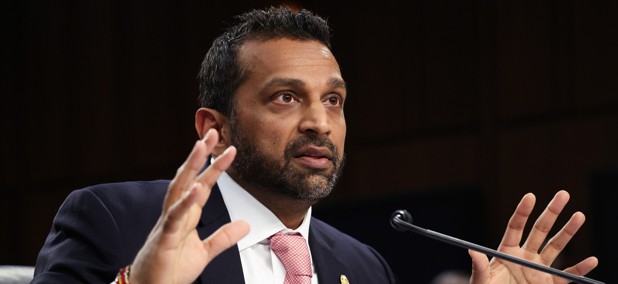
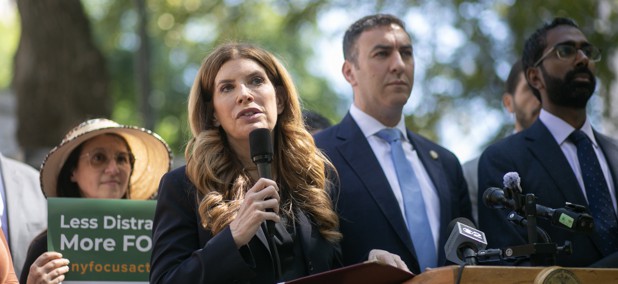

NYC Council summons Open AI and Anthropic to AI hearing
Freaked out about AI? The New York City Council is too.


Pennsylvania politicians react to calls for an AI development slowdown
Gov. Josh Shapiro, Attorney General Dave Sunday and members of Congress have weighed in on calls to slow AI development.


Environmentalists push Michigan lawmakers to forge ahead on moratorium and regulations for data centers
Groups looked to remind elected officials of data centers' effects as members of the state senate returned to work.


Local government AI training needs workflow proofing
COMMENTARY | Training should be treated as the beginning, rather than the finish line, and judge what works after the excitement of being in the classroom fades.


AI safety advocacy group launches new state-level effort
Americans for Responsible Innovation debuted the advocacy arm to bring responsible AI policy assistance to local lawmakers.




The largest US school districts restrict student AI use
Los Angeles and New York City banned most students from using artificial intelligence in classrooms this school year.


AI and the new rules of digital trust: Watermarks
COMMENTARY | AI watermarking will become more than a tech issue for governments. In time, it could help them authenticate official communications and identify fraudulent ones.


NYC’s new school AI ban explained: What’s changing? What’s still murky?
NYC public schools will ban student-facing generative AI through eighth grade and cap screen time, Mayor Mamdani announced. But key details — including the specific tools affected — remain unclear days before school starts.


Nevada lawmakers propose oversight for state, local agencies using AI
Elected officials want basic standards governing how the technology is used by state and local government entities.


New AI center announced for St. Louis
The Spirit of St. Louis AI Innovation Center looks to position the city and the surrounding region as a hub for the technology with computing power and other resources.
Featured eBooks





States urge schools to use AI, but leave teachers on their own to stop cheating
Most states have published AI guidance for public schools, but they mostly avoid addressing academic integrity. That’s left many teachers adrift and frustrated when it comes to stopping AI-fueled cheating.


Why ‘mundane’ uses are most effective for AI
COMMENTARY | The unglamorous tools that give employees time back in their day may not generate headlines, but they help get government moving more efficiently.


Data centers are Americans’ least favored development, poll finds
The survey from Public First and ITIF found that 46% oppose data centers in their communities, compared to 26% who support, far behind other projects.


State audit finds room for improvement in NYC’s AI governance
A new report from state Comptroller Tom DiNapoli found New York City has only partially implemented 2023 recommendations on how government should use AI.


The irony of scarcity: When risk and opportunity reside between agencies
COMMENTARY | New technologies are interacting with governance systems built around older assumptions in areas like water and electricity. AI will shift that paradigm.


Many localities have tried data center moratoriums, tracker finds
The National League of Cities found that 76 cities, counties or towns have at least attempted moratoriums or permanent bans, with most being successful. That number is likely even higher.


DeSantis administration moving to regulate AI from pre-K to Ph.D.
Bodies that govern education at all ages in Florida will move soon to implement policies around safety and classroom use of the technology.


New York politicians are using AI to write their op-eds
Politicians including the governor’s running mate and the mayor of Albany acknowledged using artificial intelligence to write op-eds.


Whole-of-state cyber defense: The pathway for addressing today’s AI-fueled threats
COMMENTARY | When every link in the chain is protected, the entire state is stronger, so they and their technology partners must operate as a unified, integrated force.


Can an old dog teach an old man a new trick?
COMMENTARY | New tools should be an amplifier, not a replacement, for the work done by employees. AI should do the same, and be an upgrade to a working process.

