Insights
How to scale agents across defense and national security agencies
<p>Agents are helping the Department of War (DOW) turn institutional knowledge into operational intelligence. When <a href="https://cloud.google.com/gemini-enterprise/agents">Google Gemini Agent Designer</a> launched on GenAI.mil, the Pentagon’s Chief Digital and Artificial Intelligence Officer, Cameron Stanley, anticipated that users would build a handful of agents. Instead, they created over 40,000 custom agents within the first week. Since its initial rollout, defense personnel have deployed more than half a million custom agents across various departments, agencies and commands. As this level of innovation continues to grow, here are three steps leaders can take today to safely scale agents across their agency.</p>
The Blueprint for Continuous Assurance: Lessons from FedRAMP Modernization
<p>Download this eBook to learn what differentiates 20x from Rev 5, what it means for CSPs, agencies, and 3PAOs, and how a compliance-as-code approach turns KSIs into a repeatable authorization system instead of a one-time checklist.</p>
Zero Trust in 2026: Operationalizing Software Security for Federal and Defense Missions
<p>Zero trust verifies who is asking for access, not whether the application behind it can be trusted. This Checkmarx white paper translates OMB M-22-09, EO 14144, and OMB M-26-05 into a four-phase roadmap for software-centered zero trust and a mandate-to-evidence table: the SBOMs, application security test results, and records to retain for ATO, cATO, and contractor oversight. Learn how to produce defensible software evidence without reconstructing release history for every authorization review.</p>
Unlocking Data from Digital Archives
<p>While government modernization has digitized vast archives, it has inadvertently produced disconnected modern data silos where critical institutional knowledge remains trapped and unusable. This whitepaper outlines a strategic roadmap to dismantle these silos using Intelligent Document Processing (IDP) to extract, structure, and classify dormant records. By pairing automated processing with metadata governance and risk-based human validation, agencies can transform fragmented collections into accessible, AI-ready assets that advance current missions.</p>
Preparing the Federal Government for the Post-Quantum Era
<p>This whitepaper outlines an enterprise strategy for preparing federal agencies for post-quantum cryptography (PQC). Migration requires more than replacing algorithms; it demands connecting cryptographic inventories to mission criticality, system lifecycles, and operational constraints. Because legacy systems and operational technology require years of hybrid co-existence, federal leaders must embed cryptographic agility into planned refresh cycles, acquisition processes, and mission-informed testing to ensure long-term enterprise readiness.</p>


Are We Measuring Logistics Performance or Logistics Confidence?
Nothing has failed. Yet confidence is declining.

Everything You Want to Know About Failing Government Security Audits But Were Too Afraid to Ask
<p> <style type="text/css"><!--br {mso-data-placement:same-cell;}--> </style> Clean audit opinions aren’t about working harder; they’re about seeing clearer.<br /> <br /> When you can’t prove what systems you operate, who has access, and how controls perform, audit failure is inevitable. But agencies achieving consistent success share one trait: unified, automated visibility across their entire environment.</p> <p><br /> “Everything You Want to Know About Failing Government Security Audits But Were Too Afraid to Ask” shows you how to:<br /> • Eliminate the visibility gaps that trigger “material weakness” findings<br /> • Replace manual attestations with machine-verifiable evidence<br /> • Align financial, cyber, and operational controls into one accountability framework<br /> • Leverage existing Zero Trust investments for audit readiness</p> <p></p> <p>The payoff goes beyond compliance: Faster risk response, mission agility, and transparent governance that strengthens public confidence.</p> <p><br /> Modern accountability demands modern proof. Systems that defend your network can also document its integrity, in real time, all the time.</p> <p><br /> Download the eBook and learn how leading agencies are making audit readiness automatic.</p>
From Audit Failure to Continuous Assurance
<p> <style type="text/css"><!--br {mso-data-placement:same-cell;}--> </style> Federal agencies invest heavily in policies, compliance frameworks, and security controls — yet audit failures remain stubbornly common. The problem isn’t intent, and it isn’t the frameworks themselves. It’s the growing gap between what agencies document and what they can defensibly prove to an auditor on any given day.</p> <p>Forescout’s latest whitepaper diagnoses exactly where the chain of accountability breaks down — and shows how government security leaders are restructuring their evidence model to meet the demands of continuous oversight.<br /> <br /> Why You Should Read This Paper:</p> <p><br /> • Identify the specific point where policy design diverges from provable control operation<br /> • Understand why complexity – sprawling hybrid IT, cloud, OT, and remote assets – makes manual evidence structurally unreliable<br /> • Learn how oversight expectations under FISMA, NIST SP 800-53, OMB M-23-02, and the GAO Green Book are evolving toward real-time verification<br /> • See how enforcement actions in a UZTNA architecture automatically produce time-stamped, auditable evidence<br /> • Build a path from reactive audit preparation to continuous assurance that protects budget, leadership credibility, and mission</p> <p></p> <p>Download free — no waiting, instant access.</p>
5 Steps to PQC Readiness
<p>What’s Inside the eBook:<br /> • The key challenges driving Post-Quantum Cryptography readiness initiatives<br /> • A five-step framework for identifying and managing cryptographic risk<br /> • Best practices for discovering quantum-vulnerable encryption across the enterprise<br /> • Approaches for prioritizing remediation based on business impact and exposure<br /> • Methods for tracking progress and building a defensible readiness program</p> <p>The emergence of quantum computing is accelerating the need for Post-Quantum Cryptography (PQC) readiness. As organizations prepare for a future where today’s encryption standards may no longer provide adequate protection, understanding cryptographic exposure has become a critical security priority.</p> <p>Many organizations lack visibility into where cryptography is being used, which assets rely on quantum-vulnerable algorithms, and which exposures pose the greatest risk. This eBook outlines five practical steps to help security teams discover cryptographic risk, prioritize remediation efforts, and build a defensible roadmap to PQC readiness across IT, OT, IoT, and IoMT environments.</p>


A guide to AI sovereignty: How HPE and NVIDIA help agencies balance control, compliance and scale
<p>As AI transitions from experimental pilots into core operational environments, maintaining strict control over data, where it resides, model behavior and overall system governance is both a strategic and regulatory imperative. Particularly given the sensitivity of government workloads, scaling AI requires a careful balance between deployment speed and authority over data, infrastructure and outcomes.</p>


How modern is your modernization?
From recovering legacy knowledge to preparing for quantum, agencies need a foundation that can evolve with the mission.
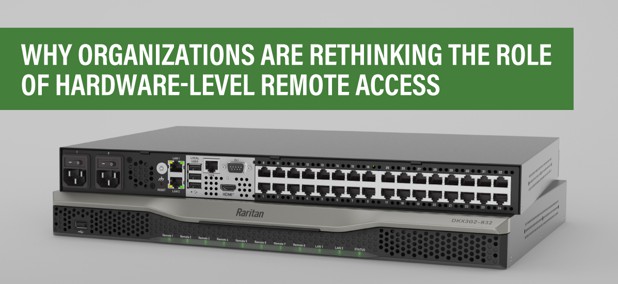
KVM Is No Longer Just a Data Center Tool
Why organizations are rethinking the role of hardware-level remote access
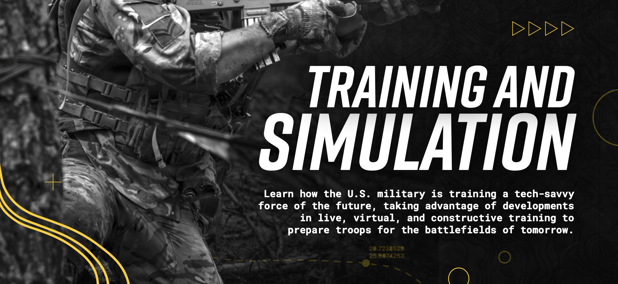
Training and Simulation
<p> <style type="text/css"><!--td {border: 1px solid #cccccc;}br {mso-data-placement:same-cell;}--> </style> Learn how the U.S. military is training a tech-savvy force of the future, taking advantage of developments in live, virtual, and constructive training to prepare troops for the battlefields of tomorrow.</p>

