Renewed CISA support comes too late for midterm prep, some election officials say
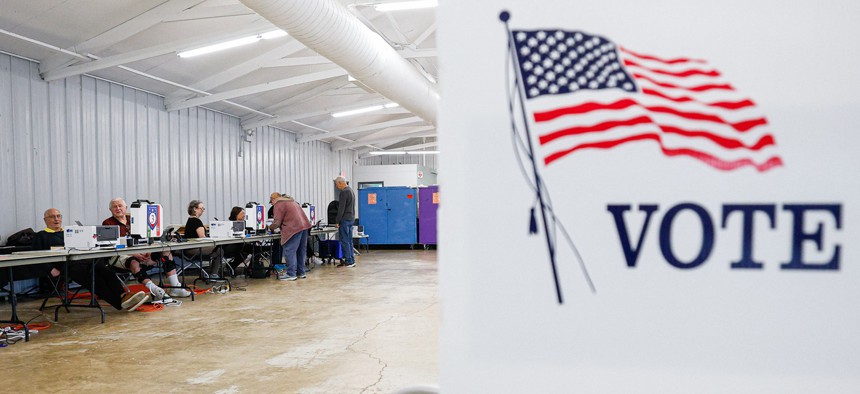
KAMIL KRZACZYNSKI / AFP via Getty Images


Arizona still plans to accept federal help on Election Day, while officials warn that staffing cuts have weakened relationships and left smaller jurisdictions with fewer resources.

Election officials said Wednesday that renewed federal cybersecurity assistance comes too late for some of their midterm preparations, following cuts they say disrupted support from the Cybersecurity and Infrastructure Security Agency, though they are not closing the door on federal help. 

Michael Moore, chief information security officer for the Arizona secretary of state’s office, said the state recently reconnected with CISA’s regional leadership and plans to accept its support on Election Day if cyberattacks disrupt election services.

“We haven’t had a cybersecurity advisor in Arizona since March 2025,” Moore said at a briefing hosted by the Partnership for Large Election Jurisdictions, or PLEJ.

“When it comes to the services that they’ve recently offered, it is much too late,” he said. “We cannot utilize some of the services that they offer.”

CISA released an election security plan last week that assigns its 10 regional directors an election adviser role and describes a free threat-sharing platform connecting election officials, state intelligence hubs and federal partners. Homeland Security Secretary Markwayne Mullin said the plan would be implemented in full.

The document does not specify how many employees will carry out the work or announce restoration of dedicated election adviser positions. It also does not explain how its commitments fit with a White House fiscal 2027 proposal to eliminate dedicated election security funding.

Moore described Arizona’s partnership with CISA during the 2024 election as “truly amazing,” contrasting it with the loss of staff and support that followed in 2025. Still, he argued that federal assistance remains essential when a foreign adversary targets election infrastructure.

“If there were a visible crossing of the Arizona border by a foreign adversary, we would expect federal response, not just the Arizona National Guard,” he said. “And why should cybersecurity be any different?”

Dean Logan, Los Angeles County’s registrar-recorder and county clerk, said larger election jurisdictions have spent the past several years building cyberdefenses and monitoring systems to help fill gaps in outside support. He cautioned that small and medium-sized jurisdictions may lack those resources and depend more heavily on threat notifications.

Election offices have also been conducting exercises and simulations to prepare for disruptions, with backup arrangements intended to keep voting available should a particular location or service become unavailable, he added.

But the problem extends beyond restoring services and can trickle into state-federal relationships, said Aaron Blacksberg, federal policy counsel at the Institute for Responsive Government, which works with election administrators.

“You can’t flip a switch and turn back on trust,” he said. “When resources diminish overnight, there’s a level of trust that diminishes as well.”

Others emphasized that federal relationships have continued despite CISA’s reductions. Eric Fey, St. Louis County’s Democratic director of elections, said his office never stopped communicating with the U.S. attorney’s office or the local FBI election crime coordinator.

CISA “was gutted,” Fey said, but his office remains willing to work with the agency where it can provide assistance.

“At a minimum, we’re going to engage with them and have that communication,” he said. “And if we can collaborate, we’re going to do that.”

Preparations can cover a broad array of cyber and physical threats that have the potential to disrupt election operations. They may range from internet outages affecting electronic poll books used for voter check-in to service disruptions targeting polling place locators and election reporting sites. 

An array of fear and disinformation tactics has also been top-of-mind for officials. Moore identified bomb threats as a concern following the 2024 election. Such threats can be sent remotely, are difficult to attribute and can halt work by forcing election personnel to evacuate.

“As directed by Secretary Mullin, CISA is implementing the newly updated and released election infrastructure security plan outlining available no‑cost voluntary services — including threat information sharing, technical expertise, vulnerability scanning, and other risk‑mitigation support,” an agency spokesperson said when asked for comment on the officials’ remarks. “CISA is committed to supporting state and local election officials to protect election infrastructure and safeguard our democracy.”

The administration’s CISA cuts reflect both a broader Trump-era push to shrink federal spending and lingering political grievances over its election security work. Conservatives have long accused CISA of enabling government censorship through its efforts to combat online disinformation in and around the 2020 election cycle. Former officials and experts have warned the reductions could weaken protections for voting systems and other critical infrastructure against foreign cyberattacks.

X
This website uses cookies to enhance user experience and to analyze performance and traffic on our website. We also share information about your use of our site with our social media, advertising and analytics partners. Learn More / Do Not Sell My Personal Information
Accept Cookies
X
Cookie Preferences Cookie List

Do Not Sell My Personal Information

When you visit our website, we store cookies on your browser to collect information. The information collected might relate to you, your preferences or your device, and is mostly used to make the site work as you expect it to and to provide a more personalized web experience. However, you can choose not to allow certain types of cookies, which may impact your experience of the site and the services we are able to offer. Click on the different category headings to find out more and change our default settings according to your preference. You cannot opt-out of our First Party Strictly Necessary Cookies as they are deployed in order to ensure the proper functioning of our website (such as prompting the cookie banner and remembering your settings, to log into your account, to redirect you when you log out, etc.). For more information about the First and Third Party Cookies used please follow this link.

Allow All Cookies

Manage Consent Preferences

Strictly Necessary Cookies - Always Active

We do not allow you to opt-out of our certain cookies, as they are necessary to ensure the proper functioning of our website (such as prompting our cookie banner and remembering your privacy choices) and/or to monitor site performance. These cookies are not used in a way that constitutes a “sale” of your data under the CCPA. You can set your browser to block or alert you about these cookies, but some parts of the site will not work as intended if you do so. You can usually find these settings in the Options or Preferences menu of your browser. Visit www.allaboutcookies.org to learn more.

Sale of Personal Data, Targeting & Social Media Cookies

Under the California Consumer Privacy Act, you have the right to opt-out of the sale of your personal information to third parties. These cookies collect information for analytics and to personalize your experience with targeted ads. You may exercise your right to opt out of the sale of personal information by using this toggle switch. If you opt out we will not be able to offer you personalised ads and will not hand over your personal information to any third parties. Additionally, you may contact our legal department for further clarification about your rights as a California consumer by using this Exercise My Rights link

If you have enabled privacy controls on your browser (such as a plugin), we have to take that as a valid request to opt-out. Therefore we would not be able to track your activity through the web. This may affect our ability to personalize ads according to your preferences.

Targeting cookies may be set through our site by our advertising partners. They may be used by those companies to build a profile of your interests and show you relevant adverts on other sites. They do not store directly personal information, but are based on uniquely identifying your browser and internet device. If you do not allow these cookies, you will experience less targeted advertising.

Social media cookies are set by a range of social media services that we have added to the site to enable you to share our content with your friends and networks. They are capable of tracking your browser across other sites and building up a profile of your interests. This may impact the content and messages you see on other websites you visit. If you do not allow these cookies you may not be able to use or see these sharing tools.

If you want to opt out of all of our lead reports and lists, please submit a privacy request at our Do Not Sell page.

Save Settings
Cookie Preferences Cookie List

Cookie List

A cookie is a small piece of data (text file) that a website – when visited by a user – asks your browser to store on your device in order to remember information about you, such as your language preference or login information. Those cookies are set by us and called first-party cookies. We also use third-party cookies – which are cookies from a domain different than the domain of the website you are visiting – for our advertising and marketing efforts. More specifically, we use cookies and other tracking technologies for the following purposes:

Strictly Necessary Cookies

We do not allow you to opt-out of our certain cookies, as they are necessary to ensure the proper functioning of our website (such as prompting our cookie banner and remembering your privacy choices) and/or to monitor site performance. These cookies are not used in a way that constitutes a “sale” of your data under the CCPA. You can set your browser to block or alert you about these cookies, but some parts of the site will not work as intended if you do so. You can usually find these settings in the Options or Preferences menu of your browser. Visit www.allaboutcookies.org to learn more.

Functional Cookies

We do not allow you to opt-out of our certain cookies, as they are necessary to ensure the proper functioning of our website (such as prompting our cookie banner and remembering your privacy choices) and/or to monitor site performance. These cookies are not used in a way that constitutes a “sale” of your data under the CCPA. You can set your browser to block or alert you about these cookies, but some parts of the site will not work as intended if you do so. You can usually find these settings in the Options or Preferences menu of your browser. Visit www.allaboutcookies.org to learn more.

Performance Cookies

We do not allow you to opt-out of our certain cookies, as they are necessary to ensure the proper functioning of our website (such as prompting our cookie banner and remembering your privacy choices) and/or to monitor site performance. These cookies are not used in a way that constitutes a “sale” of your data under the CCPA. You can set your browser to block or alert you about these cookies, but some parts of the site will not work as intended if you do so. You can usually find these settings in the Options or Preferences menu of your browser. Visit www.allaboutcookies.org to learn more.

Sale of Personal Data

We also use cookies to personalize your experience on our websites, including by determining the most relevant content and advertisements to show you, and to monitor site traffic and performance, so that we may improve our websites and your experience. You may opt out of our use of such cookies (and the associated “sale” of your Personal Information) by using this toggle switch. You will still see some advertising, regardless of your selection. Because we do not track you across different devices, browsers and GEMG properties, your selection will take effect only on this browser, this device and this website.

Social Media Cookies

We also use cookies to personalize your experience on our websites, including by determining the most relevant content and advertisements to show you, and to monitor site traffic and performance, so that we may improve our websites and your experience. You may opt out of our use of such cookies (and the associated “sale” of your Personal Information) by using this toggle switch. You will still see some advertising, regardless of your selection. Because we do not track you across different devices, browsers and GEMG properties, your selection will take effect only on this browser, this device and this website.

Targeting Cookies

We also use cookies to personalize your experience on our websites, including by determining the most relevant content and advertisements to show you, and to monitor site traffic and performance, so that we may improve our websites and your experience. You may opt out of our use of such cookies (and the associated “sale” of your Personal Information) by using this toggle switch. You will still see some advertising, regardless of your selection. Because we do not track you across different devices, browsers and GEMG properties, your selection will take effect only on this browser, this device and this website.