
Why New York City has become an AI Mecca
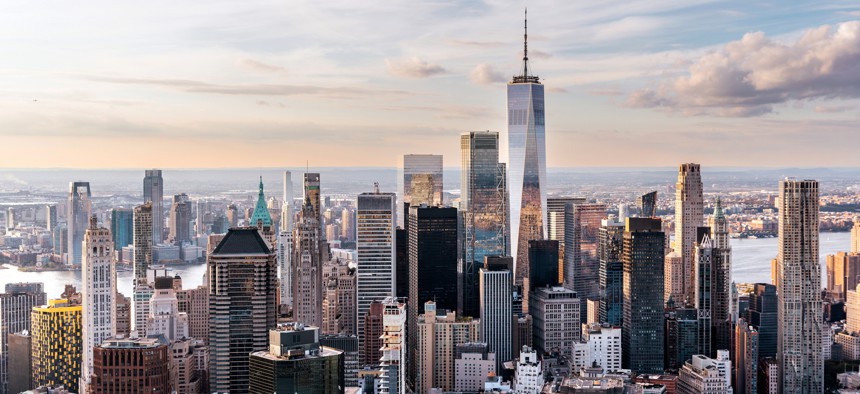
Alexander Spatari via Getty Images




OpenAI and Anthropic have opened up huge offices in Manhattan, while smaller companies have been drawn to the city’s talent and its status as an economic powerhouse.
This article was originally published by The City Reporter.
The City Council is set to hold a rare all-Council meeting on Oct. 5 to discuss the “potentially catastrophic risks” of artificial intelligence and debate a package of oversight legislation, including protections for AI whistleblowers and requirements for third-party validators of AI systems.
Attorney General Letitia James has also asked New Yorkers to report AI companies who might be violating the law.
But while New York politicians are focused on the perils of AI, the city has emerged as a center for AI companies, second only to the Bay Area, showing the industry’s growing importance to the city’s economy — and the risks if the AI boom turns into a bubble.
Elise AI, founded five years ago, now employs 600 people, two-thirds of them in New York. This week, it announced it had raised $350 million, which values the company at $4 billion as its tools for property management and healthcare companies gain new clients.
Alex Sambvani’s Slang AI, which two years ago was developing an application to handle phone calls to restaurants, is now selling itself as an AI tools manager for restaurants around the world. In the last two years, Sambvani has raised $48 million, bringing total investment to almost $70 million, while doubling Slang AI’s headcount to 70.
Two juggernauts leading the development of AI — OpenAI and Anthropic — have both established major operations here.
The same factors that drove the city’s tech boom over the past 10 years are what’s propelling AI’s growth now: New York has both an enormous reservoir of tech talent and is the city best poised to bring tech innovation to the rest of the economy.
“There are a wide range of small- to medium-sized AI companies in every sector who are coming here or launching here because of what Willie Sutton said about where the money is, because you have companies in finance, law, medicine, insurance or whatever,” Greg Morrisett, the dean of Cornell Tech said, citing the famous 20th-century bank robber.
Data shows how large the AI sector has become:
- Last year, the city’s Economic Development Corporation counted more than 2,000 AI companies operating in the city, a number that has almost certainly increased since then.
- Venture capitalists invested $17.4 billion in tech in the first seven months of 2026, 50% more than in the same period last year, and most of which went to AI companies, according to tech site AlleyWatch. The total for the full year is sure to top 2025’s $19 billion.
- In the first half of the year, AI companies signed up to lease about 1.5 million square feet of office space, nearly double the 800,000 square feet they signed up for in all of 2025.
The AI expansion outpaces other periods of rapid expansion in the tech sector.
“The rates of growth from these companies is so much faster than I’ve seen from similar companies compared with five or 10 years ago,” said Joe Sipala, a real estate broker at JLL who specializes in tech companies.
The talent here is so extensive — almost 70,000 AI specialists, second only to San Francisco — that the two biggest names in the sector are establishing major operations here.
OpenAI has leased 90,000 square feet in the Puck Building in SoHo. The company declined comment on how many employees it has in New York and what its plans for expansion are.
Anthropic has leased an entire building at 330 Hudson St. — its second-biggest office after San Francisco — and plans to increase its staff there by 1,000 by the end of the year. The creator of the chatbot Claude has room for another 700 people in the building.
Cornell Tech has completely reoriented its teaching to focus on AI, and its prospective students want to be at the center of the action, said Morrisett.
“If you are building anything digital these days, it’s basically incorporating AI,” he said. “All our curriculum, whether you are talking about the business program or the design program or the computer science program, is oriented around AI.”
In addition to its slightly more than 2,000 graduates over the last five years, many of whom are working in AI jobs, the school says its alums have started about 140 companies, the vast majority of which involve AI.
The startups are here because of the business opportunities — and because its founders don’t want to live anywhere else.
The parents of Kyle Bhiro, one of the founders of the AI security company Pensar, are immigrants to New York City; his father worked as an electrical contractor on the World Trade Center and his mother worked in the North Tower but was on leave during the terrorist attacks. Bhiro went to college at Hofstra.
“I had only one real goal and one real dream,” he said. “I wanted to live and work in New York.”
Pensar uses AI tools to hack software at factories, banks and other companies to expose security flaws. Many of its customers work in regulated industries, and Bhiro noted New York City contains the most companies fitting that description. He just moved his last remaining employee in Virginia to their offices in New York, where the engineers, operating and marketing personnel all work together.
New York City has also emerged as the center for software development targeting the real estate industry, which is now being reorganized around AI.
Elise AI’s tools are being used by real estate companies to handle administrative tasks, allowing employees to concentrate on more important work, said chief experience officer Francesca Loftus. This transition, called “leveling up” in AI jargon, is cited by AI proponents to counter predictions that artificial intelligence will wipe out millions of jobs.
While Elise is headquartered opposite Bryant Park, the majority of AI companies are flocking to the traditional tech neighborhood of Midtown South. But as space there becomes scarce, JLL’s Sipala said, they are broadening their searches to Hudson Square, between Canal and Houston streets, where Anthropic landed.
Some are putting down roots in Williamsburg, Brooklyn, where the former Domino Sugar factory is mostly filled with small AI startups.
Many AI companies are taking more space than they need, Sipala said, in a sign of how confident they are of more growth.
The possibility that AI will cause enormous harm is top of mind for virtually everyone working in the field. Morrisett at Cornell said his students think about it almost every day.
The City Council has said it can regulate AI without damaging its role in the economy. A spokesperson spotlighted Speaker Julie Menin’s statement the day she announced the upcoming hearings.
“New York City is fast becoming the technology and AI capital of the world, which we want to encourage. But that also means we now have an even greater responsibility to ensure that we have the appropriate safeguards in place to protect New Yorkers from unintended consequences,” she said.
Those in the field don’t see that as a reason to curtail their work.
“We have to ask the question,” said Bhiro of Pensar. “But I am not going to live in a world of fear that our way of life will unravel once we reach the threshold of artificial general intelligence that can do anything humans can do.”