
More body-cam footage is not the end goal. More usable, accountable footage should be
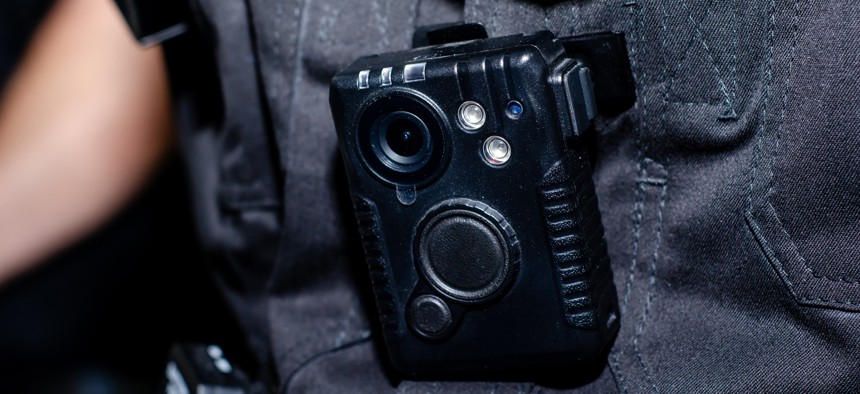
artas via Getty Images


COMMENTARY | Programs should not be judged on how many officers wear them or how many hours of footage they obtain. What agencies do with that footage must also be considered.

Immigration and Customs Enforcement promised earlier this year that all its agents would wear body cameras. It is a significant undertaking, and one that should create a much fuller record of some of the complex and contentious interactions carried out by federal law enforcement.

But deployment is only the first part of the equation.

ICE's policy gives leadership broad discretion over whether footage is released, specifying that disclosure decisions should serve the agency's "best interests." There are legitimate reasons for that kind of flexibility — footage may form part of an active investigation, reveal sensitive operational information, or expose victims, witnesses, officers and bystanders whose identities need to be protected.

Balancing those interests against the public's is not a problem unique to any one agency. Every law enforcement agency operating a body-camera program has to balance transparency with privacy, due process, safety and the integrity of an investigation.

What is interesting is how differently agencies are beginning to strike that balance.

Earlier this year, London’s Metropolitan Police revised its body-worn video policy to enable more proactive release when there is a legitimate policing purpose. After a knife attack in Golders Green, partial footage and criticism of officers began circulating online. The Met reviewed the material and released body-camera footage from the responding officers within hours. Previously, footage would typically have remained unpublished until criminal proceedings had concluded, potentially years later.

That does not mean the Met now publishes everything. Release still has to be lawful, necessary and proportionate, with privacy, operational risk and future legal proceedings taken into account.

But it demonstrates a different starting point: not simply “should this footage be released?”, but “can we make this footage safe and appropriate to release while it still matters?”

That distinction matters more as body cameras stop being a technology initiative and become part of everyday policing.

The most comprehensive federal census found that 47% of U.S. law-enforcement agencies had acquired body-worn cameras in 2016. That figure is now badly dated — by 2020, 68% of sheriffs’ offices alone were deploying them, while adoption had long been highest among larger police departments. Federal authorities no longer publish a single reliable nationwide adoption rate, but the direction of travel is clear: body-worn cameras have moved from emerging technology to mainstream policing infrastructure.

The evidence of their impact is not straightforward. The National Institute of Justice describes the overall research as mixed: some programs have recorded reductions in complaints and use of force, while others have produced little or no statistically significant change.

That complexity is important. A body-worn camera is not inherently an accountability tool. The policy and process around it determine whether it becomes one.

And the work after capture is harder than it can appear from the outside.

Bodycam footage is rarely clean, static video. The camera is moving with the officer, sometimes in poor light or a crowded environment. People move in and out of frame. Faces can be obscured. Victims, children, witnesses and unrelated members of the public may all appear alongside the people central to an incident. Before footage can be released, agencies need to establish what is relevant, what needs protecting and what can safely remain visible without removing the context that makes the recording valuable.

That is why the next generation of body-camera programs should be judged on more than how many officers are equipped or how many hours of footage are captured.

Can an agency find the relevant material quickly when an incident attracts scrutiny, and review significant volumes of footage without creating an impossible operational burden? Just as important is what happens to the people in the frame — protecting victims, witnesses and bystanders, and removing sensitive elements without losing the context that makes a recording meaningful in the first place.

Those are partly questions of policy. But they are increasingly questions of operational capability too.

The Met example is useful because it shows that privacy and disclosure do not have to sit on opposite sides of the argument. Its Golders Green release still required the force to consider legal, policy and operational constraints. The difference was that its policy allowed it to move from raw footage to something it could responsibly publish within hours, rather than automatically waiting until the end of proceedings.

No agency should be expected to release every recording, and reasonable organizations will draw the line in different places. There will always be cases where an investigation, a victim’s rights or a genuine operational risk outweighs the case for immediate publication.

But the practical difficulty of processing sensitive footage should not make that decision for them.

As body-camera programs grow, success should not be measured only in the volume of footage captured. Agencies should also be able to demonstrate what they can responsibly do with it afterwards.

Simon Randall is CEO of Pimloc.

X
This website uses cookies to enhance user experience and to analyze performance and traffic on our website. We also share information about your use of our site with our social media, advertising and analytics partners. Learn More / Do Not Sell My Personal Information
Accept Cookies
X
Cookie Preferences Cookie List

Do Not Sell My Personal Information

When you visit our website, we store cookies on your browser to collect information. The information collected might relate to you, your preferences or your device, and is mostly used to make the site work as you expect it to and to provide a more personalized web experience. However, you can choose not to allow certain types of cookies, which may impact your experience of the site and the services we are able to offer. Click on the different category headings to find out more and change our default settings according to your preference. You cannot opt-out of our First Party Strictly Necessary Cookies as they are deployed in order to ensure the proper functioning of our website (such as prompting the cookie banner and remembering your settings, to log into your account, to redirect you when you log out, etc.). For more information about the First and Third Party Cookies used please follow this link.

Allow All Cookies

Manage Consent Preferences

Strictly Necessary Cookies - Always Active

We do not allow you to opt-out of our certain cookies, as they are necessary to ensure the proper functioning of our website (such as prompting our cookie banner and remembering your privacy choices) and/or to monitor site performance. These cookies are not used in a way that constitutes a “sale” of your data under the CCPA. You can set your browser to block or alert you about these cookies, but some parts of the site will not work as intended if you do so. You can usually find these settings in the Options or Preferences menu of your browser. Visit www.allaboutcookies.org to learn more.

Sale of Personal Data, Targeting & Social Media Cookies

Under the California Consumer Privacy Act, you have the right to opt-out of the sale of your personal information to third parties. These cookies collect information for analytics and to personalize your experience with targeted ads. You may exercise your right to opt out of the sale of personal information by using this toggle switch. If you opt out we will not be able to offer you personalised ads and will not hand over your personal information to any third parties. Additionally, you may contact our legal department for further clarification about your rights as a California consumer by using this Exercise My Rights link

If you have enabled privacy controls on your browser (such as a plugin), we have to take that as a valid request to opt-out. Therefore we would not be able to track your activity through the web. This may affect our ability to personalize ads according to your preferences.

Targeting cookies may be set through our site by our advertising partners. They may be used by those companies to build a profile of your interests and show you relevant adverts on other sites. They do not store directly personal information, but are based on uniquely identifying your browser and internet device. If you do not allow these cookies, you will experience less targeted advertising.

Social media cookies are set by a range of social media services that we have added to the site to enable you to share our content with your friends and networks. They are capable of tracking your browser across other sites and building up a profile of your interests. This may impact the content and messages you see on other websites you visit. If you do not allow these cookies you may not be able to use or see these sharing tools.

If you want to opt out of all of our lead reports and lists, please submit a privacy request at our Do Not Sell page.

Save Settings
Cookie Preferences Cookie List

Cookie List

A cookie is a small piece of data (text file) that a website – when visited by a user – asks your browser to store on your device in order to remember information about you, such as your language preference or login information. Those cookies are set by us and called first-party cookies. We also use third-party cookies – which are cookies from a domain different than the domain of the website you are visiting – for our advertising and marketing efforts. More specifically, we use cookies and other tracking technologies for the following purposes:

Strictly Necessary Cookies

We do not allow you to opt-out of our certain cookies, as they are necessary to ensure the proper functioning of our website (such as prompting our cookie banner and remembering your privacy choices) and/or to monitor site performance. These cookies are not used in a way that constitutes a “sale” of your data under the CCPA. You can set your browser to block or alert you about these cookies, but some parts of the site will not work as intended if you do so. You can usually find these settings in the Options or Preferences menu of your browser. Visit www.allaboutcookies.org to learn more.

Functional Cookies

We do not allow you to opt-out of our certain cookies, as they are necessary to ensure the proper functioning of our website (such as prompting our cookie banner and remembering your privacy choices) and/or to monitor site performance. These cookies are not used in a way that constitutes a “sale” of your data under the CCPA. You can set your browser to block or alert you about these cookies, but some parts of the site will not work as intended if you do so. You can usually find these settings in the Options or Preferences menu of your browser. Visit www.allaboutcookies.org to learn more.

Performance Cookies

We do not allow you to opt-out of our certain cookies, as they are necessary to ensure the proper functioning of our website (such as prompting our cookie banner and remembering your privacy choices) and/or to monitor site performance. These cookies are not used in a way that constitutes a “sale” of your data under the CCPA. You can set your browser to block or alert you about these cookies, but some parts of the site will not work as intended if you do so. You can usually find these settings in the Options or Preferences menu of your browser. Visit www.allaboutcookies.org to learn more.

Sale of Personal Data

We also use cookies to personalize your experience on our websites, including by determining the most relevant content and advertisements to show you, and to monitor site traffic and performance, so that we may improve our websites and your experience. You may opt out of our use of such cookies (and the associated “sale” of your Personal Information) by using this toggle switch. You will still see some advertising, regardless of your selection. Because we do not track you across different devices, browsers and GEMG properties, your selection will take effect only on this browser, this device and this website.

Social Media Cookies

We also use cookies to personalize your experience on our websites, including by determining the most relevant content and advertisements to show you, and to monitor site traffic and performance, so that we may improve our websites and your experience. You may opt out of our use of such cookies (and the associated “sale” of your Personal Information) by using this toggle switch. You will still see some advertising, regardless of your selection. Because we do not track you across different devices, browsers and GEMG properties, your selection will take effect only on this browser, this device and this website.

Targeting Cookies

We also use cookies to personalize your experience on our websites, including by determining the most relevant content and advertisements to show you, and to monitor site traffic and performance, so that we may improve our websites and your experience. You may opt out of our use of such cookies (and the associated “sale” of your Personal Information) by using this toggle switch. You will still see some advertising, regardless of your selection. Because we do not track you across different devices, browsers and GEMG properties, your selection will take effect only on this browser, this device and this website.