The mobile driver's license is hitting its tipping point — states just need to give it a shove
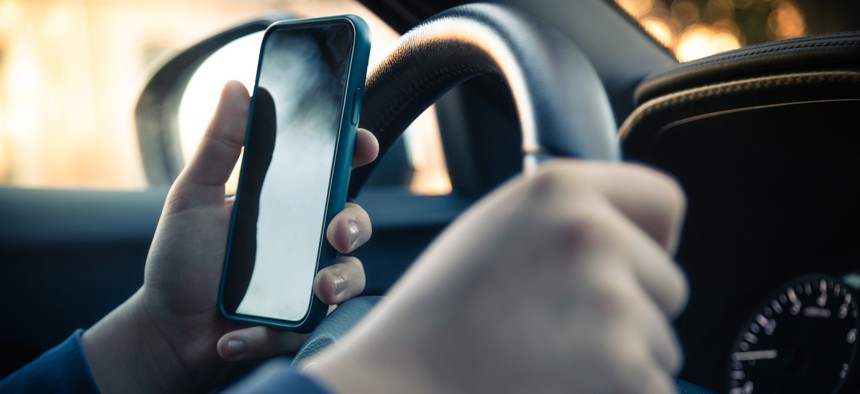
Fabio Principe via Getty Images

COMMENTARY | mDLs are available in 21 states and Puerto Rico, showing that the technology has real promise. The rest of the states must follow suit to make them truly useful.

The driver's license became America's identity card by accident. It was meant to prove you could drive; it ended up proving you're who you say you are at the bank, the bar, the airport and more. 

Now, the plastic card is getting a digital upgrade. It's the same license, issued by the state, but in an unfakeable digital format, finally fit to really prove identity in the online age.

So far, mobile driver's licenses have mostly been trapped on our phones, useful only for hustling through a TSA line or buying a Coors Light at a small handful of venues able to read them. The future of the mDL is remote verification: sharing your identity credential securely straight from your phone to open a bank account, prove your age, or onboard onto a gig work app.

In a demo during a California Department of Motor Vehicles showcase, a would-be Grubhub delivery driver signing up on their phone consents in their phone's wallet to share three DMV-attested fields (name, date of birth, license number) and is verified in seconds. This is faster, easier and more secure. 

Blurry photos of plastic cards full of sensitive information don't multiply across servers. Only necessary data is shared. And because it's all signed by the state's cryptographic key, there's no way to fake any of it. AI can now create flawless images of fake licenses for pennies, but it can't fake a state's signature.

That capability is now live, and it's one reason I think the mDL is nearing a tipping point.

A few years ago you could count the issuing states on one hand. Today, 21 states and Puerto Rico issue mDLs, more than 8 million credentials are active, and roughly 45% of Americans live somewhere they could get one this afternoon. The American Association of Motor Vehicle Administrators projects that crossing the halfway mark will kick adoption into a higher gear.

Use cases are multiplying just as fast. Fans are buying beer at Camden Yards and Wrigley Field with a tap. TSA accepts mDLs at a growing list of airports, police departments are piloting patrol-car readers, and Georgia's will require every law enforcement agency to accept mDLs by mid-2027. Each tap builds the habit, and the habit builds demand.

But the in-person tap was never where digital ID would earn its keep. The verifications that matter most happen remotely, when someone opens a bank account, claims a benefit, or onboards to a gig platform. The current system leans on a photo of a plastic card, precisely the thing generative artificial intelligence has learned to counterfeit. In 2023, the IRS's identity-theft filters flagged nearly 1.1 million tax returns claiming $6.3 billion in refunds. You're checking a picture of a card, not confirming that the DMV stands behind it.

This is what the Grubhub demo was really about. mDLs can now be presented and verified remotely, over the internet, with the same assurance as an in-person tap. California and Georgia were among the first states to switch this on. California went further than most: it built an open ecosystem that any relying party can integrate with directly, rather than routing everything through the wallet providers' gates.

When anyone, anywhere, can onboard to any service with the mDL on their phone, digital identity stops being a demo-day curiosity and becomes boring infrastructure, like the power grid: invisible, essential, interesting only when it fails.

We're getting closer every day, but we're not there yet. So what's holding us back? Four things.

First, more states need to follow California's lead and make remote presentation of their mDLs easy for verifiers to access. Remote acceptance creates use cases; use cases make an mDL worth having; adoption justifies the state's investment and attracts still more use cases. It's a flywheel, but somebody has to get it spinning, and only a small handful of states have added momentum.

Second, the OEM wallets — Apple, Google, Samsung — need to streamline the process through which verifiers like Persona can access mDLs on behalf of relying parties. The credential's authority comes from the DMV's signing key. The wallet shouldn't be a bottleneck throttling the utility of the state's own credential.

Third, it's time for the rest of the states to get moving. An mDL is most useful when it's universal; a platform onboarding drivers in 50 states can't build around a credential that exists in 21 states and Puerto Rico. Most of the Northeast and big states like Texas and Florida are conspicuously absent from the adoption map. Every state that waits on issuing an mDL is deferring fraud savings for its own agencies, businesses, and residents.

Fourth, states need to answer the privacy question head-on. Done right, digital credentials protect privacy far better than photos of plastic cards: a bar can see that you're over 21 without seeing your address, and a delivery platform can capture three verified fields rather than a picture of your entire ID. 

But the benefit holds only if verifiers can't quietly ask for more than a transaction requires. States should require data minimization, prohibit tracking, and keep the plastic card working for anyone who prefers it. Adoption will be broader and sturdier if worries about privacy and data security are answered directly by lawmakers.

Nothing here requires a breakthrough. It requires, well, meetings, and a dash of political will. The meetings are already happening: at showcases like the California DMV's, in AAMVA's working groups, in the standards bodies. 

States that move now will spend the next few years watching their credentials verify unemployment claims, bank accounts, and gig workers. States that issue but don't enable remote verification will have spent millions on the equivalent of a passport to a country nobody can visit. States that haven't issued at all will be stuck in the plastic past.

The identity system we inherited is an accident of the automobile age. We can build a better one with intention: infrastructure for the internet age, made by states that decided not to wait.

Will Wilkinson is director of government affairs at Persona.

X
This website uses cookies to enhance user experience and to analyze performance and traffic on our website. We also share information about your use of our site with our social media, advertising and analytics partners. Learn More / Do Not Sell My Personal Information
Accept Cookies
X
Cookie Preferences Cookie List

Do Not Sell My Personal Information

When you visit our website, we store cookies on your browser to collect information. The information collected might relate to you, your preferences or your device, and is mostly used to make the site work as you expect it to and to provide a more personalized web experience. However, you can choose not to allow certain types of cookies, which may impact your experience of the site and the services we are able to offer. Click on the different category headings to find out more and change our default settings according to your preference. You cannot opt-out of our First Party Strictly Necessary Cookies as they are deployed in order to ensure the proper functioning of our website (such as prompting the cookie banner and remembering your settings, to log into your account, to redirect you when you log out, etc.). For more information about the First and Third Party Cookies used please follow this link.

Allow All Cookies

Manage Consent Preferences

Strictly Necessary Cookies - Always Active

We do not allow you to opt-out of our certain cookies, as they are necessary to ensure the proper functioning of our website (such as prompting our cookie banner and remembering your privacy choices) and/or to monitor site performance. These cookies are not used in a way that constitutes a “sale” of your data under the CCPA. You can set your browser to block or alert you about these cookies, but some parts of the site will not work as intended if you do so. You can usually find these settings in the Options or Preferences menu of your browser. Visit www.allaboutcookies.org to learn more.

Sale of Personal Data, Targeting & Social Media Cookies

Under the California Consumer Privacy Act, you have the right to opt-out of the sale of your personal information to third parties. These cookies collect information for analytics and to personalize your experience with targeted ads. You may exercise your right to opt out of the sale of personal information by using this toggle switch. If you opt out we will not be able to offer you personalised ads and will not hand over your personal information to any third parties. Additionally, you may contact our legal department for further clarification about your rights as a California consumer by using this Exercise My Rights link

If you have enabled privacy controls on your browser (such as a plugin), we have to take that as a valid request to opt-out. Therefore we would not be able to track your activity through the web. This may affect our ability to personalize ads according to your preferences.

Targeting cookies may be set through our site by our advertising partners. They may be used by those companies to build a profile of your interests and show you relevant adverts on other sites. They do not store directly personal information, but are based on uniquely identifying your browser and internet device. If you do not allow these cookies, you will experience less targeted advertising.

Social media cookies are set by a range of social media services that we have added to the site to enable you to share our content with your friends and networks. They are capable of tracking your browser across other sites and building up a profile of your interests. This may impact the content and messages you see on other websites you visit. If you do not allow these cookies you may not be able to use or see these sharing tools.

If you want to opt out of all of our lead reports and lists, please submit a privacy request at our Do Not Sell page.

Save Settings
Cookie Preferences Cookie List

Cookie List

A cookie is a small piece of data (text file) that a website – when visited by a user – asks your browser to store on your device in order to remember information about you, such as your language preference or login information. Those cookies are set by us and called first-party cookies. We also use third-party cookies – which are cookies from a domain different than the domain of the website you are visiting – for our advertising and marketing efforts. More specifically, we use cookies and other tracking technologies for the following purposes:

Strictly Necessary Cookies

We do not allow you to opt-out of our certain cookies, as they are necessary to ensure the proper functioning of our website (such as prompting our cookie banner and remembering your privacy choices) and/or to monitor site performance. These cookies are not used in a way that constitutes a “sale” of your data under the CCPA. You can set your browser to block or alert you about these cookies, but some parts of the site will not work as intended if you do so. You can usually find these settings in the Options or Preferences menu of your browser. Visit www.allaboutcookies.org to learn more.

Functional Cookies

We do not allow you to opt-out of our certain cookies, as they are necessary to ensure the proper functioning of our website (such as prompting our cookie banner and remembering your privacy choices) and/or to monitor site performance. These cookies are not used in a way that constitutes a “sale” of your data under the CCPA. You can set your browser to block or alert you about these cookies, but some parts of the site will not work as intended if you do so. You can usually find these settings in the Options or Preferences menu of your browser. Visit www.allaboutcookies.org to learn more.

Performance Cookies

We do not allow you to opt-out of our certain cookies, as they are necessary to ensure the proper functioning of our website (such as prompting our cookie banner and remembering your privacy choices) and/or to monitor site performance. These cookies are not used in a way that constitutes a “sale” of your data under the CCPA. You can set your browser to block or alert you about these cookies, but some parts of the site will not work as intended if you do so. You can usually find these settings in the Options or Preferences menu of your browser. Visit www.allaboutcookies.org to learn more.

Sale of Personal Data

We also use cookies to personalize your experience on our websites, including by determining the most relevant content and advertisements to show you, and to monitor site traffic and performance, so that we may improve our websites and your experience. You may opt out of our use of such cookies (and the associated “sale” of your Personal Information) by using this toggle switch. You will still see some advertising, regardless of your selection. Because we do not track you across different devices, browsers and GEMG properties, your selection will take effect only on this browser, this device and this website.

Social Media Cookies

We also use cookies to personalize your experience on our websites, including by determining the most relevant content and advertisements to show you, and to monitor site traffic and performance, so that we may improve our websites and your experience. You may opt out of our use of such cookies (and the associated “sale” of your Personal Information) by using this toggle switch. You will still see some advertising, regardless of your selection. Because we do not track you across different devices, browsers and GEMG properties, your selection will take effect only on this browser, this device and this website.

Targeting Cookies

We also use cookies to personalize your experience on our websites, including by determining the most relevant content and advertisements to show you, and to monitor site traffic and performance, so that we may improve our websites and your experience. You may opt out of our use of such cookies (and the associated “sale” of your Personal Information) by using this toggle switch. You will still see some advertising, regardless of your selection. Because we do not track you across different devices, browsers and GEMG properties, your selection will take effect only on this browser, this device and this website.