Report finds most data centers in urban, not rural, areas
marchello74 via Getty Images

Researchers at New York University found that 97.5% of existing data centers sit in metro areas, counter to the industry narrative that most are in rural regions.

Despite the industry’s narrative that many data centers are located in rural areas, a research report published late last month found that the vast majority are actually based in urban communities.

Researchers at New York University, writing in the peer-reviewed journal Nature Cities, found that of the 4,283 data centers they mapped in the United States, 97.5% sit inside metropolitan or micropolitan areas. The other 2.5% sit just 8.5 miles from an urban edge, researchers found, which they said shows there are very, very few truly rural data centers, if any.

Of the country’s data centers, researchers found that five metro areas — Washington, D.C., Chicago, Dallas-Fort Worth, New York and Phoenix — hold nearly a third. The Washington, D.C. metropolitan area alone has 610, the report says, which includes many in the Northern Virginia data center strongholds of Loudoun and Prince William counties.

“While we see in the media there is a focus on the construction of data centers out of cities, these are the figures,” said Ofek Lauber Bonomo, a postdoctoral associate at NYU’s Tandon School of Engineering and a co-author of the report. “It doesn't mean that data centers are not being built in rural areas. But the majority right now, not talking about in 5-10 years, are currently in these urban, densely populated areas. I think this is information that should be clear to the public; the narrative should be clear.”

Data center construction has been a hot conversation topic in numerous states in the past few years, as they seek to lead the way on development and help underpin the growth of artificial intelligence. But it has not been without its controversy, whether it be due to worries over environmental impact, noise and residents’ utility bills, among others. Several states now have moratoriums on new data centers as they try to install guardrails for their development, while local governments have done the same.

Despite that, a boom is promised in rural data center construction based on recent research. The Pew Research Center found in April that 67% of  planned data centers are set to be located in rural areas, with much of that construction set to happen in the South and Midwest.

Based on their research, the report found that existing infrastructure is a major predictor of where data centers will be located, including available power generation as well as broadband connectivity to allow for low latency. Indeed, the NYU researchers found that many data centers have clustered near closed coal plants, so they can tap into the grid infrastructure those power generation sites left behind.

The report also found that data centers under development are twice as likely to appear in a federally designated “Energy Community,” which were created by the U.S. Department of Energy as part of the Inflation Reduction Act in 2022 to direct clean-energy investment toward regions with ties to the fossil fuel and coal industries.

“We don't argue that there is a direct tax benefit to data center providers through [the IRA], but the idea is that by helping these communities with the energy transition and lowering the tax on the generation of green energy and lowering tax burden on these communities, somehow, indirectly, these data center providers can benefit,” Bonomo said. “On the one hand, they benefit indirectly through the tax, but also, they enjoy the old legacy infrastructure. There is a double benefit there.”

The researchers also found that data centers have traditionally clustered in areas with a high number of workers in IT and other technology fields that benefit from low latency and strong broadband connectivity.

One thing the researchers struggled with was a lack of readily available information about data center locations and the infrastructure and utilities they require. This NYU group is one of several currently looking to better collate and publicize that information, while other states have passed laws designed to mandate better transparency. For this report, and to track future development, a lot of data points need to be brought together.

“Part of the work will be looking at maps, scraping the internet, different queries, maybe one can use AI, there can be some crowdsourcing, several areas to get this information, but it's not as much,” said Maurizio Porfiri, the lead researcher on the report and a Tandon School professor. “What is even more alarming from my point of view is the [lack of] information about energy use. What are the sustainability implications, not only the location, but what is the impact? That one is, to the best of our knowledge, not coded and not as well-defined as it could be.”

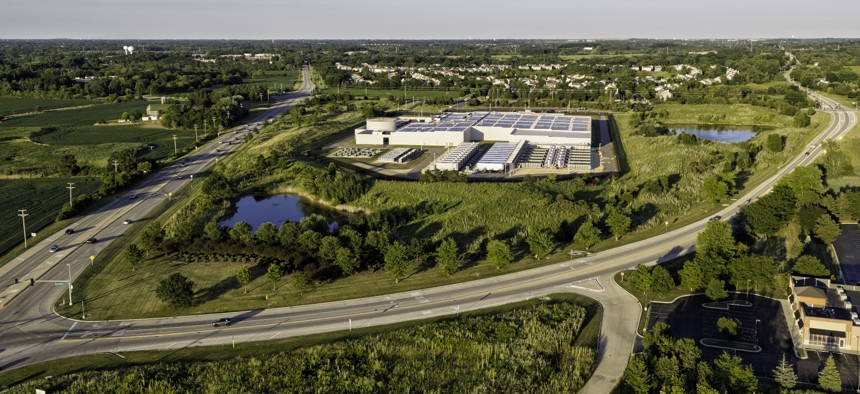
Many new data centers may not be located in completely rural areas, either. Bonomo noted that some satellite images of construction sites may show something that is “basically a field,” but may only be 20 or 30 minutes away from a city center so they can draw on that infrastructure, which could impact residents.

“Even if it looks completely rural, there is usually a community there that is affected,” he said. “We need to keep that in mind.”

X
This website uses cookies to enhance user experience and to analyze performance and traffic on our website. We also share information about your use of our site with our social media, advertising and analytics partners. Learn More / Do Not Sell My Personal Information
Accept Cookies
X
Cookie Preferences Cookie List

Do Not Sell My Personal Information

When you visit our website, we store cookies on your browser to collect information. The information collected might relate to you, your preferences or your device, and is mostly used to make the site work as you expect it to and to provide a more personalized web experience. However, you can choose not to allow certain types of cookies, which may impact your experience of the site and the services we are able to offer. Click on the different category headings to find out more and change our default settings according to your preference. You cannot opt-out of our First Party Strictly Necessary Cookies as they are deployed in order to ensure the proper functioning of our website (such as prompting the cookie banner and remembering your settings, to log into your account, to redirect you when you log out, etc.). For more information about the First and Third Party Cookies used please follow this link.

Allow All Cookies

Manage Consent Preferences

Strictly Necessary Cookies - Always Active

We do not allow you to opt-out of our certain cookies, as they are necessary to ensure the proper functioning of our website (such as prompting our cookie banner and remembering your privacy choices) and/or to monitor site performance. These cookies are not used in a way that constitutes a “sale” of your data under the CCPA. You can set your browser to block or alert you about these cookies, but some parts of the site will not work as intended if you do so. You can usually find these settings in the Options or Preferences menu of your browser. Visit www.allaboutcookies.org to learn more.

Sale of Personal Data, Targeting & Social Media Cookies

Under the California Consumer Privacy Act, you have the right to opt-out of the sale of your personal information to third parties. These cookies collect information for analytics and to personalize your experience with targeted ads. You may exercise your right to opt out of the sale of personal information by using this toggle switch. If you opt out we will not be able to offer you personalised ads and will not hand over your personal information to any third parties. Additionally, you may contact our legal department for further clarification about your rights as a California consumer by using this Exercise My Rights link

If you have enabled privacy controls on your browser (such as a plugin), we have to take that as a valid request to opt-out. Therefore we would not be able to track your activity through the web. This may affect our ability to personalize ads according to your preferences.

Targeting cookies may be set through our site by our advertising partners. They may be used by those companies to build a profile of your interests and show you relevant adverts on other sites. They do not store directly personal information, but are based on uniquely identifying your browser and internet device. If you do not allow these cookies, you will experience less targeted advertising.

Social media cookies are set by a range of social media services that we have added to the site to enable you to share our content with your friends and networks. They are capable of tracking your browser across other sites and building up a profile of your interests. This may impact the content and messages you see on other websites you visit. If you do not allow these cookies you may not be able to use or see these sharing tools.

If you want to opt out of all of our lead reports and lists, please submit a privacy request at our Do Not Sell page.

Save Settings
Cookie Preferences Cookie List

Cookie List

A cookie is a small piece of data (text file) that a website – when visited by a user – asks your browser to store on your device in order to remember information about you, such as your language preference or login information. Those cookies are set by us and called first-party cookies. We also use third-party cookies – which are cookies from a domain different than the domain of the website you are visiting – for our advertising and marketing efforts. More specifically, we use cookies and other tracking technologies for the following purposes:

Strictly Necessary Cookies

We do not allow you to opt-out of our certain cookies, as they are necessary to ensure the proper functioning of our website (such as prompting our cookie banner and remembering your privacy choices) and/or to monitor site performance. These cookies are not used in a way that constitutes a “sale” of your data under the CCPA. You can set your browser to block or alert you about these cookies, but some parts of the site will not work as intended if you do so. You can usually find these settings in the Options or Preferences menu of your browser. Visit www.allaboutcookies.org to learn more.

Functional Cookies

We do not allow you to opt-out of our certain cookies, as they are necessary to ensure the proper functioning of our website (such as prompting our cookie banner and remembering your privacy choices) and/or to monitor site performance. These cookies are not used in a way that constitutes a “sale” of your data under the CCPA. You can set your browser to block or alert you about these cookies, but some parts of the site will not work as intended if you do so. You can usually find these settings in the Options or Preferences menu of your browser. Visit www.allaboutcookies.org to learn more.

Performance Cookies

We do not allow you to opt-out of our certain cookies, as they are necessary to ensure the proper functioning of our website (such as prompting our cookie banner and remembering your privacy choices) and/or to monitor site performance. These cookies are not used in a way that constitutes a “sale” of your data under the CCPA. You can set your browser to block or alert you about these cookies, but some parts of the site will not work as intended if you do so. You can usually find these settings in the Options or Preferences menu of your browser. Visit www.allaboutcookies.org to learn more.

Sale of Personal Data

We also use cookies to personalize your experience on our websites, including by determining the most relevant content and advertisements to show you, and to monitor site traffic and performance, so that we may improve our websites and your experience. You may opt out of our use of such cookies (and the associated “sale” of your Personal Information) by using this toggle switch. You will still see some advertising, regardless of your selection. Because we do not track you across different devices, browsers and GEMG properties, your selection will take effect only on this browser, this device and this website.

Social Media Cookies

We also use cookies to personalize your experience on our websites, including by determining the most relevant content and advertisements to show you, and to monitor site traffic and performance, so that we may improve our websites and your experience. You may opt out of our use of such cookies (and the associated “sale” of your Personal Information) by using this toggle switch. You will still see some advertising, regardless of your selection. Because we do not track you across different devices, browsers and GEMG properties, your selection will take effect only on this browser, this device and this website.

Targeting Cookies

We also use cookies to personalize your experience on our websites, including by determining the most relevant content and advertisements to show you, and to monitor site traffic and performance, so that we may improve our websites and your experience. You may opt out of our use of such cookies (and the associated “sale” of your Personal Information) by using this toggle switch. You will still see some advertising, regardless of your selection. Because we do not track you across different devices, browsers and GEMG properties, your selection will take effect only on this browser, this device and this website.