DHS expanding citizenship system for voter verification, despite concerns about potential disenfranchisement
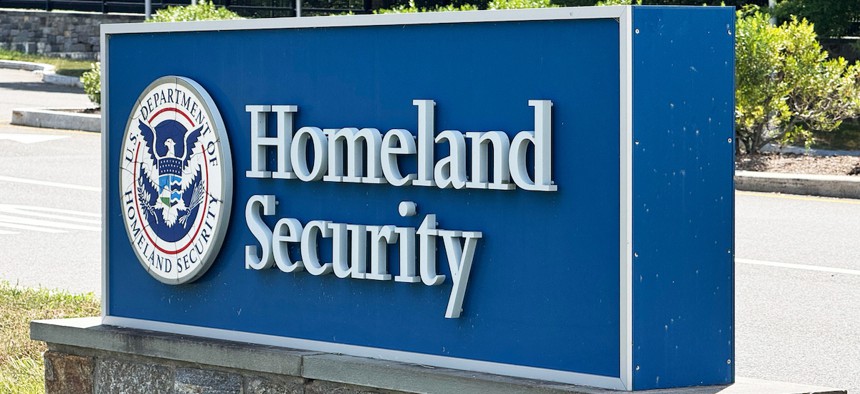
Westy72/Getty Images


Twenty-six states are in line to use a revamped DHS system to check their voter rolls for non-citizens, although the network has raised concerns about privacy and accuracy — including if it could kick eligible voters off the rolls.

The Trump administration is pushing forward in its effort to build a searchable national citizenship system.

The Department of Homeland Security says the revamped system can help enforce laws that only U.S. citizens can vote in federal elections, although experts worry that it threatens Americans’ privacy and could potentially disenfranchise legitimate voters.

New DHS regulatory documents detail how the network gathers information from various government datasets, including passport records, driver's license databases and Social Security files. 

In April, DHS announced that it would be overhauling the system with the Department of Government Efficiency after President Donald Trump issued executive orders pushing DHS and the Social Security Administration to share data.

Since then, DHS connected Social Security numbers to the system — called SAVE, or the Systematic Alien Verification for Entitlements. It has also enabled bulk searches and eliminated fees for state and local agencies. 

Over 46 million voters have been run through SAVE, and 26 states are using or are planning to use it for voter verification, DHS said in early November. 

Some state voting officials have celebrated changes. Texas Secretary of State Jane Nelson has called free access to SAVE a “game changer,” but there is no evidence of large numbers of non-citizens widely voting in American elections — it’s something that only happens in “vanishingly small numbers,” research has found.

Louisiana only found 390 suspected non-citizens on its voter rolls after running them through SAVE. Those people could have also been flagged due to errors or bad information, the state's top election official has said. 

SAVE was first created to verify the immigration status of immigrants, non-citizens and certain naturalized and derived U.S. citizens applying for benefits and licenses. The new DHS regulatory filings add voter registration and voter list maintenance as regular uses of the system, which now also covers U.S. citizens writ large. 

Having a single citizenship system on Americans is “unprecedented,” Cody Venzke, senior policy counsel at the American Civil Liberties Union, told Nextgov/FCW.

“Once you’ve built this sort of centralized pillar of surveillance, it’s really hard to roll it back,” Venzke said, noting the potential for linking identifiers from SAVE with information on a person’s political donations or government benefits.

The changes to the DHS system come as the Justice Department has also asked states to turn over voter rolls and other data. DHS can share SAVE data with DOJ and SSA, across DHS and with other agencies doing “audits” of federal programs run by states, the new system of records notice says.

The regulatory documents also detail how SAVE is now scouring additional data sources from SSA, the State Department and elsewhere — and ingesting that data. SAVE “will maintain and process” information like names, dates of birth and Social Security numbers of U.S. citizens provided by agencies using the network, the new privacy impact assessment states. 

Still, there are some blind spots within the system.

SAVE can now check information submitted by users against SSA’s death database and files of Social Security numbers. That covers most U.S.-born individuals, and DHS records include naturalized citizens. But other U.S. citizens may not be in the data. 

SSA’s data isn’t a definitive record of citizens, the agency has said. The agency didn’t start recording citizenship status until 1981, and people don’t have to report a change in their immigration status to SSA unless they’re getting benefits from the agency.

Individuals with what’s called “acquired citizenship” — such as people who become citizens as children of naturalized parents or are born to U.S. citizens in a foreign country — may not show up in DHS databases, either, unless they applied for a citizenship certificate with USCIS.

States can’t take people off voting rolls based on a no-match from SSA without doing additional verification, and they’re supposed to do additional verification for any initial result other than “U.S. citizen,” DHS says

States also have to give individuals a chance to correct their records before they are taken off voter rolls if they are identified as being something other than a U.S. citizen, according to the department. 

Still, mistakes could lead to legitimate voters being taken off the rolls or applicants to government benefits being wrongly denied, critics say. 

In Texas, 2,724 people flagged by SAVE have only 30 days to hand over proof of citizenship before they’re taken off the rolls, state officials said in late October after running their voter registration list through the system. That 2,000-plus is still only 0.01% of Texas voters.

Verifying citizenship is a good idea, but existing solutions are more secure and accurate than SAVE, said Tim Harper, a senior policy analyst focused on elections at the Center for Democracy and Technology.

Investigations into voting rolls also run the risk of being politicized by state attorneys general wanting to show that they’re tough on crime, said Harper, as Republicans — including Trump himself — have spread baseless claims about migrants voting.

“That poses a significant risk of spreading false information that many people are falsely registered to vote or illegally registered to vote when that is not the case,” he added.

There’s also the impact on individuals flagged by SAVE, who could be subject to an investigation or questioned by authorities, said Harper.

DHS says that SAVE can’t be used for non-criminal immigration enforcement, but the department lists a broad list of ways it can be used, including for “national security,” “law enforcement” and “immigration” functions.

DHS filed the regulatory documents after a lawsuit alleged it had violated the Privacy Act in revamping SAVE. It is accepting comments on the systems of records notice for SAVE through Dec. 1. 

“This is another example of a long-running pattern by the Trump administration of consolidating databases in violation of the Privacy Act and in ways that pose a threat to privacy, and in this case, also voting rights,” John Davisson, senior counsel at the Electronic Privacy Information Center, which is a plaintiff in the case, told Nextgov/FCW.

The system has been scaled and added to largely without public notice or participation, or input from Congress, said Davisson. Questions about how SAVE works and what it does with data put into it have given some state voting officials pause so far, although it's not yet clear if the new regulatory filings may change their minds. 

In a statement to Nextgov/FCW, a DHS spokesperson said "USCIS remains dedicated to securing the nation’s electoral process — by allowing states to efficiently verify voter eligibility, we are reinforcing the principle that America’s elections are reserved exclusively for American citizens."

The department previously argued in court filings that plaintiffs haven’t been able to show any voters being disenfranchised due to SAVE. 

“We encourage all federal, state, and local agencies to use the SAVE program,” USCIS spokesman Matthew Tragesser said in a recent statement when DHS announced that SAVE could run searches using the last four digits of a Social Security number.

Editor's note: This article has been updated to include comment from DHS.

If you have a tip you'd like to share, Natalie Alms can be securely contacted at nalms.41 on Signal.

NEXT STORY: Most states don’t disclose which companies get data center incentives, report finds

X
This website uses cookies to enhance user experience and to analyze performance and traffic on our website. We also share information about your use of our site with our social media, advertising and analytics partners. Learn More / Do Not Sell My Personal Information
Accept Cookies
X
Cookie Preferences Cookie List

Do Not Sell My Personal Information

When you visit our website, we store cookies on your browser to collect information. The information collected might relate to you, your preferences or your device, and is mostly used to make the site work as you expect it to and to provide a more personalized web experience. However, you can choose not to allow certain types of cookies, which may impact your experience of the site and the services we are able to offer. Click on the different category headings to find out more and change our default settings according to your preference. You cannot opt-out of our First Party Strictly Necessary Cookies as they are deployed in order to ensure the proper functioning of our website (such as prompting the cookie banner and remembering your settings, to log into your account, to redirect you when you log out, etc.). For more information about the First and Third Party Cookies used please follow this link.

Allow All Cookies

Manage Consent Preferences

Strictly Necessary Cookies - Always Active

We do not allow you to opt-out of our certain cookies, as they are necessary to ensure the proper functioning of our website (such as prompting our cookie banner and remembering your privacy choices) and/or to monitor site performance. These cookies are not used in a way that constitutes a “sale” of your data under the CCPA. You can set your browser to block or alert you about these cookies, but some parts of the site will not work as intended if you do so. You can usually find these settings in the Options or Preferences menu of your browser. Visit www.allaboutcookies.org to learn more.

Sale of Personal Data, Targeting & Social Media Cookies

Under the California Consumer Privacy Act, you have the right to opt-out of the sale of your personal information to third parties. These cookies collect information for analytics and to personalize your experience with targeted ads. You may exercise your right to opt out of the sale of personal information by using this toggle switch. If you opt out we will not be able to offer you personalised ads and will not hand over your personal information to any third parties. Additionally, you may contact our legal department for further clarification about your rights as a California consumer by using this Exercise My Rights link

If you have enabled privacy controls on your browser (such as a plugin), we have to take that as a valid request to opt-out. Therefore we would not be able to track your activity through the web. This may affect our ability to personalize ads according to your preferences.

Targeting cookies may be set through our site by our advertising partners. They may be used by those companies to build a profile of your interests and show you relevant adverts on other sites. They do not store directly personal information, but are based on uniquely identifying your browser and internet device. If you do not allow these cookies, you will experience less targeted advertising.

Social media cookies are set by a range of social media services that we have added to the site to enable you to share our content with your friends and networks. They are capable of tracking your browser across other sites and building up a profile of your interests. This may impact the content and messages you see on other websites you visit. If you do not allow these cookies you may not be able to use or see these sharing tools.

If you want to opt out of all of our lead reports and lists, please submit a privacy request at our Do Not Sell page.

Save Settings
Cookie Preferences Cookie List

Cookie List

A cookie is a small piece of data (text file) that a website – when visited by a user – asks your browser to store on your device in order to remember information about you, such as your language preference or login information. Those cookies are set by us and called first-party cookies. We also use third-party cookies – which are cookies from a domain different than the domain of the website you are visiting – for our advertising and marketing efforts. More specifically, we use cookies and other tracking technologies for the following purposes:

Strictly Necessary Cookies

We do not allow you to opt-out of our certain cookies, as they are necessary to ensure the proper functioning of our website (such as prompting our cookie banner and remembering your privacy choices) and/or to monitor site performance. These cookies are not used in a way that constitutes a “sale” of your data under the CCPA. You can set your browser to block or alert you about these cookies, but some parts of the site will not work as intended if you do so. You can usually find these settings in the Options or Preferences menu of your browser. Visit www.allaboutcookies.org to learn more.

Functional Cookies

We do not allow you to opt-out of our certain cookies, as they are necessary to ensure the proper functioning of our website (such as prompting our cookie banner and remembering your privacy choices) and/or to monitor site performance. These cookies are not used in a way that constitutes a “sale” of your data under the CCPA. You can set your browser to block or alert you about these cookies, but some parts of the site will not work as intended if you do so. You can usually find these settings in the Options or Preferences menu of your browser. Visit www.allaboutcookies.org to learn more.

Performance Cookies

We do not allow you to opt-out of our certain cookies, as they are necessary to ensure the proper functioning of our website (such as prompting our cookie banner and remembering your privacy choices) and/or to monitor site performance. These cookies are not used in a way that constitutes a “sale” of your data under the CCPA. You can set your browser to block or alert you about these cookies, but some parts of the site will not work as intended if you do so. You can usually find these settings in the Options or Preferences menu of your browser. Visit www.allaboutcookies.org to learn more.

Sale of Personal Data

We also use cookies to personalize your experience on our websites, including by determining the most relevant content and advertisements to show you, and to monitor site traffic and performance, so that we may improve our websites and your experience. You may opt out of our use of such cookies (and the associated “sale” of your Personal Information) by using this toggle switch. You will still see some advertising, regardless of your selection. Because we do not track you across different devices, browsers and GEMG properties, your selection will take effect only on this browser, this device and this website.

Social Media Cookies

We also use cookies to personalize your experience on our websites, including by determining the most relevant content and advertisements to show you, and to monitor site traffic and performance, so that we may improve our websites and your experience. You may opt out of our use of such cookies (and the associated “sale” of your Personal Information) by using this toggle switch. You will still see some advertising, regardless of your selection. Because we do not track you across different devices, browsers and GEMG properties, your selection will take effect only on this browser, this device and this website.

Targeting Cookies

We also use cookies to personalize your experience on our websites, including by determining the most relevant content and advertisements to show you, and to monitor site traffic and performance, so that we may improve our websites and your experience. You may opt out of our use of such cookies (and the associated “sale” of your Personal Information) by using this toggle switch. You will still see some advertising, regardless of your selection. Because we do not track you across different devices, browsers and GEMG properties, your selection will take effect only on this browser, this device and this website.