
Oklahoma launches statewide effort to use libraries to close the digital divide
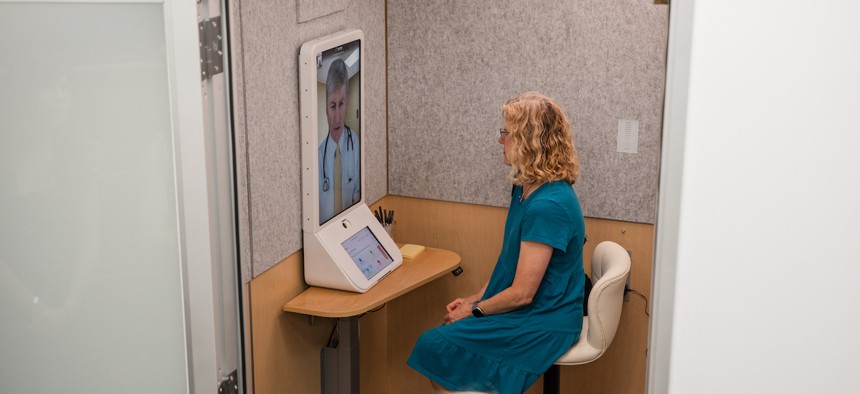
Photo courtesy of the Oklahoma Broadband Office





While many local and county governments have launched similar projects to improve digital equity, officials say Oklahoma is the first in the nation to do so statewide.
The Oklahoma Broadband Office is partnering with libraries to complete last-mile projects designed to increase residents’ access to digital services in the nation’s first statewide effort of its sort, one official says.
OBO is investing $14.5 million in a community access portal initiative to install pods in municipal libraries where residents can privately use tablets and monitors for their personal use, state officials announced last month. The initiative is funded through the American Rescue Plan’s Capital Projects Fund, which recipients must expend by December 2026.
The Capital Projects Fund is a COVID-era federal program aimed to help state and local governments close the digital divide through capital improvements that expand communities' access to work opportunities, educational services, telehealth and other use cases reliant on digital connectivity.
For Oklahoma, particularly its rural communities, libraries are an ideal pathway to leverage the federal funds and enhance peoples’ ability to use tech-based services that they lack access to at home, Mike Sanders, director of the Oklahoma Broadband Office, told Route Fifty.
“Libraries in our state, and quite frankly in any state, are a trusted institution,” he said. “We knew that [offering] more ability and opportunities for people in such places … was going to be a win-win,” he explained.
OBO plans to install up to 175 community access portals in total. To date, 40 libraries are participating in the initiative across 32 counties, according to Sanders.
The first community access portals went live last month in Kingfisher, Oklahoma, located about 50 miles northwest of Oklahoma City. The Kingfisher Memorial Library received funding to install two pods at the facility, one of which was designed to be compliant with the Americans with Disabilities Act, Library Director Michael Tautkus told Route Fifty.
For users who are unfamiliar with newer technology or people who previously had to travel hours to see their doctor, the community access portals present another opportunity to improve their quality of life, work or education at no cost, he explained.
The pod’s tablet also includes an artificial intelligence-enabled tool that can help users navigate the device menus and prompts, Tautkus said.
OBO will continue to receive support from its technology partner, Ready.net, to install and maintain the community access portals and train library staff for the next five years, Sanders said. The agency will also monitor residents’ interactions with the portals and time spent using the devices.
Offering more services like the community access portals is a natural next step for libraries expanding their scope of amenities, Sanders said. Several libraries across the U.S. already provide non-traditional equipment like kitchenware, cleaning supplies and museum passes.
Libraries across the U.S. have recognized their increasing role in helping the general public adapt to a digital world. San Jose, California, launched an AI center earlier this year at a local library where people can access AI education and training tools. Osceola County, Florida, opened a “library without books” late last year for visitors to access digital resources like coding and AI learning labs.
In 2024, the Illinois courts system launched an initiative with local libraries through which residents could use Chromebooks and other devices to navigate the legal system, such as remotely attending court appearances or accessing legal documents. The same year, one library in Hartford, Kentucky, began running a program for youths and teens to learn about mental health management.
For OBO and the state’s libraries, “what we want to do is make it easier for individuals and communities to connect with a doctor, with a teacher, with a future employer, maybe their grandkids,” Sanders said, because, "libraries are doing a lot more than just checking out books.”