
Alabama lawmakers plan bills regulating license plate readers in coming session
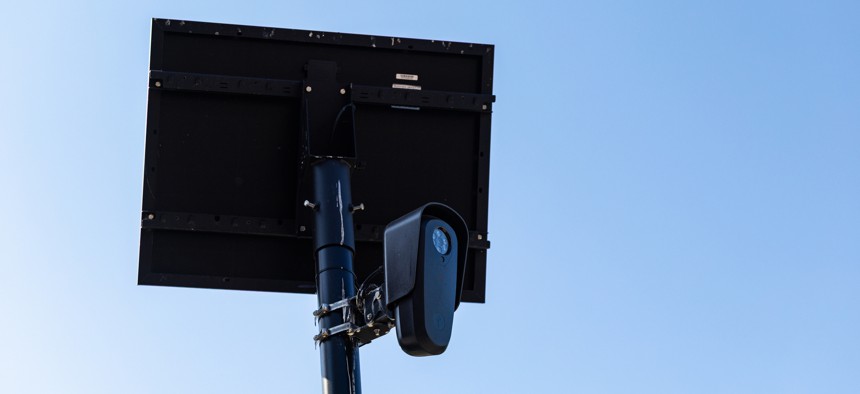
halbergman via Getty Images


The legislation would sanction law enforcement for misusing the data taken from license plate readers and delete data after some time passes.

This article was originally published by Alabama Reflector.

State lawmakers plan to file legislation addressing privacy concerns over license plate readers in the coming legislative session.

Both Rep. Ron Bolton, R-Northport, and Sen. Arthur Orr, R-Decatur, said their bills will place time limits on data collected by plate readers; require audits of the database that tracks vehicle information and establish penalties for officers who abuse their authority when they obtain information.

“We have got to protect people’s rights, but also we are using the tools that are available for law enforcement to solve crimes,” Bolton said in an interview Wednesday. “I have got an ever-increasing list of things that have been solved, very important things.”

Flock, an Atlanta-based company that manufactures license plate readers, said in a statement Wednesday that the technology provides an important tool to address public safety and signaled it would support regulations.

“We support thoughtful legislation and strong privacy, transparency, and accountability guardrails that ensure technology is used responsibly while preserving law enforcement’s ability to use effective tools to keep people safe,” the company said.

License plate readers capture an image of a vehicle’s license plate, then convert it to text. The system can then record the plate number of the vehicle as well as the date and location.

Privacy advocates have become increasingly concerned as the technology’s capabilities expand to allow it to retain vehicles’ location histories. That information can then be used to trace where people have been.

Several law enforcement officers have been charged with using data obtained by license plate readers to surveil current and former romantic partners. The system has also misidentified people. In Wisconsin, a person was pulled over at gunpoint after the camera flagged the vehicle in a homicide case. Milwaukee police said the incident was caused by an employee who failed to remove an alert on the vehicle and was not because of the system.

Bolton and Orr said they proposed the legislation to address some of the concerns.

“It really allows law enforcement to use the technology in a very narrow manner, and it doesn’t inhibit them from doing their job,” Orr said in an interview Wednesday.

The bills are still being finalized, but both legislators said the bills would include sanctions for law enforcement officers who abuse the system.

“There are going to be levels of criminal offenses depending on the severity of the violation,” Bolton said.

Both bills will also require audits of the system periodically, but neither Bolton nor Orr outlined who would perform the audits or the process. Orr said law enforcement officials would need authorization from a court before using the system, unless the situation is urgent.

“You would have to have a judicial warrant,” Orr said. “If you are coming from out of state, let’s say Mississippi, and you want to access our cameras in Alabama, you would need a warrant, domesticated by an Alabama judge.”

Both bills also limit the time the system retains license plate data before automatically deleting it. Bolton said he is still speaking with people to determine the appropriate timeframe. Orr said his bill allows the data to be retained between one to three months.

For their part, law enforcement said they are willing to accept regulations imposed by lawmakers.

“We have no issues with regulation, creating better regulation, creating more rules, or even holding the data,” said Michael Moore, president of the Alabama Association of Chiefs of Police and chief of the Enterprise Police Department, in an interview Wednesday. “We completely understand that. There has got to be a legitimate length that assists us on both sides.”

Moore said he believes that having access to the data for 90 days would be reasonable. The data could then be retained for two years but would require a court order or warrant to be able to access the information.

Many of the elements proposed by Bolton and Orr are part of the recommendations from the Institute for Justice, a nonpartisan, libertarian-leaning public interest law firm. The firm is representing residents in two federal lawsuits who are challenging the use of license plate readers.

The organization advocates time limits for keeping the data, requiring police to obtain a warrant or receive permission from the court for access, and ensure a record is created each time a person reviews information.

“At the end of the day, the Fourth Amendment is the balance,” said Robert Frommer, senior attorney for the Institute for Justice, in an interview Tuesday. “The idea is that we do not want officers in the field to have this roving power. And we want to maintain a degree of privacy and security that people had at the time of the founding.”

X
This website uses cookies to enhance user experience and to analyze performance and traffic on our website. We also share information about your use of our site with our social media, advertising and analytics partners. Learn More / Do Not Sell My Personal Information
Accept Cookies
X
Cookie Preferences Cookie List

Do Not Sell My Personal Information

When you visit our website, we store cookies on your browser to collect information. The information collected might relate to you, your preferences or your device, and is mostly used to make the site work as you expect it to and to provide a more personalized web experience. However, you can choose not to allow certain types of cookies, which may impact your experience of the site and the services we are able to offer. Click on the different category headings to find out more and change our default settings according to your preference. You cannot opt-out of our First Party Strictly Necessary Cookies as they are deployed in order to ensure the proper functioning of our website (such as prompting the cookie banner and remembering your settings, to log into your account, to redirect you when you log out, etc.). For more information about the First and Third Party Cookies used please follow this link.

Allow All Cookies

Manage Consent Preferences

Strictly Necessary Cookies - Always Active

We do not allow you to opt-out of our certain cookies, as they are necessary to ensure the proper functioning of our website (such as prompting our cookie banner and remembering your privacy choices) and/or to monitor site performance. These cookies are not used in a way that constitutes a “sale” of your data under the CCPA. You can set your browser to block or alert you about these cookies, but some parts of the site will not work as intended if you do so. You can usually find these settings in the Options or Preferences menu of your browser. Visit www.allaboutcookies.org to learn more.

Sale of Personal Data, Targeting & Social Media Cookies

Under the California Consumer Privacy Act, you have the right to opt-out of the sale of your personal information to third parties. These cookies collect information for analytics and to personalize your experience with targeted ads. You may exercise your right to opt out of the sale of personal information by using this toggle switch. If you opt out we will not be able to offer you personalised ads and will not hand over your personal information to any third parties. Additionally, you may contact our legal department for further clarification about your rights as a California consumer by using this Exercise My Rights link

If you have enabled privacy controls on your browser (such as a plugin), we have to take that as a valid request to opt-out. Therefore we would not be able to track your activity through the web. This may affect our ability to personalize ads according to your preferences.

Targeting cookies may be set through our site by our advertising partners. They may be used by those companies to build a profile of your interests and show you relevant adverts on other sites. They do not store directly personal information, but are based on uniquely identifying your browser and internet device. If you do not allow these cookies, you will experience less targeted advertising.

Social media cookies are set by a range of social media services that we have added to the site to enable you to share our content with your friends and networks. They are capable of tracking your browser across other sites and building up a profile of your interests. This may impact the content and messages you see on other websites you visit. If you do not allow these cookies you may not be able to use or see these sharing tools.

If you want to opt out of all of our lead reports and lists, please submit a privacy request at our Do Not Sell page.

Save Settings
Cookie Preferences Cookie List

Cookie List

A cookie is a small piece of data (text file) that a website – when visited by a user – asks your browser to store on your device in order to remember information about you, such as your language preference or login information. Those cookies are set by us and called first-party cookies. We also use third-party cookies – which are cookies from a domain different than the domain of the website you are visiting – for our advertising and marketing efforts. More specifically, we use cookies and other tracking technologies for the following purposes:

Strictly Necessary Cookies

We do not allow you to opt-out of our certain cookies, as they are necessary to ensure the proper functioning of our website (such as prompting our cookie banner and remembering your privacy choices) and/or to monitor site performance. These cookies are not used in a way that constitutes a “sale” of your data under the CCPA. You can set your browser to block or alert you about these cookies, but some parts of the site will not work as intended if you do so. You can usually find these settings in the Options or Preferences menu of your browser. Visit www.allaboutcookies.org to learn more.

Functional Cookies

We do not allow you to opt-out of our certain cookies, as they are necessary to ensure the proper functioning of our website (such as prompting our cookie banner and remembering your privacy choices) and/or to monitor site performance. These cookies are not used in a way that constitutes a “sale” of your data under the CCPA. You can set your browser to block or alert you about these cookies, but some parts of the site will not work as intended if you do so. You can usually find these settings in the Options or Preferences menu of your browser. Visit www.allaboutcookies.org to learn more.

Performance Cookies

We do not allow you to opt-out of our certain cookies, as they are necessary to ensure the proper functioning of our website (such as prompting our cookie banner and remembering your privacy choices) and/or to monitor site performance. These cookies are not used in a way that constitutes a “sale” of your data under the CCPA. You can set your browser to block or alert you about these cookies, but some parts of the site will not work as intended if you do so. You can usually find these settings in the Options or Preferences menu of your browser. Visit www.allaboutcookies.org to learn more.

Sale of Personal Data

We also use cookies to personalize your experience on our websites, including by determining the most relevant content and advertisements to show you, and to monitor site traffic and performance, so that we may improve our websites and your experience. You may opt out of our use of such cookies (and the associated “sale” of your Personal Information) by using this toggle switch. You will still see some advertising, regardless of your selection. Because we do not track you across different devices, browsers and GEMG properties, your selection will take effect only on this browser, this device and this website.

Social Media Cookies

We also use cookies to personalize your experience on our websites, including by determining the most relevant content and advertisements to show you, and to monitor site traffic and performance, so that we may improve our websites and your experience. You may opt out of our use of such cookies (and the associated “sale” of your Personal Information) by using this toggle switch. You will still see some advertising, regardless of your selection. Because we do not track you across different devices, browsers and GEMG properties, your selection will take effect only on this browser, this device and this website.

Targeting Cookies

We also use cookies to personalize your experience on our websites, including by determining the most relevant content and advertisements to show you, and to monitor site traffic and performance, so that we may improve our websites and your experience. You may opt out of our use of such cookies (and the associated “sale” of your Personal Information) by using this toggle switch. You will still see some advertising, regardless of your selection. Because we do not track you across different devices, browsers and GEMG properties, your selection will take effect only on this browser, this device and this website.