Local Tennessee officials are putting data center plans on ice to consider regulations
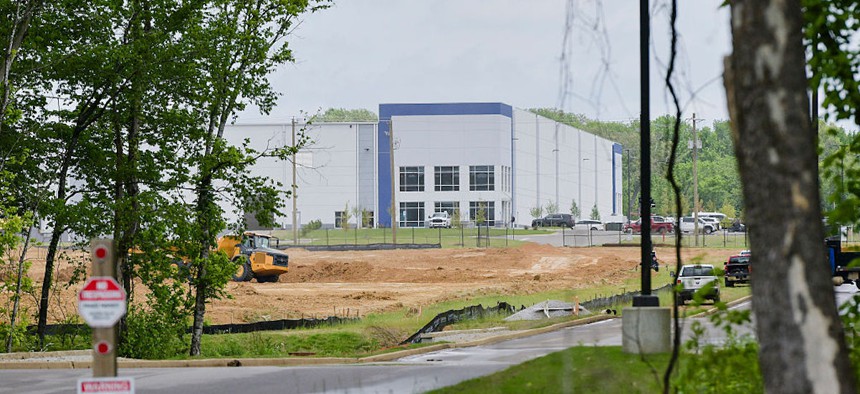
The entrance to an xAI data center under construction on Tulane Road in Memphis, Tennessee, on April 25, 2025.

The entrance to an xAI data center under construction on Tulane Road in Memphis, Tennessee, on April 25, 2025. Brandon Dill for The Washington Post via Getty Images

Two rural areas paused development for at least a year; Nashville also contemplates moratorium amid public pushback.

This story was originally published by the Tennessee Lookout.

Local governments in Tennessee are pausing data center development after outcry from residents while officials determine how to regulate the resource-intensive facilities.

McMinnville and Coffee County, both rural areas southeast of Nashville, each unanimously passed moratoria on data centers on June 9, with other moratoria votes expected in Warren and Knox counties on June 22. In Nashville, more than 150 people attended a Planning Commission meeting to speak against planned data center developments near the Nashville Zoo and Fisk University. The capital city’s council passed a moratorium bill on its first of three readings on June 9, and a bill that would codify restrictions and requirements for data centers will next be considered by the Planning Commission on June 25.

McMinnville, Tennessee resident Kai Sage is one of several locals who recently took up the mantle against a planned 25 megawatt data center that would be located near her home and other residential neighborhoods.

“I think that they’re aiming these at … these smaller places in Tennessee because our land is so cheap, our laws are so lenient, the income isn’t taxed like it is anywhere else, and generally they’re just not going to get a lot of pushback, because a lot of people don’t know what’s going on, and they don’t know anything about this,” Sage said. “Luckily, a lot of people around here were informed, so as soon as we alerted people about this, people quickly reacted.”

Data centers power modern communications, commerce, entertainment and more, and artificial intelligence and cloud computing are driving development of the facilities throughout the country.

Sixty-one data centers are operating or under construction in Tennessee, including 26 in the Nashville area, 13 in Memphis and 11 in Knoxville, according to market intelligence company Data Center Map.

Nearly 90% of existing data centers nationwide are located in urban areas, according to an April report from the Pew Research Center, but 67% of planned centers are in rural areas, many of which don’t have any data centers yet. The South holds the top rank for both the country’s existing number of data centers and planned data centers, Pew reports.

The International Code Council, a nonprofit organization sponsored by building trades that publishes codes and building standards, launched its own committee this month to shape guidelines specific to data centers.

I think that they’re aiming these at … these smaller places in Tennessee because our land is so cheap, our laws are so lenient, the income isn’t taxed like it is anywhere else, and generally they’re just not going to get a lot of pushback, because a lot of people don’t know what’s going on, and they don’t know anything about this.

– Kai Sage, McMinnville resident

Proponents say the centers can be sources of tax revenue, but detractors cite concerns about immense resource requirements — a large data center can use enough power and water to run an entire city — and environmental impacts.

Elon Musk’s xAI currently faces two lawsuits over air pollution and harmful, “near-constant” noise related to its Memphis-area data centers and the gas turbines that power them.

McMinnville Passes 18-Month Moratorium

In Warren County, the McMinnville Board of Mayor and Aldermen unanimously passed an 18-month moratorium on data center permitting on June 9, buying time for local officials to consider “electrical grid capacity, water and stormwater impacts, environmental and public health concerns, noise and community fit,” McMinnville City Administrator Nolan Ming said in a social media post after the vote.

“A moratorium is not a permanent ban. It is a responsible time-out,” Ming said. “It gives us time to study the issues carefully, update our zoning and land use regulations, and make sure any future decisions are based on solid information, not rushed approvals.”

The proposed 96,064-square-foot Hixson Data Center would have a 25 megawatt output powered by natural gas and diesel generators, according to the project’s website, which estimates an opening date in early 2028.

Alex Hixson, the center’s development director and a McMinnville resident, did not respond to questions about plans for the project after the moratorium vote. Hixson told WKRN earlier this month that he loves the area and wants to “do something good for it.”

Sage said the 14,000-resident city known for its hundreds of plant nurseries is not built for this type of industry, citing concerns over electricity demand, water use and pollution and noise. Now that McMinnville’s moratorium is in place, Sage plans to reach out to neighboring counties and cities that may also want to advocate for moratoriums or local regulations. Her primary goal is to keep data centers out of McMinnville and Warren County.

“We can’t just say in a law, these data centers are banned, right? That wouldn’t hold up in court,” Sage said, but local governments can create codes that make it more difficult or less appealing for data centers to develop there.

Elon Musk’s company, xAI, is building a massive supercomputer in Memphis, Tennessee, called “Colossus,” in Memphis, Tennessee. The project has spurred lawsuits and concerns about the environmental and health impacts of the data center. (Photo: Karen Pulfer Focht/Tennessee Lookout)

Tennessee Data Center Regulations Don’t Contemplate Environmental Impact

About a dozen states are considering statewide moratoria on permitting for data centers, but Tennessee is not among them. Maine’s state legislature passed the country’s first statewide moratorium on data centers, but Gov. Janet Mills vetoed the bill in April.

Tennessee legislators this year enacted a law stipulating that the owners of data centers that require at least 50 megawatts of power must pay for any infrastructure upgrades needed to produce the electricity the center needs. For reference, a large data center capable of supporting Artificial Intelligence can use more than 100 megawatts of power, or enough to support roughly 80,000 households, according to a congressional report.

Sponsors said the law is meant to protect people from larger electricity bills — utility companies are not allowed to use ratepayer funds to pay for upgrades solely associated with data centers, unless those upgrades also benefit other customers.

But the law also allows data centers to produce their own power without state or local oversight using equipment like gas turbines, something opponents say removes important guardrails protecting communities from pollution. Data centers can also purchase power from independent producers. 

Bills that would have set permit requirements for data centers or required the centers to report water, electricity and fuel usage did not garner enough support to make it to a final vote.

Tennessee Lookout is part of States Newsroom, a nonprofit news network supported by grants and a coalition of donors as a 501c(3) public charity. Tennessee Lookout maintains editorial independence. Contact Editor Holly McCall for questions: info@tennesseelookout.com.

X
This website uses cookies to enhance user experience and to analyze performance and traffic on our website. We also share information about your use of our site with our social media, advertising and analytics partners. Learn More / Do Not Sell My Personal Information
Accept Cookies
X
Cookie Preferences Cookie List

Do Not Sell My Personal Information

When you visit our website, we store cookies on your browser to collect information. The information collected might relate to you, your preferences or your device, and is mostly used to make the site work as you expect it to and to provide a more personalized web experience. However, you can choose not to allow certain types of cookies, which may impact your experience of the site and the services we are able to offer. Click on the different category headings to find out more and change our default settings according to your preference. You cannot opt-out of our First Party Strictly Necessary Cookies as they are deployed in order to ensure the proper functioning of our website (such as prompting the cookie banner and remembering your settings, to log into your account, to redirect you when you log out, etc.). For more information about the First and Third Party Cookies used please follow this link.

Allow All Cookies

Manage Consent Preferences

Strictly Necessary Cookies - Always Active

We do not allow you to opt-out of our certain cookies, as they are necessary to ensure the proper functioning of our website (such as prompting our cookie banner and remembering your privacy choices) and/or to monitor site performance. These cookies are not used in a way that constitutes a “sale” of your data under the CCPA. You can set your browser to block or alert you about these cookies, but some parts of the site will not work as intended if you do so. You can usually find these settings in the Options or Preferences menu of your browser. Visit www.allaboutcookies.org to learn more.

Sale of Personal Data, Targeting & Social Media Cookies

Under the California Consumer Privacy Act, you have the right to opt-out of the sale of your personal information to third parties. These cookies collect information for analytics and to personalize your experience with targeted ads. You may exercise your right to opt out of the sale of personal information by using this toggle switch. If you opt out we will not be able to offer you personalised ads and will not hand over your personal information to any third parties. Additionally, you may contact our legal department for further clarification about your rights as a California consumer by using this Exercise My Rights link

If you have enabled privacy controls on your browser (such as a plugin), we have to take that as a valid request to opt-out. Therefore we would not be able to track your activity through the web. This may affect our ability to personalize ads according to your preferences.

Targeting cookies may be set through our site by our advertising partners. They may be used by those companies to build a profile of your interests and show you relevant adverts on other sites. They do not store directly personal information, but are based on uniquely identifying your browser and internet device. If you do not allow these cookies, you will experience less targeted advertising.

Social media cookies are set by a range of social media services that we have added to the site to enable you to share our content with your friends and networks. They are capable of tracking your browser across other sites and building up a profile of your interests. This may impact the content and messages you see on other websites you visit. If you do not allow these cookies you may not be able to use or see these sharing tools.

If you want to opt out of all of our lead reports and lists, please submit a privacy request at our Do Not Sell page.

Save Settings
Cookie Preferences Cookie List

Cookie List

A cookie is a small piece of data (text file) that a website – when visited by a user – asks your browser to store on your device in order to remember information about you, such as your language preference or login information. Those cookies are set by us and called first-party cookies. We also use third-party cookies – which are cookies from a domain different than the domain of the website you are visiting – for our advertising and marketing efforts. More specifically, we use cookies and other tracking technologies for the following purposes:

Strictly Necessary Cookies

We do not allow you to opt-out of our certain cookies, as they are necessary to ensure the proper functioning of our website (such as prompting our cookie banner and remembering your privacy choices) and/or to monitor site performance. These cookies are not used in a way that constitutes a “sale” of your data under the CCPA. You can set your browser to block or alert you about these cookies, but some parts of the site will not work as intended if you do so. You can usually find these settings in the Options or Preferences menu of your browser. Visit www.allaboutcookies.org to learn more.

Functional Cookies

We do not allow you to opt-out of our certain cookies, as they are necessary to ensure the proper functioning of our website (such as prompting our cookie banner and remembering your privacy choices) and/or to monitor site performance. These cookies are not used in a way that constitutes a “sale” of your data under the CCPA. You can set your browser to block or alert you about these cookies, but some parts of the site will not work as intended if you do so. You can usually find these settings in the Options or Preferences menu of your browser. Visit www.allaboutcookies.org to learn more.

Performance Cookies

We do not allow you to opt-out of our certain cookies, as they are necessary to ensure the proper functioning of our website (such as prompting our cookie banner and remembering your privacy choices) and/or to monitor site performance. These cookies are not used in a way that constitutes a “sale” of your data under the CCPA. You can set your browser to block or alert you about these cookies, but some parts of the site will not work as intended if you do so. You can usually find these settings in the Options or Preferences menu of your browser. Visit www.allaboutcookies.org to learn more.

Sale of Personal Data

We also use cookies to personalize your experience on our websites, including by determining the most relevant content and advertisements to show you, and to monitor site traffic and performance, so that we may improve our websites and your experience. You may opt out of our use of such cookies (and the associated “sale” of your Personal Information) by using this toggle switch. You will still see some advertising, regardless of your selection. Because we do not track you across different devices, browsers and GEMG properties, your selection will take effect only on this browser, this device and this website.

Social Media Cookies

We also use cookies to personalize your experience on our websites, including by determining the most relevant content and advertisements to show you, and to monitor site traffic and performance, so that we may improve our websites and your experience. You may opt out of our use of such cookies (and the associated “sale” of your Personal Information) by using this toggle switch. You will still see some advertising, regardless of your selection. Because we do not track you across different devices, browsers and GEMG properties, your selection will take effect only on this browser, this device and this website.

Targeting Cookies

We also use cookies to personalize your experience on our websites, including by determining the most relevant content and advertisements to show you, and to monitor site traffic and performance, so that we may improve our websites and your experience. You may opt out of our use of such cookies (and the associated “sale” of your Personal Information) by using this toggle switch. You will still see some advertising, regardless of your selection. Because we do not track you across different devices, browsers and GEMG properties, your selection will take effect only on this browser, this device and this website.