
From dial-up to iPhones: We’re sending people home unprepared for the digital economy
Luis Diaz Devesa via Getty Images




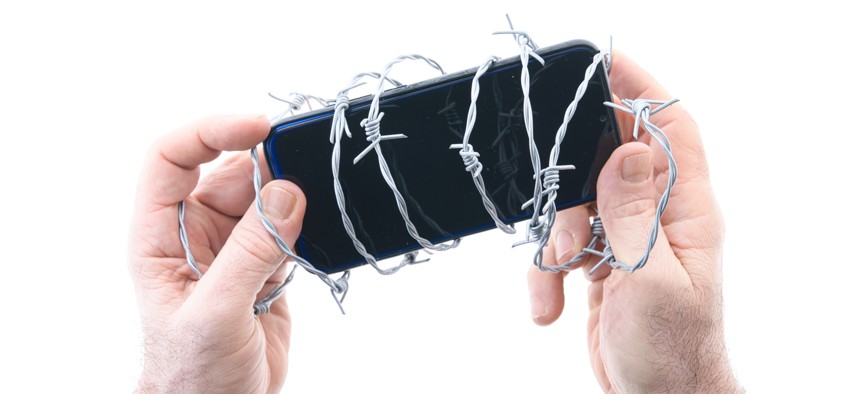
COMMENTARY | Artificial intelligence represents a new era in the digital revolution, but without proper training and help, it could pass incarcerated people by.
When I walked into prison at 17 years old in 1995, dial-up internet was the next big thing. When I walked out in 2010 at age 32, the fourth iPhone was already in people’s pockets.
Touchscreens had replaced keyboards. Job applications, government services, healthcare portals and daily communication had moved online. While I was incarcerated, the world had fundamentally transformed. Inside prison, I missed that entire digital evolution.
My first year out, I worked relentlessly: two full-time jobs and a part-time one. Despite that effort, my annual income was $24,600. I had motivation and grit, yet without digital fluency, I was missing the tools I needed to thrive in a digitized economy.
My story isn’t unique. It reflects a broader preparation gap experienced by the thousands of people who return home from incarceration each year, one that has little to do with effort or character, and everything to do with access.
Today, we’re living through another period of rapid technological change. In the early 2000s, the internet reshaped how we apply for jobs, communicate with employers and live our daily lives. Artificial intelligence is now propelling a similar transformation, so much faster and at an even greater scale, making digital fluency even more important.
Many of the people currently incarcerated are experiencing this second wave of transformation the way I experienced the first, without the tools that define it. The path to a different outcome already exists inside correctional facilities: secure tablets and technology platforms that allow incarcerated individuals to build digital literacy before they come home, ensuring they are prepared for the workforce they will actually enter, not the one that existed years ago.
Some of the most meaningful preparation doesn’t happen in classrooms or structured programs. It happens in quiet moments, alone in a cell, when someone chooses to learn. Reading. Researching. Practicing basic digital navigation. Applying for credentials. Staying connected to family. Developing habits of responsibility and focus. Avoiding trouble inside the facility.
That kind of self-directed motivation can’t be mandated, but it can be supported by access. Technology doesn’t create the will to prepare; it simply makes preparation possible for those who already want it.
Education and workforce programs inside facilities are essential, and most correctional leaders understand the importance of preparing people for life after incarceration. These programs must function within the realities of running safe and secure institutions. Technology can support that mission by expanding access to learning and skill-building without asking corrections agencies to step outside their primary role.
Technology extends access beyond physical programs. It allows preparation to continue during off-hours. And it mirrors the digital environment people will encounter the moment they return home.
Still, access alone is not enough because reentry is a system. I think of it as a quilt; each piece must connect to the next. Digital preparation inside a facility only leads to real outcomes if there is infrastructure waiting on the outside, like workforce organizations that begin engagement before release, not after; community partners who understand that housing stability and behavioral health support are prerequisites to employment; and employers who see digitally literate, credentialed candidates as assets.
For years, the conversation around reentry employment has focused almost exclusively on employer willingness. Should businesses “give someone a chance?” That question matters, yet the focus must start earlier.
Fair-chance hiring works best when there is a pipeline of people arriving prepared: digitally fluent, connected to support systems and ready to contribute on day one. Building that pipeline requires earlier investment in facilities, paired with intentional coordination across sectors.
According to the U.S. Department of Labor, formerly incarcerated people face unemployment rates exceeding 27%, higher than the national rate during the Great Depression. This statistic represents lost economic productivity, increased taxpayer costs and unnecessary public safety risks. More importantly, it reflects a preparation gap we already know how to close.
I lived through the first version of that gap. I came home to the internet revolution without the internet, and I struggled to make it. Proper preparation could have changed that, and I now spend my days trying to build awareness of this issue.
Rather than starting from scratch, we can build more intentionally on what is already working. The tools are already inside correctional facilities, and with stronger partnerships, we can turn access into real opportunity. AI is transforming the economy faster than the internet did, but this time we can respond differently. That is how we build a reentry system that meets the future, one that works better for people, employers and communities.
Saad Soliman is the National Director of TimeDone at the Alliance for Safety and Justice, where he leads national efforts to advance policy and systems change for people living with past convictions. He is a recognized leader in reentry systems, with experience spanning the U.S. Department of Justice, federal courts and national policy and advisory roles.