
INTERVIEW: Vinton G. Cerf, the Internet's voyager
Featured eBooks





When Vinton G. Cerf speaks these days of internetworking, the MCI WorldCom Inc. senior vice president is likely to be talking about the Interplanetary Channel Protocol or the Deep Space Network 20xx he's helping NASA's Jet Propulsion Laboratory conceptualize.
CERF: It's going to be tough, because it can't be done in a flash cutover. There clearly are going to be years' worth of cohabitation with IPv4. I've challenged my people to work very hard on transition strategies and testing.The IPv6 Forum has provided a fairly visible platform, but we still have a long way to go to persuade vendors they should be investing in IPv6.CERF: If you're going to run pure v6, you have to do some work. Some things have to change to operate with 128-bit addressing. There are advantages that make those changes worthwhile. Then you have the compatibility problem-how to work with the things that haven't been upgraded yet. There are all kinds of techniques for v4-to-v6 conversion. The assignment of numbers in v6 has to take into account the ability to interwork with v4.The challenge for the community that believes v6 is the right place to go is to get as much of the implementation done as we can, and to do some real interoperability testing to make sure we have compatible v6 implementations and interworkable v6 and v4 technology.CERF: We won't ever get rid of all the v4. Part of the reason is that there are people with private networks that don't feel the need to interact with anything else. It's sort of like, how long will it be before IBM Systems Network Architecture goes away? Some old stuff will still be around and still running because no one saw the need to change it, and nobody remembers how to code it anyway.CERF: ATM works by breaking things up into cells and then reassembling them. The cell disassembly-reassembly process at very high speeds is a bottleneck as you get to higher bandwidths in the backbone. On MCI WorldCom's UUNet backbone, we're into 10-Gbps links. That doesn't give you much time to break up and reassemble a packet into cells.There is absolutely no rationale for breaking up things into cells in the backbone of the network when you're running at 10 Gbps. Any reasonable-length packet will take so little time that the jitter concerns will essentially evaporate. There's no strong motivation at these very high speeds to operate a cell-based switching matrix. You're much better off using something more bit-efficient'in this case, Multi-Protocol Label Switching, the Internet's answer to cells.CERF: I wouldn't say it's broken, but I would say it's quite vulnerable, as manifested in the computers on the Net, not so much in the routers and switching systems. The most visible problem is that many of the hosts are not well secured. Many machines are configured out of the box with very little or no security at all. A lot of people don't bother doing anything because they don't know any better. They leave default passwords and other things in place to be exploited.There are complexities in configuring for security. It can introduce inconvenience for users who have to remember and change passwords or remember keys, so security and convenience are almost always at opposite ends.CERF: I've yet to find a scenario that would unleash a significant number of smart cards to form a persuasive basis for a public-key infrastructure. The problem is not just distributing the cards, it's getting all the readers for them. You have to find a situation where some business would be significantly improved by issuing smart cards. I thought maybe automated teller machines might be the path to make this happen, since people would have the [bank] smart cards so other businesses would buy readers with their PCs, and we would have the basis for PKI. But that scenario has yet to fulfill itself.CERF: If the devices do not encrypt, you have the possibility of exposing entire transactions over the air. Some wireless systems allow people to open up tunnels to the server, isolating themselves from the rest of the network, but again we don't have a consistent PKI in place.CERF: In urban areas, we'll see fiber and high-speed digital subscriber loops getting closer to homes. Cable systems will eventually improve to the point that they move fiber bandwidth closer. My sense is that wireless access has not penetrated very deeply'maybe a half-million or 1 million users. My gut feeling is it will be 2007 before we get serious penetration.CERF: Internet 2 is a healthy project run by the University Corporation for Advanced Internet Development. [MCI WorldCom's] very-high-speed Backbone Network Service is a key network for Internet 2. We've now christened it vBNS+, because our contract with the National Science Foundation is extended under different terms'NSF does not pay anything for it. We see a significant business opportunity, not only in the R&D community but also within the industry.CERF: It's a government initiative, but it's intended to provide R&D funds to the academic and research communities to develop an advanced Internet. The project is very far along. One of the things it's doing is an interplanetary Internet design, funded as part of NGI by the Defense Advanced Research Projects Agency and using some NASA facilities at the Jet Propulsion Lab.I'm working with a group of about six engineers and a larger group that meets less often to redesign the Internet Protocol to work on an interplanetary basis. We're very deep into the design, and I'm expecting to do some prototyping and testing during the summer. We'll get into serious work the following year, because we'll run an Earth-centric satellite system for a time. We hope to launch a moon mission next year, and then a couple of years later, we hope to have a Mars mission ready.CERF: Given that the round-trip time would be 40 minutes or so, we have a different set of protocols that don't look like TCP and IP to accommodate that delay.CERF: I carry a cell phone and a two-way pager. At home, I have Integrated Services Digital Network and five or six analog lines, a cable modem and a digital subscriber line.I have a Metricom analog radio for my laptop on the road. I have WaveLAN [radio modems from Lucent Technologies Inc. of Murray Hill, N.J.] at home and in the office to link the laptop into the local networks. I don't have any satellite gear yet. I carry a fair amount of peripherals. I use a CD burner at home. It's tremendously convenient to dump a few hundred megabytes onto a CD-ROM and carry that around instead of cluttering up my hard drive.
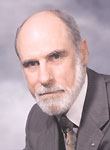 When Vinton G. Cerf speaks these days of internetworking, the MCI WorldCom Inc. senior vice president is likely to be talking about the Interplanetary Channel Protocol or the Deep Space Network 20xx he's helping NASA's Jet Propulsion Laboratory conceptualize.
Cerf, a science fiction fan, sometimes wears a Star Trek lapel pin and appeared in 1998 in the 'Gene Roddenberry's Earth: Final Conflict' television series. He is a founder of the Internet, having co-written the TCP/IP protocol and has served as president and chairman of the Internet Society. He holds several doctorates and has received scores of honors listed on the 'Cerf's Up' portion of the MCI WorldCom Web site, at www.wcom.com/about_the_company/cerfs_up/personal_perspective/bio.phtml. The site also posts Cerf's own puzzles and poetry. One stanza begins, 'Networks, networks everywhere, no place is undisturbed.'
At MCI WorldCom, which he joined in 1982 and where he implemented MCI Mail, the first commercial e-mail service, Cerf oversees development of advanced Internet systems. In the early 1980s, he was principal scientist at the Defense Advanced Research Projects Agency.
GCN chief technology editor Susan M. Menke interviewed Cerf by telephone.
GCN:'How painful is the IP Version 6 transition going to be for existing networks?
GCN:'Is that because a lot of their existing software won't function with the new protocol?
GCN:'How long is this going to take?
GCN:'You've said that asynchronous transfer mode links are an Internet bottleneck. Why?
GCN:'Is the Internet broken from a security standpoint?
GCN:'You've advocated smart cards as security tokens. Do you still think they're the answer?
GCN:'What about security for the wireless clients that are arriving?
GCN:'How long will it take to bring broadband the last mile?
GCN:'Where does the Internet 2 stand?
GCN:'How about the Next-Generation Internet?
GCN:'This would be an Internet Protocol that wouldn't time out?
GCN:'How wired up are you as a user?
Vinton G. Cerf
Cerf, a science fiction fan, sometimes wears a Star Trek lapel pin and appeared in 1998 in the 'Gene Roddenberry's Earth: Final Conflict' television series. He is a founder of the Internet, having co-written the TCP/IP protocol and has served as president and chairman of the Internet Society. He holds several doctorates and has received scores of honors listed on the 'Cerf's Up' portion of the MCI WorldCom Web site, at www.wcom.com/about_the_company/cerfs_up/personal_perspective/bio.phtml. The site also posts Cerf's own puzzles and poetry. One stanza begins, 'Networks, networks everywhere, no place is undisturbed.'
At MCI WorldCom, which he joined in 1982 and where he implemented MCI Mail, the first commercial e-mail service, Cerf oversees development of advanced Internet systems. In the early 1980s, he was principal scientist at the Defense Advanced Research Projects Agency.
GCN chief technology editor Susan M. Menke interviewed Cerf by telephone.
GCN:'How painful is the IP Version 6 transition going to be for existing networks?
GCN:'Is that because a lot of their existing software won't function with the new protocol?
GCN:'How long is this going to take?
GCN:'You've said that asynchronous transfer mode links are an Internet bottleneck. Why?
GCN:'Is the Internet broken from a security standpoint?
GCN:'You've advocated smart cards as security tokens. Do you still think they're the answer?
GCN:'What about security for the wireless clients that are arriving?
|
GCN:'How long will it take to bring broadband the last mile?
GCN:'Where does the Internet 2 stand?
GCN:'How about the Next-Generation Internet?
GCN:'This would be an Internet Protocol that wouldn't time out?
GCN:'How wired up are you as a user?
NEXT STORY: THE 50 STATES