
AI just a small part of Amtrak’s ‘invisible infrastructure,’ tech leader says
mixmotive via Getty Images




 By
Chris Teale
By
Chris Teale
While new technology can help make operations more efficient, the agency also needs good data, effective change management and improved processes, with AI as the “end state.”
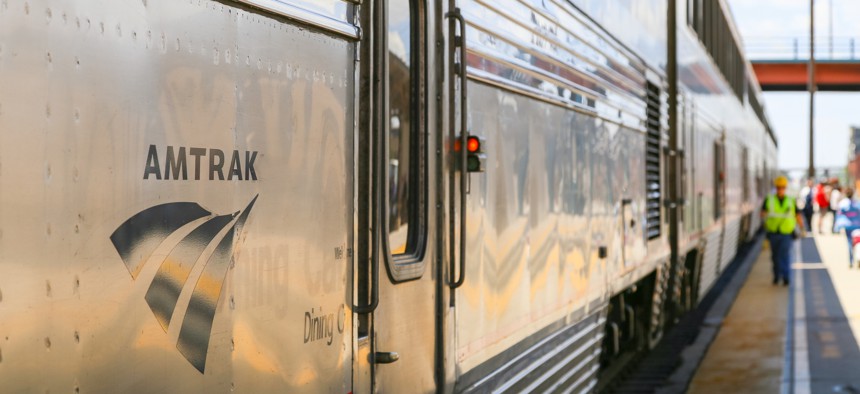
Amtrak has long been known for its passenger trains sweeping across the Great Plains, or up and down the busy Northeast Corridor. But one of its technology leaders said this week there is much more to it than that.
The railroad company, a quasi-public corporation that welcomed 35 million passengers last year, is fully embracing technology, and especially artificial intelligence, as it looks to modernize various processes, including ticket reservations, human resources, finance, supply chain, maintenance and cybersecurity.
But AI is not the end-all, be-all of Amtrak’s future, said Shakil Wadiwala, its associate vice president of corporate technologies. He said it is part of an “invisible infrastructure that goes into getting the train on the tracks,” but is not the “end of the journey.”
“It has to start with the foundation,” Wadiwala said during the SAP NOW conference in Washington, D.C., earlier this week. “The foundation of AI is data, so you have to ensure that you have the right data, in the right format. We need to ensure that we have the right platform, right data and, more importantly, right processes, and that is the foundation that is going to establish the AI journey.”
The company has already been on a massive modernization journey, Wadiwala said, and there is more to come. Amtrak has consolidated HR from a “multitude of databases” to a single platform, which he called a “single source of truth.” It also has centralized its supply chain and procurement databases, giving Amtrak a consolidated view of supply, demand, forecasts and its inventory.
Finance and enterprise resource planning are next, Wadiwala said. “It has been a journey,” he added.
But Amtrak does not use technology for technology’s sake, Wadiwala continued. Instead, the company drills into its business to understand the challenges it is trying to solve and how to improve business processes. Especially for its thousands of employees, making their lives easier is critical, he said.
“AI needs to improve the processes, the functions, the life of employees and users,” Wadiwala said. “That is the strategy at Amtrak, it’s pretty simple — how can we make sure productivity increases?”
Strategizing about how to modernize effectively without compromising performance has been an ongoing debate, Wadiwala said. That has included finding the right cloud platform to move into, which he described as an “extensive internal discussion.” But, he said, moving to the cloud “is the right thing to do from a strategy point of view,” albeit not before executives had some hard conversations first.
“Every organization should believe in innovation, but at Amtrak, we not only believe in innovation, we also believe in ensuring that our data is secure, our platform is compliant, and ensure that we are keeping our critical information in a platform which is reliable, secure and easily accessible,” he said.
Amtrak has now automated several business processes and is evaluating their success. In an ideal world, Wadiwala said, the company would like to be on one platform so it’s “not shopping for more” technology. But the “reality is a bit different,” he said, even as AI can help simplify so many things.
“Because Amtrak has multiple platforms, we need to make sure one size fits all does not cut the ribbon, so to speak,” Wadiwala said.
AI has to “be the end state,” Wadiwala said, noting that everything else has to be in place correctly for Amtrak and its riders, employees and executives to truly benefit. “It's a no-brainer, but it's going to take multiple smaller steps to reach there,” he added.