Nevada’s unregulated ‘crypto kiosks’ are a paradise for scammers, AARP warns
salarko via Getty Images

Cryptocurrency is designed to be anonymous and instantaneous, which makes it an ideal vehicle for scammers, who extort or convince victims to deposit their cash into a crypto kiosk and transfer it to the scammer’s digital wallet.

This article was originally published by Nevada Current.

Nevadans are losing millions of dollars each year to cryptocurrency scams, and much of the fraud is aided by the hundreds of largely unregulated “bitcoin ATMs,” state lawmakers heard last week.

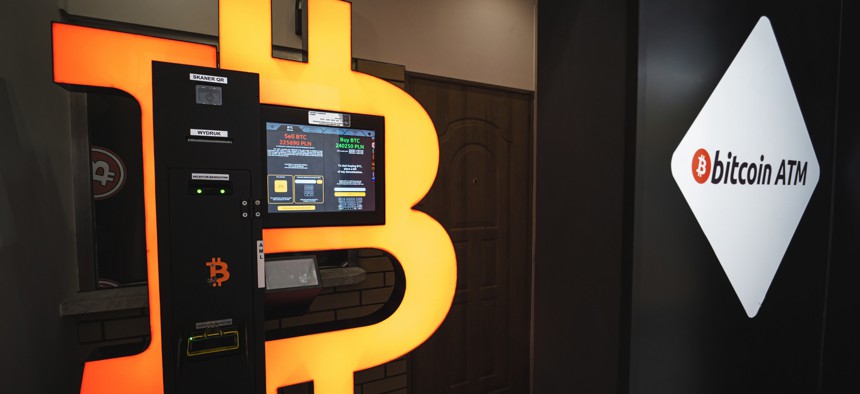
Crypto kiosks — also called cryptocurrency ATMs or bitcoin ATMs — often look just like bank ATMs and are located in grocery stores, convenience stores and other places where you’d expect to see a traditional ATM. The kiosks allow people to convert cash into cryptocurrency like bitcoin or ethereum.

Cryptocurrency is designed to be anonymous and instantaneous, which makes it an ideal vehicle for scammers,who extort or convince victims to deposit their cash into a crypto kiosk and transfer it to the scammer’s digital wallet, never to be seen again by the victim.

Getting your money back after falling for a crypto scam “is almost impossible,” said Jessica Pedrón, the associate state director of AARP Nevada.

Pedrón last week implored lawmakers in an interim legislative committee meeting to pass consumer protections specific to the growing crypto kiosk industry. In December, the Nevada Secretary of State’s Office warned that cryptocurrency scams are on the rise.

Nationwide, $246.7 million in crypto kiosk scam losses was reported in 2024 by the Federal Bureau of Investigations’ Internet Crime Complaint Center (IC3). People aged 60 or older accounted for $107.2 million of those losses.

IC3 fielded nearly 11,000 complaints related to crypto kiosks — a 31% increase from 2023.

The scams typically involve a stranger reaching out to the victim via phone, email or social media. Sometimes the scammer will claim to be tech support from a bank or local law enforcement. They’ll fabricate a story about how the victim needs to secure their funds or pay off a fine lest they or a loved one get arrested.

“Sometimes folks are so scared of these scammers that a(n actual) police officer will try to stop them and say ‘Ma’am, this is not legitimate. We do not have a warrant out for your arrest’ or what have you. And they refuse to believe it.”

Pedrón said in one case an older woman deposited thousands of dollars of her retirement into a convenience store crypto kiosk, one $100 bill at a time.

“The convenience worker felt bad for her and pulled her up a seat,” she added, “so she could deposit her entire life savings into a crypto ATM.”

Nevada has 447 bitcoin kiosks, 336 of which are in Southern Nevada, according to a public listing by Bitcoin Depot.

“We have so many of these just in Clark County,” said Pedrón. “As far as regulations, protections, (and) putting those in place, Nevada has not done that.”

Nevada licenses some crypto kiosk operators as money transmitters, according to the state’s Financial Institutions Division, but regulations specific to the industry have not passed the Nevada State Legislature.

AARP recommends states pass legislation or regulations that establish daily transaction limits, require specific warnings about scams, help victims get refunds after being defrauded, and cap kiosk transaction fees (which are often significantly higher than comparable industries).

“We’re not anti-crypto,” Pedrón told lawmakers. “Folks are very much into these investment tools, but we find it is one of the top methods of fraud. Not just for seniors — for everybody — but seniors are particularly vulnerable.”

There are legitimate crypto businesses, she continued, and some are “willing to be proactive” but standardization and protections for Nevadans are needed.

Some states have already taken action. According to AARP, at least 11 states passed crypto kiosk legislation last year, and Indiana outright banned them this year.

AARP quoted one Indiana Republican legislative leader saying he could “think of no legitimate reasons, no substantial legitimate reasons” to warrant the kiosks.

X
This website uses cookies to enhance user experience and to analyze performance and traffic on our website. We also share information about your use of our site with our social media, advertising and analytics partners. Learn More / Do Not Sell My Personal Information
Accept Cookies
X
Cookie Preferences Cookie List

Do Not Sell My Personal Information

When you visit our website, we store cookies on your browser to collect information. The information collected might relate to you, your preferences or your device, and is mostly used to make the site work as you expect it to and to provide a more personalized web experience. However, you can choose not to allow certain types of cookies, which may impact your experience of the site and the services we are able to offer. Click on the different category headings to find out more and change our default settings according to your preference. You cannot opt-out of our First Party Strictly Necessary Cookies as they are deployed in order to ensure the proper functioning of our website (such as prompting the cookie banner and remembering your settings, to log into your account, to redirect you when you log out, etc.). For more information about the First and Third Party Cookies used please follow this link.

Allow All Cookies

Manage Consent Preferences

Strictly Necessary Cookies - Always Active

We do not allow you to opt-out of our certain cookies, as they are necessary to ensure the proper functioning of our website (such as prompting our cookie banner and remembering your privacy choices) and/or to monitor site performance. These cookies are not used in a way that constitutes a “sale” of your data under the CCPA. You can set your browser to block or alert you about these cookies, but some parts of the site will not work as intended if you do so. You can usually find these settings in the Options or Preferences menu of your browser. Visit www.allaboutcookies.org to learn more.

Sale of Personal Data, Targeting & Social Media Cookies

Under the California Consumer Privacy Act, you have the right to opt-out of the sale of your personal information to third parties. These cookies collect information for analytics and to personalize your experience with targeted ads. You may exercise your right to opt out of the sale of personal information by using this toggle switch. If you opt out we will not be able to offer you personalised ads and will not hand over your personal information to any third parties. Additionally, you may contact our legal department for further clarification about your rights as a California consumer by using this Exercise My Rights link

If you have enabled privacy controls on your browser (such as a plugin), we have to take that as a valid request to opt-out. Therefore we would not be able to track your activity through the web. This may affect our ability to personalize ads according to your preferences.

Targeting cookies may be set through our site by our advertising partners. They may be used by those companies to build a profile of your interests and show you relevant adverts on other sites. They do not store directly personal information, but are based on uniquely identifying your browser and internet device. If you do not allow these cookies, you will experience less targeted advertising.

Social media cookies are set by a range of social media services that we have added to the site to enable you to share our content with your friends and networks. They are capable of tracking your browser across other sites and building up a profile of your interests. This may impact the content and messages you see on other websites you visit. If you do not allow these cookies you may not be able to use or see these sharing tools.

If you want to opt out of all of our lead reports and lists, please submit a privacy request at our Do Not Sell page.

Save Settings
Cookie Preferences Cookie List

Cookie List

A cookie is a small piece of data (text file) that a website – when visited by a user – asks your browser to store on your device in order to remember information about you, such as your language preference or login information. Those cookies are set by us and called first-party cookies. We also use third-party cookies – which are cookies from a domain different than the domain of the website you are visiting – for our advertising and marketing efforts. More specifically, we use cookies and other tracking technologies for the following purposes:

Strictly Necessary Cookies

We do not allow you to opt-out of our certain cookies, as they are necessary to ensure the proper functioning of our website (such as prompting our cookie banner and remembering your privacy choices) and/or to monitor site performance. These cookies are not used in a way that constitutes a “sale” of your data under the CCPA. You can set your browser to block or alert you about these cookies, but some parts of the site will not work as intended if you do so. You can usually find these settings in the Options or Preferences menu of your browser. Visit www.allaboutcookies.org to learn more.

Functional Cookies

We do not allow you to opt-out of our certain cookies, as they are necessary to ensure the proper functioning of our website (such as prompting our cookie banner and remembering your privacy choices) and/or to monitor site performance. These cookies are not used in a way that constitutes a “sale” of your data under the CCPA. You can set your browser to block or alert you about these cookies, but some parts of the site will not work as intended if you do so. You can usually find these settings in the Options or Preferences menu of your browser. Visit www.allaboutcookies.org to learn more.

Performance Cookies

We do not allow you to opt-out of our certain cookies, as they are necessary to ensure the proper functioning of our website (such as prompting our cookie banner and remembering your privacy choices) and/or to monitor site performance. These cookies are not used in a way that constitutes a “sale” of your data under the CCPA. You can set your browser to block or alert you about these cookies, but some parts of the site will not work as intended if you do so. You can usually find these settings in the Options or Preferences menu of your browser. Visit www.allaboutcookies.org to learn more.

Sale of Personal Data

We also use cookies to personalize your experience on our websites, including by determining the most relevant content and advertisements to show you, and to monitor site traffic and performance, so that we may improve our websites and your experience. You may opt out of our use of such cookies (and the associated “sale” of your Personal Information) by using this toggle switch. You will still see some advertising, regardless of your selection. Because we do not track you across different devices, browsers and GEMG properties, your selection will take effect only on this browser, this device and this website.

Social Media Cookies

We also use cookies to personalize your experience on our websites, including by determining the most relevant content and advertisements to show you, and to monitor site traffic and performance, so that we may improve our websites and your experience. You may opt out of our use of such cookies (and the associated “sale” of your Personal Information) by using this toggle switch. You will still see some advertising, regardless of your selection. Because we do not track you across different devices, browsers and GEMG properties, your selection will take effect only on this browser, this device and this website.

Targeting Cookies

We also use cookies to personalize your experience on our websites, including by determining the most relevant content and advertisements to show you, and to monitor site traffic and performance, so that we may improve our websites and your experience. You may opt out of our use of such cookies (and the associated “sale” of your Personal Information) by using this toggle switch. You will still see some advertising, regardless of your selection. Because we do not track you across different devices, browsers and GEMG properties, your selection will take effect only on this browser, this device and this website.