
Creating deepfakes with malicious intent will soon be a crime in Pennsylvania
SmileStudioAP via Getty Images

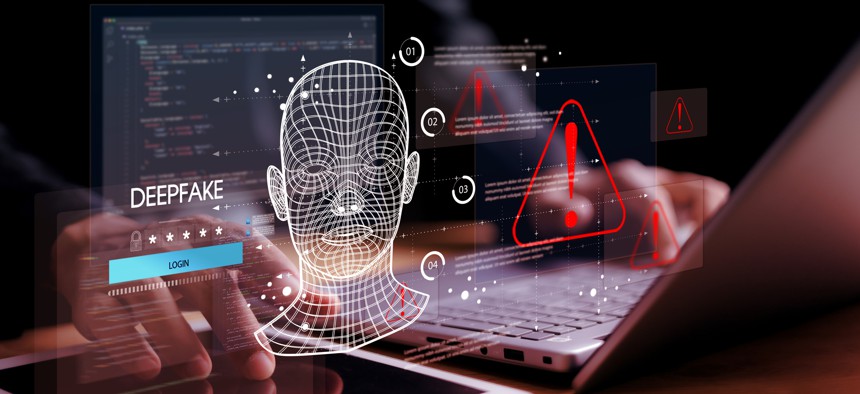
Deepfakes are images or videos generated by artificial intelligence, typically for malicious use or to spread misinformation.

This article was originally published by Pennsylvania Capital-Star.

Democratic Gov. Josh Shapiro signed legislation to classify deepfakes in Pennsylvania as digital forgeries, making non-consensual digital impersonation punishable by law.  

Deepfakes are images or videos generated by artificial intelligence, typically for malicious use or to spread misinformation. Now, anyone engaging in digital impersonation will be subject to a misdemeanor of the first degree, while anyone doing so with fraudulent intent will be subject to a felony of the third degree.

“This law gives law enforcement the tools they need to fight this digital deception, yet does so in a responsible manner, protecting First Amendment rights and preserving valid expressions of parody, satire and other forms of free speech,” bill sponsor Sen. Tracy Pennycuick (R-Montgomery) said, after the governor signed it into law last Tuesday.

The bill passed unanimously in the Senate and with near-unanimous support in the House. Pennycuick has previously pushed through legislation to combat digital impersonation, including a law Shapiro signed last October to ban deepfake pornography

Pennycuick’s pornography deepfake ban led Republican state Attorney General Dave Sunday to file the first charges involving artificial intelligence in a sexual abuse case in April. 

Sunday commended the new legislation and Pennycuick for “recognizing the danger that artificial intelligence poses to Pennsylvanians. Having this law on the books adds another tool to our chest as we continue to proactively investigate and hold offenders accountable,” he said. 

Deepfakes pose a widespread public threat, according to Pennycuick, because they include false images impossible to distinguish from real content, which are often “used to commit financial scams, injure personal reputations and disrupt the political process,” she wrote in a statement. 

“The potential for widespread harm will only grow as artificial intelligence tools become more sophisticated and more readily accessible,” Pennycuick wrote in a memo introducing the bill in February. 

In a recent, high-profile case, a deep-fake impersonating former-President Joe Biden’s voice called New Hampshire voters to tell them not to vote in the 2024 presidential primary. 

Digital scams, including artificial intelligence ones, often target vulnerable populations, such as teenagers and the elderly, as well as small businesses.

Seeing a steady increase in payment app scams targeting senior citizens, then-U.S. Sen. Bob Casey (D-Pa.) advocated for the Consumer Financial Protection Bureau to increase its user protections in 2022.

Lawmakers around the country have responded to these challenges by introducing over 38 pieces of legislation in 18 states related to deepfake regulation. That’s according to the Transparency Coalition, a nonprofit advocate for AI regulation. This legislative push follows the 80 laws passed across the country to combat deepfakes in 2024, as well as 15 passed in 2023. 

Although statewide regulations have received bipartisan support from federal lawmakers, they have also received some pushback, including from some Republicans in Congress, who criticize regulations for censorship and diminishing the country’s competitive edge in artificial intelligence. 

Republican U.S. House members originally included a decade-long moratorium on state laws regulating AI in this year’s federal budget before it was eventually removed from the final bill. 

Pennsylvania’s upper chamber is considering another bill on digital forgery regulation, which would ban the use of deepfakes in political campaigns, in an effort to improve election security. 

Deepfake regulation has previously faced pushback in the state legislature on the basis of free speech concerns, including a 2021 bill to ban deepakes from political advertisements.

Elena Eisenstadt is a 2025 Pennsylvania Legislative Correspondents Association summer intern.

X
This website uses cookies to enhance user experience and to analyze performance and traffic on our website. We also share information about your use of our site with our social media, advertising and analytics partners. Learn More / Do Not Sell My Personal Information
Accept Cookies
X
Cookie Preferences Cookie List

Do Not Sell My Personal Information

When you visit our website, we store cookies on your browser to collect information. The information collected might relate to you, your preferences or your device, and is mostly used to make the site work as you expect it to and to provide a more personalized web experience. However, you can choose not to allow certain types of cookies, which may impact your experience of the site and the services we are able to offer. Click on the different category headings to find out more and change our default settings according to your preference. You cannot opt-out of our First Party Strictly Necessary Cookies as they are deployed in order to ensure the proper functioning of our website (such as prompting the cookie banner and remembering your settings, to log into your account, to redirect you when you log out, etc.). For more information about the First and Third Party Cookies used please follow this link.

Allow All Cookies

Manage Consent Preferences

Strictly Necessary Cookies - Always Active

We do not allow you to opt-out of our certain cookies, as they are necessary to ensure the proper functioning of our website (such as prompting our cookie banner and remembering your privacy choices) and/or to monitor site performance. These cookies are not used in a way that constitutes a “sale” of your data under the CCPA. You can set your browser to block or alert you about these cookies, but some parts of the site will not work as intended if you do so. You can usually find these settings in the Options or Preferences menu of your browser. Visit www.allaboutcookies.org to learn more.

Sale of Personal Data, Targeting & Social Media Cookies

Under the California Consumer Privacy Act, you have the right to opt-out of the sale of your personal information to third parties. These cookies collect information for analytics and to personalize your experience with targeted ads. You may exercise your right to opt out of the sale of personal information by using this toggle switch. If you opt out we will not be able to offer you personalised ads and will not hand over your personal information to any third parties. Additionally, you may contact our legal department for further clarification about your rights as a California consumer by using this Exercise My Rights link

If you have enabled privacy controls on your browser (such as a plugin), we have to take that as a valid request to opt-out. Therefore we would not be able to track your activity through the web. This may affect our ability to personalize ads according to your preferences.

Targeting cookies may be set through our site by our advertising partners. They may be used by those companies to build a profile of your interests and show you relevant adverts on other sites. They do not store directly personal information, but are based on uniquely identifying your browser and internet device. If you do not allow these cookies, you will experience less targeted advertising.

Social media cookies are set by a range of social media services that we have added to the site to enable you to share our content with your friends and networks. They are capable of tracking your browser across other sites and building up a profile of your interests. This may impact the content and messages you see on other websites you visit. If you do not allow these cookies you may not be able to use or see these sharing tools.

If you want to opt out of all of our lead reports and lists, please submit a privacy request at our Do Not Sell page.

Save Settings
Cookie Preferences Cookie List

Cookie List

A cookie is a small piece of data (text file) that a website – when visited by a user – asks your browser to store on your device in order to remember information about you, such as your language preference or login information. Those cookies are set by us and called first-party cookies. We also use third-party cookies – which are cookies from a domain different than the domain of the website you are visiting – for our advertising and marketing efforts. More specifically, we use cookies and other tracking technologies for the following purposes:

Strictly Necessary Cookies

We do not allow you to opt-out of our certain cookies, as they are necessary to ensure the proper functioning of our website (such as prompting our cookie banner and remembering your privacy choices) and/or to monitor site performance. These cookies are not used in a way that constitutes a “sale” of your data under the CCPA. You can set your browser to block or alert you about these cookies, but some parts of the site will not work as intended if you do so. You can usually find these settings in the Options or Preferences menu of your browser. Visit www.allaboutcookies.org to learn more.

Functional Cookies

We do not allow you to opt-out of our certain cookies, as they are necessary to ensure the proper functioning of our website (such as prompting our cookie banner and remembering your privacy choices) and/or to monitor site performance. These cookies are not used in a way that constitutes a “sale” of your data under the CCPA. You can set your browser to block or alert you about these cookies, but some parts of the site will not work as intended if you do so. You can usually find these settings in the Options or Preferences menu of your browser. Visit www.allaboutcookies.org to learn more.

Performance Cookies

We do not allow you to opt-out of our certain cookies, as they are necessary to ensure the proper functioning of our website (such as prompting our cookie banner and remembering your privacy choices) and/or to monitor site performance. These cookies are not used in a way that constitutes a “sale” of your data under the CCPA. You can set your browser to block or alert you about these cookies, but some parts of the site will not work as intended if you do so. You can usually find these settings in the Options or Preferences menu of your browser. Visit www.allaboutcookies.org to learn more.

Sale of Personal Data

We also use cookies to personalize your experience on our websites, including by determining the most relevant content and advertisements to show you, and to monitor site traffic and performance, so that we may improve our websites and your experience. You may opt out of our use of such cookies (and the associated “sale” of your Personal Information) by using this toggle switch. You will still see some advertising, regardless of your selection. Because we do not track you across different devices, browsers and GEMG properties, your selection will take effect only on this browser, this device and this website.

Social Media Cookies

We also use cookies to personalize your experience on our websites, including by determining the most relevant content and advertisements to show you, and to monitor site traffic and performance, so that we may improve our websites and your experience. You may opt out of our use of such cookies (and the associated “sale” of your Personal Information) by using this toggle switch. You will still see some advertising, regardless of your selection. Because we do not track you across different devices, browsers and GEMG properties, your selection will take effect only on this browser, this device and this website.

Targeting Cookies

We also use cookies to personalize your experience on our websites, including by determining the most relevant content and advertisements to show you, and to monitor site traffic and performance, so that we may improve our websites and your experience. You may opt out of our use of such cookies (and the associated “sale” of your Personal Information) by using this toggle switch. You will still see some advertising, regardless of your selection. Because we do not track you across different devices, browsers and GEMG properties, your selection will take effect only on this browser, this device and this website.
