
A new era of urban mobility is within reach
Cheunghyo via Getty Images





COMMENTARY | The solutions to our biggest challenges already exist, and the data is available. What’s lacking among many cities is the will to put them to work.
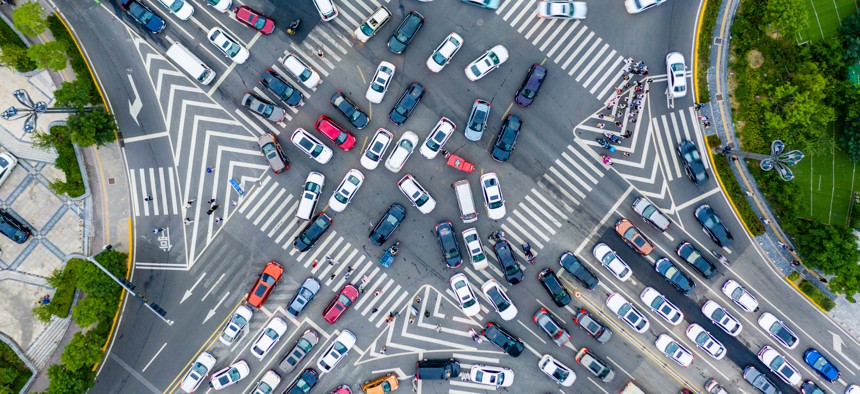
New York may be the city that never sleeps, but it comes at a price: an average of 102 hours a year spent in traffic per driver. That gridlock is just one example of a growing national challenge, and it reflects a broader issue.
In 2023, cars and vans accounted for around 10% of global energy-related CO2 emissions. The strain on outdated infrastructure and underfunded public transit is worsening, and cities across the country are feeling the pressure to alleviate congestion.
Some governments are turning to demand-driven strategies like congestion pricing, but the real breakthrough lies in embracing technology that’s already within reach. These aren’t speculative innovations or long-term moonshots — they’re proven, tested and available today. What’s missing isn’t invention. It’s activation.
Proven Technologies, Ready for Deployment
Artificial intelligence is already being used to manage traffic with greater precision. AI-powered traffic management systems translate live traffic data into responsive actions, adjusting traffic lights in real time or managing highway access through adaptive ramp metering. Cities like Los Angeles are deploying these systems to cut travel times and reduce collisions, making the daily commute more efficient and less dangerous.
Anonymized GPS data from vehicles creates a detailed, dynamic picture of how traffic flows through a city. Companies aggregate and analyze this data to help local governments make smarter investments in roads, transit, and traffic management. These insights don’t just reflect the past — they predict future problem areas, helping agencies target improvements where they’re needed most.
Location data and satellite imagery offer a bird’s-eye view of how people and goods move through cities. Geospatial intelligence can help planners prepare for major events, natural disasters, or everyday congestion.
Accurate traffic data is crucial to emergency response, enabling first responders to quickly identify priority locations and navigate the fastest routes to deliver aid. For example, Esri’s ArcGIS tools leverage location data in their geocoding, routing, and spatial analysis products. Their ArcGIS platform was used to track and respond to the Palisade wildfires, pinpointing the spread of the fire and helping emergency responders move efficiently.
Global Models, Local Momentum
These innovations are powering city central nervous systems, transforming leading epicenters of mobility and urban planning. Global leaders in smart mobility offer a glimpse of what’s possible when these tools are embraced at scale.
In Amsterdam, real-time traffic monitoring and floating car data are actively shaping city infrastructure. As journeys into the downtown area decrease, planners are reallocating space and resources to reduce congestion and improve access.
Singapore has built one of the most integrated urban mobility systems in the world — blending public transit with rideshare, micromobility, and active transportation options. Commuters can navigate the city across multiple modes through a single platform, helping Singapore rank consistently among the world’s smartest cities.
Here in the U.S., cities are beginning to follow suit, with promising results:
- In Denver, a centralized data platform enables agencies to share information and make decisions in real time, improving cross-department coordination.
- California has authorized six cities — including Los Angeles, Oakland and San Jose — to pilot automated speed safety cameras. By targeting areas with high crash rates, the program is designed to reduce injuries and fatalities.
- Wisconsin’s Department of Transportation uses traffic monitoring software to measure real-time delays caused by roadwork. By relying on software instead of expensive hardware like sensors or cameras, the agency is saving money while improving service delivery.
These examples prove the solutions we need are actionable. The data, technology and know-how exist today to ease congestion, cut emissions and improve quality of life in cities large and small. But too many decisions are still being made without the tools that could make them smarter.
By partnering with experienced data providers and trusted technology leaders, cities can modernize faster, stretch their budgets further and build systems that work for everyone — from commuters and delivery drivers to transit users and pedestrians.
The Moment to Act Is Now
The solutions to our biggest urban mobility challenges aren’t theoretical — they already exist. Cities around the world, and here at home, are proving what’s possible when technology is fully integrated into infrastructure planning. The data is available. The tools are tested. What’s needed is the will to put them to work.
Too many decisions are still made without the insights that could make them smarter. But with traffic analytics, floating car data and geospatial intelligence, governments can act faster, invest more wisely and deliver real improvements to the people who rely on these systems every day. We’re already seeing local governments recognize the value of these collaborations, but many agencies still don’t know the opportunities these partnerships present, missing out on modernized infrastructure and critical data.
This isn’t just about managing congestion. It’s about creating safer, more sustainable, more connected cities. Cities where people spend less time in traffic and more time living.
The future of mobility is already within reach. The question now isn’t what’s possible — it’s how quickly we choose to act.
Ralf-Peter Schäfer is vice president of product management for traffic at TomTom.
NEXT STORY: New York City will try (again) to regulate AI