
Speech recognition has an edge on IVR
Featured eBooks





Stephen D. Smith took over in June as president and chief executive officer of Microlog Corp. The Germantown, Md., company had been foundering in a sea of red ink even though demand for its call center systems was rising in the government, its primary customer.
'How do you see your job at Microlog Corp.? Up to this point, I've primarily had my career in sales. I've always felt that I brought a little bit of strategic perspective to running a sales organization, but those jobs are by and large tactical. When I took this job, I thought a lot about what I should do.You've got to cut expenses where you need to; you've got to be more efficient. But you've got to be sure you're characterizing the problem correctly. Is it an issue of tired products that just won't sell? A bloated infrastructure? Or something surprising?The interesting discovery was that we'd had some struggles with our traditional voice processing business, and the perception was that we were losing money there. In fact, we were making money in that business, and we'd been investing very aggressively in UniQue. We found we were spending a lot more money than we thought to bring out the new product.Second, you need to make sure people still believe in themselves. This is a strong engineering company. But when you have bad news for a period of time, you tend to start wondering if you're any good. I have to break that attitude.The third and last thing is to bring urgency to execution. Every day matters. Every market today is dealing with time cycles that are so much faster than they've ever been; they're almost untenable. But you have to get people focused on the fact that today matters.'Are you in time to save Microlog? You can go without oxygen for a certain time, but there's an absolute level when you haven't gotten any oxygen and just can't recover. I don't think this company reached that point. There is a resilient core, which is one of the things that attracted me in spite of a lot of bad news. I've focused on the short term.'What is UniQue? It's middleware designed to take multiple input media, such as the Internet, intranet, fax, e-mail and telephone calls, and provide a technical translation so they can be served by a unified queue on the back end.The most efficient way to handle calls is to have a single queue in a multiserver model. An agency could take different media and serve them up as if they were a single, incoming queue.Part of my initial validation here has been to answer the question: Is UniQue the salvation of the company, or is it a grand experiment that we don't really have the ability to bring to market?The good news is, it's more than I'd hoped it would be relative to its capabilities, where it is in development and the reaction of people who have seen it.'How much business do you do in the government? The government market historically has been the lion's share of Microlog's business. This is really two companies'one organization has held a contract with the Johns Hopkins Applied Physics Laboratory for more than 25 years, providing engineering and professional services. That represents about half the company's revenues right now.The other part has been the traditional voice processing business, or what we call interactive voice response, and that has been heavily weighted by a few large government contracts, specifically with the IRS and with the FTS 2000 program, providing network-based services to Sprint Corp.'Do your government users have requirements that are different from the commercial sector's? I don't think so. I've found the government intriguing because it has all the same needs as the commercial sector. The needs are no different; the only difference is the rules. The federal sector, because of its focus on fairness and public trust responsibilities, has a set of rules that maybe in some cases inhibit the ability to do what they want to do.The government also is different from a starting point. With a new product like UniQue, the commercial sector will move faster and is more willing to take risks on a product early in its lifecycle. In my somewhat limited experience, the federal government has been a little slower to adopt the newest technology.'Where is your biggest installed base in government? We've installed a number of call centers at the IRS, and we're providing the IVR component. We've recently gone through a major upgrade to make all of it ready for the year 2000, and we're continuing to bid on new products and new extensions in that area.Sprint's Network B for FTS 2000 has been a good contract for us. We've supplied 1,000 or so ports under the auspices of FTS 2000. Sprint also is offering network services to different agencies. The Veterans Affairs Department has been the most aggressive first rollout.'You came to Microlog from a speech recognition company. What does that say about the future of call center technology? I think it says a lot. SpeechWorks is in the business of providing technology that lets people be recognized individually talking over the telephone to a computer.IVR systems were the first in a successful self-service technology. They were cost-justified and efficient.But they did focus more, in my opinion, on saving money for the provider and not so much on making the interface rich for the caller.The technology has reached the limits of the things it can do based on the user interface'the telephone keypad. A number of applications are quite cumbersome on a keypad, such as spelling out a name.Speech recognition represents the future of the IVR industry. It opens up a lot of new applications and parallels to what people are doing with their Internet investments. It offers a much richer self-service medium.There is activity in the Postal Service in that area. The IRS is looking into some interesting things, as is the Social Security Administration.'Will the growing use of the Internet for business communications reduce the need for advanced telephone systems? I think it will increase the calls to call centers. I do not think the need for human touch will go away. In my experience in the commercial sector, the Internet actually increased call centers' traffic because people they were not reaching before were now finding them and generating needs for interaction that the Internet wasn't resolving.A call center carries a connotation that says telephone. What we call a contact center does more than just receive telephone calls. Interactive communication instead of IVR reflects an opinion change about what the systems are.'Who in the federal government is making the best use of call center technology? Generically, the ones who do more consumer-facing kinds of things'the IRS and Postal Service, agencies that have to deal on a commercial basis with the public. The ones that are more regulatory in nature will find less use.'Where do you see the greatest opportunities in government for this technology? In any agency that needs to deal with John Q. Public on a frequent basis. But I think there will be two other general areas. One is the help desk function inside an agency, which is typically a complex interaction with a highly skilled individual. The premium on getting the call to the right person will lend itself to this area.The other area will be in the explosion of the intranet function. Any agency has a constituency called employees it has to serve.In the commercial sector, a lot of work is going into serving that constituency better with human resource policies, job postings and opportunities, training and internal notification of policy changes.I think it's probably a pretty rich opportunity.
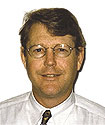
Stephen D. Smith took over in June as president and chief executive officer of Microlog Corp. The Germantown, Md., company had been foundering in a sea of red ink even though demand for its call center systems was rising in the government, its primary customer.
Microlog's interactive voice response telephone systems prompt callers through a menu of options with a recorded voice. The company hopes to recoup its position with its new UniQue middleware software product, which blends different incoming media into a single queue.
Smith came to Microlog from speech recognition developer SpeechWorks International Inc. of Boston, where he was vice president of sales. He also worked as vice president of new business development for Teloquent Communications Corp., an automated call distributor software company in Billerica, Mass.
Smith began his career at IBM Corp. and holds a bachelor's degree in industrial engineering and operations research from Virginia Polytechnic Institute and State University in Blacksburg, Va.
GCN senior editor William Jackson talked with Smith at his Germantown office.
GCN:
SMITH:
GCN:
SMITH:
GCN:
SMITH:
GCN:
SMITH:
GCN:
SMITH:
GCN:
SMITH:
GCN:
SMITH:
GCN:
SMITH:
GCN:
SMITH:
GCN:
SMITH:
What's more
Stephen D. Smith took over in June as president and chief executive officer of Microlog Corp. The Germantown, Md., company had been foundering in a sea of red ink even though demand for its call center systems was rising in the government, its primary customer.
Microlog's interactive voice response telephone systems prompt callers through a menu of options with a recorded voice. The company hopes to recoup its position with its new UniQue middleware software product, which blends different incoming media into a single queue.
Smith came to Microlog from speech recognition developer SpeechWorks International Inc. of Boston, where he was vice president of sales. He also worked as vice president of new business development for Teloquent Communications Corp., an automated call distributor software company in Billerica, Mass.
Smith began his career at IBM Corp. and holds a bachelor's degree in industrial engineering and operations research from Virginia Polytechnic Institute and State University in Blacksburg, Va.
GCN senior editor William Jackson talked with Smith at his Germantown office.
GCN:
SMITH:
GCN:
SMITH:
GCN:
SMITH:
GCN:
SMITH:
GCN:
SMITH:
GCN:
SMITH:
GCN:
SMITH:
GCN:
SMITH:
GCN:
SMITH:
GCN:
SMITH:
What's more
- Age: 43
- Family: Two boys, aged 13 and 10; married 17 years
- Pet: Long-haired dachshund
- Current car: Jeep
- Leisure activities: Coaching baseball and soccer