Immigration service patrols with sensors and video

The Immigration and Naturalization Service's Border Patrol is using a combination of ground sensors and video data to help prevent contraband and illegal immigrants from crossing U.S. borders.

By Shruti Dat'GCN StaffThe Immigration and Naturalization Service's Border Patrol is using a combination of ground sensors and video data to help prevent contraband and illegal immigrants from crossing U.S. borders.Walt Drabik, INS' Electronics Systems Section chief, has nurtured the Integrated Surveillance Intelligence System since 1995. As ISIS has evolved, its technology has matured to provide additional capabilities, he said.The Intelligent Computer-Aided Detection system, which predates ISIS by several years, makes the data flowing from the remote ISIS equipment intelligible, said David Messier, the service's ICAD program manager.INS recently began implementing the third version of ICAD nationally.Border Patrol assistant chief Bruce Cook said ISIS serves as the extended eyes and ears of agents whose duties are stretched too far.Drabik said that when he took charge of the ISIS project four years ago INS relied mostly on its 4,800 Border Patrol officers to guard 8,000 miles of border. Only a handful of cameras and decade-old sensors supported the agents.ISIS, developed with International Microwave Corp. of East Norwalk, Conn., adds technological prowess to the Border Patrol's efforts.The patrol now has 13,000 seismic, magnetic and infrared ground sensors along the borders, Drabik said.The sensors can detect movement and heat sources within a 50-foot radius and metal within 250 feet, he said.The Border Patrol has also installed 73 high-resolution and infrared cameras on poles. Agents at Border Patrol stations in 21 sectors remotely control the cameras, which scan up to a five-mile radius.The combination of cameras and sensors tells the agents the location of any activity, the number of people and whether they are armed.These critical bits of information help station agents decide which officers to dispatch.ISIS supplies a higher degree of safety for agents and the people attempting illegal entrance, Cooke said.'The majority of people we catch crossing the border are decent people coming for economic reasons, and we don't want to lose sight of that,' he said. 'But we need to protect our sovereignty as well.'Agents at border stations must interpret images from the cameras visually. ICAD filters and analyzes information flowing from the remote sensors, Messier said. He has worked on ICAD since 1989, adding capabilities as new technology became available.The Border Patrol deployed ICAD II in early 1994. The system runs under IBM OS/2 on PCs, which provide a user-friendly interface and multitasking environment, Messier said.Messier said that added storage capacity also prompted the upgrade. ICAD II can provide analysis of any one of more than 100,000 records within minutes.The Border Patrol has now begun deploying ICAD III, which has enhanced ISIS' surveillance features, at seven sites.Stations in San Diego and Swanton, Vt., implemented the system in early 1998. Three Texas sites'El Paso, Laredo and McAllen'along with Arizona sites in Tucson and Yuma deployed the system this summer.Two databases support ICAD III, which runs under Microsoft Windows NT on Pentium III servers with 128M of RAM.The ICAD II database of 100,000 records gives individual stations on-demand access and analysis of several months of information.The ICAD III records reside in an Oracle7 database on a Unix server that holds 650,000 records and can absorb 3 million to 4 million records per year. Data from the earlier ICAD II system will be rolled into the newer database.The National ICAD Data Analysis server also supports the system by mirroring ICAD III data, Messier said.Besides providing system backup, the server supports mapping applications and communicates with INS' national database server.If the INS network goes down for an extended period, ICAD III can still operate, using the mirrored database. Once the network has been restored, ICAD data resynchronizes with the national database.INS also improved its network reliability. Communications between the ICAD III servers and clients run through TCP/IP. 'Additional provisions were developed into the ICAD system to detect network failures and automatically reconnect without impacting critical system operation,' Messier said. 'We had to make our system smarter. ICAD keeps a permanent TCP/IP connection and processes 200 to 300 bytes a second.'ICAD III uses an Internet encryption and authentication system from RSA Data Security Inc. of Redwood City, Calif., to secure ISIS information.The system maintains an extensive audit of successful and unsuccessful entries into the network to monitor potential hackers.ICAD III will be the first version to be managed on a national level, giving once-isolated regions a broader perspective. Sectors have used previous ICAD versions for regional data collection, tracking and analysis.ICAD II use was limited to a single LAN supporting up to six clients. Each ICAD III server can support up to 20 clients in a WAN extending thousands of miles.'At each site, we are training up to 70 or more people over a period of seven to 10 days,' Messier said. An integrated distribution system makes ICAD III updates available nationwide within several minutes. This process is initiated from the ICAD Development Center in Burlington, Vt. Previous versions required manual upgrades via disk. Information provided through the center also allows Border Patrol sectors to compare and contrast trends depicted graphically.
Integrated Surveillance Intelligence System combines detection and data to improve border security


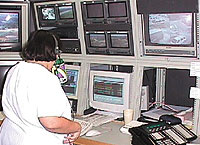
Florinda Gonzales, a communications assistant at the Border Patrol station in Laredo, Texas, monitors ICAD and ISIS to help field agents apprehend people trying to cross the U.S.-Mexico border illegally.


On their own


Coast to coast


X
This website uses cookies to enhance user experience and to analyze performance and traffic on our website. We also share information about your use of our site with our social media, advertising and analytics partners. Learn More / Do Not Sell My Personal Information
Accept Cookies
X
Cookie Preferences Cookie List

Do Not Sell My Personal Information

When you visit our website, we store cookies on your browser to collect information. The information collected might relate to you, your preferences or your device, and is mostly used to make the site work as you expect it to and to provide a more personalized web experience. However, you can choose not to allow certain types of cookies, which may impact your experience of the site and the services we are able to offer. Click on the different category headings to find out more and change our default settings according to your preference. You cannot opt-out of our First Party Strictly Necessary Cookies as they are deployed in order to ensure the proper functioning of our website (such as prompting the cookie banner and remembering your settings, to log into your account, to redirect you when you log out, etc.). For more information about the First and Third Party Cookies used please follow this link.

Allow All Cookies

Manage Consent Preferences

Strictly Necessary Cookies - Always Active

We do not allow you to opt-out of our certain cookies, as they are necessary to ensure the proper functioning of our website (such as prompting our cookie banner and remembering your privacy choices) and/or to monitor site performance. These cookies are not used in a way that constitutes a “sale” of your data under the CCPA. You can set your browser to block or alert you about these cookies, but some parts of the site will not work as intended if you do so. You can usually find these settings in the Options or Preferences menu of your browser. Visit www.allaboutcookies.org to learn more.

Sale of Personal Data, Targeting & Social Media Cookies

Under the California Consumer Privacy Act, you have the right to opt-out of the sale of your personal information to third parties. These cookies collect information for analytics and to personalize your experience with targeted ads. You may exercise your right to opt out of the sale of personal information by using this toggle switch. If you opt out we will not be able to offer you personalised ads and will not hand over your personal information to any third parties. Additionally, you may contact our legal department for further clarification about your rights as a California consumer by using this Exercise My Rights link

If you have enabled privacy controls on your browser (such as a plugin), we have to take that as a valid request to opt-out. Therefore we would not be able to track your activity through the web. This may affect our ability to personalize ads according to your preferences.

Targeting cookies may be set through our site by our advertising partners. They may be used by those companies to build a profile of your interests and show you relevant adverts on other sites. They do not store directly personal information, but are based on uniquely identifying your browser and internet device. If you do not allow these cookies, you will experience less targeted advertising.

Social media cookies are set by a range of social media services that we have added to the site to enable you to share our content with your friends and networks. They are capable of tracking your browser across other sites and building up a profile of your interests. This may impact the content and messages you see on other websites you visit. If you do not allow these cookies you may not be able to use or see these sharing tools.

If you want to opt out of all of our lead reports and lists, please submit a privacy request at our Do Not Sell page.

Save Settings
Cookie Preferences Cookie List

Cookie List

A cookie is a small piece of data (text file) that a website – when visited by a user – asks your browser to store on your device in order to remember information about you, such as your language preference or login information. Those cookies are set by us and called first-party cookies. We also use third-party cookies – which are cookies from a domain different than the domain of the website you are visiting – for our advertising and marketing efforts. More specifically, we use cookies and other tracking technologies for the following purposes:

Strictly Necessary Cookies

We do not allow you to opt-out of our certain cookies, as they are necessary to ensure the proper functioning of our website (such as prompting our cookie banner and remembering your privacy choices) and/or to monitor site performance. These cookies are not used in a way that constitutes a “sale” of your data under the CCPA. You can set your browser to block or alert you about these cookies, but some parts of the site will not work as intended if you do so. You can usually find these settings in the Options or Preferences menu of your browser. Visit www.allaboutcookies.org to learn more.

Functional Cookies

We do not allow you to opt-out of our certain cookies, as they are necessary to ensure the proper functioning of our website (such as prompting our cookie banner and remembering your privacy choices) and/or to monitor site performance. These cookies are not used in a way that constitutes a “sale” of your data under the CCPA. You can set your browser to block or alert you about these cookies, but some parts of the site will not work as intended if you do so. You can usually find these settings in the Options or Preferences menu of your browser. Visit www.allaboutcookies.org to learn more.

Performance Cookies

We do not allow you to opt-out of our certain cookies, as they are necessary to ensure the proper functioning of our website (such as prompting our cookie banner and remembering your privacy choices) and/or to monitor site performance. These cookies are not used in a way that constitutes a “sale” of your data under the CCPA. You can set your browser to block or alert you about these cookies, but some parts of the site will not work as intended if you do so. You can usually find these settings in the Options or Preferences menu of your browser. Visit www.allaboutcookies.org to learn more.

Sale of Personal Data

We also use cookies to personalize your experience on our websites, including by determining the most relevant content and advertisements to show you, and to monitor site traffic and performance, so that we may improve our websites and your experience. You may opt out of our use of such cookies (and the associated “sale” of your Personal Information) by using this toggle switch. You will still see some advertising, regardless of your selection. Because we do not track you across different devices, browsers and GEMG properties, your selection will take effect only on this browser, this device and this website.

Social Media Cookies

We also use cookies to personalize your experience on our websites, including by determining the most relevant content and advertisements to show you, and to monitor site traffic and performance, so that we may improve our websites and your experience. You may opt out of our use of such cookies (and the associated “sale” of your Personal Information) by using this toggle switch. You will still see some advertising, regardless of your selection. Because we do not track you across different devices, browsers and GEMG properties, your selection will take effect only on this browser, this device and this website.

Targeting Cookies

We also use cookies to personalize your experience on our websites, including by determining the most relevant content and advertisements to show you, and to monitor site traffic and performance, so that we may improve our websites and your experience. You may opt out of our use of such cookies (and the associated “sale” of your Personal Information) by using this toggle switch. You will still see some advertising, regardless of your selection. Because we do not track you across different devices, browsers and GEMG properties, your selection will take effect only on this browser, this device and this website.