
INTERVIEW: Larry M. Augustin, VA Linux Systems founder





''As a Stanford University graduate student in 1993, Larry M. Augustin could not afford a Unix workstation. So he built his own using the then-new Linux kernel invented by Linus Torvalds; soon afterward he started taking orders for similar systems.
AUGUSTIN: When I started this company, it was always one of my goals that the customers would have a single point of contact. They'd have one person to go to to solve hardware and software problems.When I was a graduate student at Stanford University, $7,000 for a Sun Microsystems Sparcstation was just not affordable. For about $2,000, I put together a machine that was 1.5 to two times faster than a Sparcstation.Part of the reason I put it together myself was that I didn't trust a PC maker to make a Unix workstation. I wanted something that was balanced well, with applications that worked well with Linux, and that was meant to be a workstation'not just a PC with Linux on it.AUGUSTIN: We design specifically for the markets where Linux is strong.In the Internet space, our customers are looking for high-density server systems that are easily managed remotely. We've applied for patents for high-density systems specifically for that market. They include management hardware, and we've developed the support for remotely managing thousands of machines.We have strength in all the open-source software needed to build a Web infrastructure.AUGUSTIN: I think it's Argonne National Laboratory [in Argonne, Ill.]. The Argonne system has 256 nodes or 512 CPUs. Brookhaven [National Laboratory in Upton, N.Y.,] has a system on the order of 150 units, 300 CPUs.The Argonne, Brookhaven and Los Alamos [in Los Alamos, N.M.,] labs are doing large-scale scientific computing, and they're replacing supercomputers with clusters of Linux machines. It's interesting because they tend to have the same needs as the Internet market I talked about before.They have a large number of machines. They need to manage them all together, they need very high-density systems and they need management features that we have on our servers.In fact, we worked very closely with the national labs in developing the features in the management software for Linux.AUGUSTIN: It depends on the application. I think open-source has tremendous potential, just because of the need for security. With open-source software, you have the ability to do open code reviews.Open-source enables the federal government not to be tied to a specific vendor. There's really only one supplier for Windows NT, and that's Microsoft Corp. With open-source software, there can be multiple suppliers. I think that's a big benefit to government agencies.A certain amount of educating has to be done, so that people understand you can have a desktop environment where you collaborate with people running Microsoft and other software under Linux. There are great applications available that let you interoperate with Microsoft Excel, Word and PowerPoint.AUGUSTIN: I think it is becoming better known there, and that's clearly because it has a dominant portion of the server market, particularly the Internet server market. Right now 31 percent of server sites run Linux, making it the leading operating system in that market. When you see a system dominate a market like that, you know it gets a lot of attention.AUGUSTIN: You might argue that we're very close to it now. The difference is that with Windows, people tend to look at commercial applications and compare them with Linux commercial applications. If you look at Linux, a lot of the available applications are open-source.We just announced an Internet site, SourceForge at sourceforge.net, where developers can go and run their open-source projects. It's a place that has the tools developers need to build applications for Linux. That site alone now has 900 registered open-source projects and nearly 5,000 developers.That gives you an idea of the strength and size of the open-source application market and the number of open-source developers. It's a huge community.We found that one of the barriers to open-source projects was the administrative overhead of creating all the elements needed to run a project. For example, you need to create a Web site. Developers need to create mailing lists. The mailing lists need to be archived and searchable. There needs to be a bug-reporting process, a mechanism for sharing the source code and controlling releases and versioning systems'standard software development tools like that.With SourceForge we've created what is essentially an application service provider, where people running open-source projects can register their projects and get all the pieces through the Web.AUGUSTIN: We work closely with many of them. For example, we did the Argonne project jointly with IBM Corp. We partner closely with a large number of companies, and one of the things we can do is help them open-source their code.AUGUSTIN: We work with the various Linux distributors. What we do is produce a solution that's customized, focused to the target markets. As we go to Argonne or Brookhaven or our Web customers, we work closely with them to build out the software they need as part of the system.Instead of just a generic version of Red Hat or Debian, for example, we will remove the components of the system that may not be necessary to a server, such as desktop graphical tools. We may add some components that are missing in the generic piece, for example, server management components. Plus we'll work to put the customer's applications into that system so that when we deliver it, everything is included.AUGUSTIN: Debian is a Linux distribution, except that it's a noncommercial project and built in the same open, collaborative way that Linux or Apache or any of the other open-source pieces of software were developed. Debian has some nice technology that can be entirely upgraded over the Internet in a very clean, easy manner. At VA Linux, we've got a few of the core contributors to the project, and we've helped support it as a Linux community effort.AUGUSTIN: I think Linux is a far more secure environment than most because it's open-source and the code is open to review by anyone. Once a security exploit is found and published, fixes appear within hours.AUGUSTIN: They actually worry about that tremendously, and they work very hard to make sure it doesn't happen.To participate in the Debian Project, an individual has to meet another Debian developer face to face. They have to show that Debian developer identification. They have to exchange Pretty Good Privacy encryption codes, so that all the software they submit can be PGP-signed. It's not a case of taking random code from unknown people.AUGUSTIN: I think open-source matches very closely with the needs of the federal government, in terms of being open and having multiple suppliers and security-conscious and having multiple reviewers for the code. All those pieces fit well with the needs of federal users.It wouldn't surprise me someday to seea government mandate that all federal software be open-source.
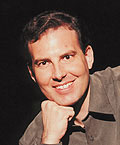 As a Stanford University graduate student in 1993, Larry M. Augustin could not afford a Unix workstation. So he built his own using the then-new Linux kernel invented by Linus Torvalds; soon afterward he started taking orders for similar systems.
In late 1993, Augustin founded VA Research, now VA Linux Systems Inc. After completing a doctorate in electrical engineering, he devoted himself full time to the Sunnyvale, Calif., company, of which he is president and chief executive officer. VA Linux Systems sells workstations and servers running Linux. The company also provides technical support services.
Augustin began working with Unix in 1984 at AT&T Bell Laboratories. A strong proponent of open-source software, he sits on the board of trade group Linux International of Amherst, N.H.
Besides the doctorate from Stanford, Augustin also has a master's degree in electrical engineering from the school and a bachelor's degree from the University of Notre Dame.
GCN associate editor Patricia Daukantas interviewed Augustin by telephone as he was driving to his company's headquarters.
GCN:'Why do you build systems that run Linux, rather than publishing a Linux version yourself or writing applications for Linux?
GCN:'How does your company optimize its systems for Linux?
GCN:'What is your biggest Linux system installation within the federal government?
GCN:'What's the biggest hurdle leading to widespread adoption of Linux within the government?
GCN:'Isn't Linux better known for servers than for desktop computers?
GCN:'How long will it take to develop the number of applications for Linux that now exist for Windows?
GCN:'The open-source movement has attracted some large companies. How closely do you work with them?
GCN:'What is your relationship with other commercial Linux distributors such as Caldera Systems Inc. of Orem, Utah, and Red Hat Inc. of Durham, N.C.?
GCN:'What is the Debian Project, and how did you get involved in it?
GCN:'When people ask you about the security of Linux, how do you answer?
GCN:'So Linux users don't really worry about somebody inserting bogus code into a Linux distribution?
GCN:'What do you think will be the future of Linux within government?
In late 1993, Augustin founded VA Research, now VA Linux Systems Inc. After completing a doctorate in electrical engineering, he devoted himself full time to the Sunnyvale, Calif., company, of which he is president and chief executive officer. VA Linux Systems sells workstations and servers running Linux. The company also provides technical support services.
Augustin began working with Unix in 1984 at AT&T Bell Laboratories. A strong proponent of open-source software, he sits on the board of trade group Linux International of Amherst, N.H.
Besides the doctorate from Stanford, Augustin also has a master's degree in electrical engineering from the school and a bachelor's degree from the University of Notre Dame.
GCN associate editor Patricia Daukantas interviewed Augustin by telephone as he was driving to his company's headquarters.
GCN:'Why do you build systems that run Linux, rather than publishing a Linux version yourself or writing applications for Linux?
GCN:'How does your company optimize its systems for Linux?
GCN:'What is your biggest Linux system installation within the federal government?
GCN:'What's the biggest hurdle leading to widespread adoption of Linux within the government?
GCN:'Isn't Linux better known for servers than for desktop computers?
GCN:'How long will it take to develop the number of applications for Linux that now exist for Windows?
GCN:'The open-source movement has attracted some large companies. How closely do you work with them?
GCN:'What is your relationship with other commercial Linux distributors such as Caldera Systems Inc. of Orem, Utah, and Red Hat Inc. of Durham, N.C.?
GCN:'What is the Debian Project, and how did you get involved in it?
GCN:'When people ask you about the security of Linux, how do you answer?
|
GCN:'So Linux users don't really worry about somebody inserting bogus code into a Linux distribution?
GCN:'What do you think will be the future of Linux within government?
NEXT STORY: Telecommuting service arrives