Student aid office banks on trust

Around the Education Department's Office of Student Financial Assistance, it's known as 'the hairball.'

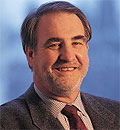
By Richard W. WalkerGCN StaffAround the Education Department's Office of Student Financial Assistance, it's known as 'the hairball.'It's a flow chart of the department's student financial aid system. It depicts a dense tangle of routes and destinations.'Jay Leno once used it in his monologue,' said Andrew Boots, champion for information privacy and security for OSFA. 'He said, 'Look at this. Believe it or not, this is the simplified view of a federal agency program.' 'But it's no joke.'It is enormously complicated, but we're talking about a program that delivers $50 billion a year,' he said. 'So not only does it need to be complicated because there are all these different ways we do it, but it also needs to be complicated to make sure we've got the right controls to prevent fraud as best as we can.'OSFA facilitates loans to students at 6,000 institutions, from Harvard University to Tony's Trucking Academy. In all, the agency deals with about 30 million people: applicants, current borrowers and borrowers who have finished school and are repaying their loans.Under a three-year network modernization plan, OSFA wants to let those 30 million customers review their records via the Web.Boots' job is to make sure that technicians follow proper security and privacy policies as they revamp the automated system that supports the student aid process.'The vision is for a more Web-based, commercial, off-the-shelf system for more commercial practices,' he said. He's planning 'for people to do the entire process in a paperless way.'OSFA saves $38 for every application that's submitted online.'And when you're getting 10 million applications a year, saving $38 a pop really pays off,' Boots said. 'In terms of lowering unit cost, the more money we save, the more money we've got to help kids.'Students can file applications online, but they can't sign them. They have to print the signature page, sign it and mail it to OSFA.Once student information is in the system, it moves over leased lines. That's about to change.'We've got about 15,000 places where we move lots and lots of data about loans and students, particularly at the application stage, when we may move 50G or 60G of data a day,' Boots said. 'When we start moving things over the Internet, the risk that the pathways will get clogged goes down, but the risk of losing data goes up a little bit.'The volume and sensitive nature of the information creates formidable hurdles to the system's security and privacy.'We get information from about 10 million strangers a year,' Boots said. 'Holding on to people's information is really an awesome responsibility.'Applicants for student loans must submit detailed information about personal and family income, assets, home ownership and similar data.'Many, if not all, Americans would view information about their income and assets as pretty sensitive stuff,' he said. 'They have to give it to us to apply for aid, and we have to protect it.'OSFA's biggest security challenge will be in providing remote access via the Web to the system's data center in Meriden, Conn.The modernization plan calls for a combined Internet, extranet and intranet strategy, eliminating the landscape of stovepipes in the current system.Under the plan, applicants and borrowers will use a Web browser, personal identification numbers and passwords to access information protected by Secure Sockets Layer encryption.Contractors, employees and auditors will access data via an intranet using token-based digital certificates.An extranet will support batch file transfers to 15,000 destination points, including schools, state agencies and guarantee agencies, using a virtual private network and digital certificates.Eventually, Boots said, 'We're probably going to be issuing smart cards and encryption tokens to everybody who has access and begin to do a much better job of tracking what they do and when they do it.'Boots wasn't always a security sage. When he was a systems technician at the Justice Department from 1983 to 1997 he dismissed computer security as a nuisance.'I was an operations guy,' Boots said. 'My job was to get people computers so they could do stuff. I viewed security as annoying. Yeah, we had to have good security, and Justice was very serious about it. But I wasn't an enthusiast, I wasn't a specialist and I certainly wasn't an expert.'His transformation into a security and privacy specialist began at Vice President Gore's National Partnership for Reinventing Government, where he arrived in 1997 with a bad case of burnout after 13 years in the systems trenches at Justice.In a sense, Boots reinvented himself at NPR.'People told me NPR would be a great place to work, but nobody told me I was going to be inspired,' he said.At NPR, computer security was integral to Gore's Access America plan for online government.'The vice president's idea is that we want to give the American people an opportunity to get government services without standing in line, going from office to office or filling out paper forms,' Boots said. 'In order to realize that vision, we have to promise security and privacy, or people aren't going to do it. They'll say, 'I'll do the paper, thank you very much.''Boots, an information systems design graduate of Georgia Tech, enjoyed the cerebral world of NPR. 'It was very abstract,' he said. 'I got into that.'Early last year, Greg Woods, OSFA's chief operating officer and former deputy director for information technology, customer service and regulatory reform at NPR, offered Boots the security champion's job at OSFA.Boots balked at the offer.'My initial reaction was, why would I want to do that? I'm just having a wonderful time,' he said.But when he realized that working with the student financial aid system would give him a chance to turn the ideas he developed at NPR into reality''the place where the rubber really meets the road''he was on his way to the Education Department.These days, after about a year on the job, Boots spends part of his time on low-tech bureaucratic obligations such as paper-pushing and memo writing and part of his time on high-tech matters such as meeting vendors and keeping up with the latest security technology.But most of his time is focused on 'the sweet spot in the middle'cheerleading and telling everybody we can do it,' he said.Right now, Boots and OSFA are bracing for big challenges ahead.'We're facing this tsunami of college-age students. The baby boom echo is coming. We're going to have more and more and more people wanting to get financial aid, and this is an organization that has to get ready for that,' he said.But that's no cause for anxiety'Boots loves what he does.
Boots oversees protections for a system that delivers $50 billion a year


"Holding on to people's information is really an awesome responsibility." ' Andrew Boots


Planning strategy


Hitting the road


X
This website uses cookies to enhance user experience and to analyze performance and traffic on our website. We also share information about your use of our site with our social media, advertising and analytics partners. Learn More / Do Not Sell My Personal Information
Accept Cookies
X
Cookie Preferences Cookie List

Do Not Sell My Personal Information

When you visit our website, we store cookies on your browser to collect information. The information collected might relate to you, your preferences or your device, and is mostly used to make the site work as you expect it to and to provide a more personalized web experience. However, you can choose not to allow certain types of cookies, which may impact your experience of the site and the services we are able to offer. Click on the different category headings to find out more and change our default settings according to your preference. You cannot opt-out of our First Party Strictly Necessary Cookies as they are deployed in order to ensure the proper functioning of our website (such as prompting the cookie banner and remembering your settings, to log into your account, to redirect you when you log out, etc.). For more information about the First and Third Party Cookies used please follow this link.

Allow All Cookies

Manage Consent Preferences

Strictly Necessary Cookies - Always Active

We do not allow you to opt-out of our certain cookies, as they are necessary to ensure the proper functioning of our website (such as prompting our cookie banner and remembering your privacy choices) and/or to monitor site performance. These cookies are not used in a way that constitutes a “sale” of your data under the CCPA. You can set your browser to block or alert you about these cookies, but some parts of the site will not work as intended if you do so. You can usually find these settings in the Options or Preferences menu of your browser. Visit www.allaboutcookies.org to learn more.

Sale of Personal Data, Targeting & Social Media Cookies

Under the California Consumer Privacy Act, you have the right to opt-out of the sale of your personal information to third parties. These cookies collect information for analytics and to personalize your experience with targeted ads. You may exercise your right to opt out of the sale of personal information by using this toggle switch. If you opt out we will not be able to offer you personalised ads and will not hand over your personal information to any third parties. Additionally, you may contact our legal department for further clarification about your rights as a California consumer by using this Exercise My Rights link

If you have enabled privacy controls on your browser (such as a plugin), we have to take that as a valid request to opt-out. Therefore we would not be able to track your activity through the web. This may affect our ability to personalize ads according to your preferences.

Targeting cookies may be set through our site by our advertising partners. They may be used by those companies to build a profile of your interests and show you relevant adverts on other sites. They do not store directly personal information, but are based on uniquely identifying your browser and internet device. If you do not allow these cookies, you will experience less targeted advertising.

Social media cookies are set by a range of social media services that we have added to the site to enable you to share our content with your friends and networks. They are capable of tracking your browser across other sites and building up a profile of your interests. This may impact the content and messages you see on other websites you visit. If you do not allow these cookies you may not be able to use or see these sharing tools.

If you want to opt out of all of our lead reports and lists, please submit a privacy request at our Do Not Sell page.

Save Settings
Cookie Preferences Cookie List

Cookie List

A cookie is a small piece of data (text file) that a website – when visited by a user – asks your browser to store on your device in order to remember information about you, such as your language preference or login information. Those cookies are set by us and called first-party cookies. We also use third-party cookies – which are cookies from a domain different than the domain of the website you are visiting – for our advertising and marketing efforts. More specifically, we use cookies and other tracking technologies for the following purposes:

Strictly Necessary Cookies

We do not allow you to opt-out of our certain cookies, as they are necessary to ensure the proper functioning of our website (such as prompting our cookie banner and remembering your privacy choices) and/or to monitor site performance. These cookies are not used in a way that constitutes a “sale” of your data under the CCPA. You can set your browser to block or alert you about these cookies, but some parts of the site will not work as intended if you do so. You can usually find these settings in the Options or Preferences menu of your browser. Visit www.allaboutcookies.org to learn more.

Functional Cookies

We do not allow you to opt-out of our certain cookies, as they are necessary to ensure the proper functioning of our website (such as prompting our cookie banner and remembering your privacy choices) and/or to monitor site performance. These cookies are not used in a way that constitutes a “sale” of your data under the CCPA. You can set your browser to block or alert you about these cookies, but some parts of the site will not work as intended if you do so. You can usually find these settings in the Options or Preferences menu of your browser. Visit www.allaboutcookies.org to learn more.

Performance Cookies

We do not allow you to opt-out of our certain cookies, as they are necessary to ensure the proper functioning of our website (such as prompting our cookie banner and remembering your privacy choices) and/or to monitor site performance. These cookies are not used in a way that constitutes a “sale” of your data under the CCPA. You can set your browser to block or alert you about these cookies, but some parts of the site will not work as intended if you do so. You can usually find these settings in the Options or Preferences menu of your browser. Visit www.allaboutcookies.org to learn more.

Sale of Personal Data

We also use cookies to personalize your experience on our websites, including by determining the most relevant content and advertisements to show you, and to monitor site traffic and performance, so that we may improve our websites and your experience. You may opt out of our use of such cookies (and the associated “sale” of your Personal Information) by using this toggle switch. You will still see some advertising, regardless of your selection. Because we do not track you across different devices, browsers and GEMG properties, your selection will take effect only on this browser, this device and this website.

Social Media Cookies

We also use cookies to personalize your experience on our websites, including by determining the most relevant content and advertisements to show you, and to monitor site traffic and performance, so that we may improve our websites and your experience. You may opt out of our use of such cookies (and the associated “sale” of your Personal Information) by using this toggle switch. You will still see some advertising, regardless of your selection. Because we do not track you across different devices, browsers and GEMG properties, your selection will take effect only on this browser, this device and this website.

Targeting Cookies

We also use cookies to personalize your experience on our websites, including by determining the most relevant content and advertisements to show you, and to monitor site traffic and performance, so that we may improve our websites and your experience. You may opt out of our use of such cookies (and the associated “sale” of your Personal Information) by using this toggle switch. You will still see some advertising, regardless of your selection. Because we do not track you across different devices, browsers and GEMG properties, your selection will take effect only on this browser, this device and this website.