
INTERVIEW: John Guy, HP's government organization chief





A 23-year veteran of Hewlett-Packard Co., John Guy leads the company's government marketing efforts.
GUY: The federal market has its own language and its own set of procurement policies. We find the federal government is a leader in pursuing new technologies. In many cases when we bring out a new product, we tend to ship first to the government. Many times we'll build something that's a little bit special for the government.Also, the federal government is clearly a global customer. There are a lot of global issues important to large government organizations.For example, we sold over the last couple of years thousands of desktop systems and servers to the State Department. One of the things they asked us to do was to put an auto-switching power supply on them, so that their users'wherever they are in the world'wouldn't have to know which current to set them for. If they set the computers on the wrong current, they could burn them up. So an auto-switching power supply is an example of a global issue.GUY: For the past three to four years, we've been a major supplier to the Army. In partnership with Government Technology Services Inc. of Chantilly, Va., we've held Army PC-2 and PC-3 contracts that have supplied about 25,000 desktop systems per year to the Army.We negotiated one of the first blanket purchasing agreements in the Air Force a few years back, to sell HP printers. We sell, on average, 10,000 to 15,000 printers per year through the Air Force contract. On the State contract, we are selling HP desktop systems and servers for installation in embassies all over the world.The Census Bureau selected HP laptops to check the Census 2000 results []. We're just completing shipment of about 10,000 laptops to Census in conjunction with Comark Federal Systems of Chantilly, Va.GUY: We worked with the Postal Service to define the standards for postage downloads through the private company Stamps.com Inc. of Santa Monica, Calif. The project calls for developing the ability to print postal indicia at the user's location and to set up the software for the Postal Service to bill the individual user.We just put some high-end HP servers in the Smithsonian Institution for projects there.Another area is HP's implementation of e-speak. We're working with several government agencies on implementing e-speak, which is basically a universal language that lets devices speak to one another or facilitates the connection of devices over the Internet.It's a new technology that's coming out from HP right now. We're talking to a lot of potential e-speak users in both the government and the commercial worlds.GUY: Last year, everybody was really focused on year 2000. We have seen a rollover of the Y2K focus and even individuals who were working on it into information assurance issues, which is the No. 1 area of focus for this year in a lot of the agencies. From my perspective, it's definitely information security.GUY: There are only two things I can be really sure of. One, it'll be a lot different than it is today. The other is, whatever what you write now will probably be wrong. But having said that, I'd be willing to hazard a few guesses.I think there'll be growth in the whole outsourcing process. There will be more and more seat management approaches. One of the issues that has caused that to be a bit slow in takeoff is that most large agencies don't have the common operating environment internally that's necessary to be successful in seat management. But I think that'll change over time.I do think the application service providers and the Internet providers will be much more influential, and probably hardware will be leveraged through those groups. Of course, there'll be a large growth in e-commerce and e-delivery of products and services. That's certainly a bet HP's making.Ten years is a long time to make a guess ahead, though. If you'd asked me about the Web 10 years ago, I sure wouldn't have been able to predict where we are today.GUY: We're certainly supporting Linux. We ship a significant percentage of our NetServers with Linux. Any time there's an additional source for good software that helps our customers pursue their applications, we support it.GUY: We have specific conditions and requirements for which we'll sell that source code or provide that source code for sale today. Beyond that, I don't know that we would actually release it.GUY: I mentioned earlier that we often see the government customer as one that pursues leading-edge technology. So I think we'll have a fair number that will be interested in testing IA-64 and developing with it for their environments.We'll see some agencies that will move forward quickly, and then we'll probably have an ongoing but steady transition to the new architecture for different systems and applications.The first priority would be any application where people are looking at working more efficiently in a heterogeneous environment.GUY: I'd have to say it's too early to tell. People just don't have enough information about it at this time or haven't had an appropriate amount of time to evaluate it.GUY: I have been at HP for more than 20 years'all of that time in the Washington area. I reached a point in my career where I was responsible for management of a geographic territory that comprised about 10 states in the mid-Atlantic region.A key element for me to be successful was trying to sell to the federal government. Initially, HP had no organization that had the ability to develop resources for the government as a single focused customer on a national basis.I was working with a team of people, but we could really only approach the government if those customers were contained within my geographic region.If we dealt with the Navy in Norfolk, Va., under one set of policies, but then wanted to deal with the Navy in San Diego, I had no authority to enter into the discussions. Instead, I had to go to managers in California and see if they were interested in partnering in the same way.In a nutshell, I think the government has become much more like a commercial organization. For example, the execution of BPAs today lets customers not only get to contract in a much shorter time but also to specify more clearly exactly what they're looking for.The process is quicker and easier to deal with than it was, and it allows for a more open interchange between vendors and government customers. It's probably overall less expensive for both government and vendors.
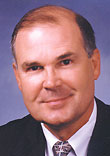 A 23-year veteran of Hewlett-Packard Co., John Guy leads the company's government marketing efforts.
Early in his career, while working in HP's mid-Atlantic region, Guy said he chafed under policies that restricted him from approaching government customers on the West Coast on the same terms as those in the Washington area.
So in 1994, he formed the HP computer products group's first sales and marketing team devoted to government users.
In 1996, Guy founded the HP federal government organization. He became general manager of the Rockville, Md., organization in 1997. Last year, he started bringing state and local government sales efforts into the division.
Guy received a bachelor's degree in political science from Pennsylvania State University.
GCN associate editor Patricia Daukantas interviewed Guy by telephone.
GCN:'How is working in the federal market different from working in the commercial market?
GCN:'What current projects or contracts is Hewlett-Packard Co. doing with the federal government?
GCN, March 20, Page 1
GCN:'Is HP doing any government projects that could be labeled electronic commerce?
GCN:'When you talk to potential government customers, what do they say they are looking for?
GCN:'Ten years from now, will agencies leasing more software or hardware?
GCN:'What do you think of the evolution of open-source software, especially Linux?
GCN:'Any plans to release the source code for HP-UX as Sun Microsystems Inc. is considering for Solaris?
GCN:'When the first Intel IA-64 processors come out later this year, how fast do you expect government agencies to migrate to the new architecture?
GCN:'What kind of feedback have you been getting from government customers about Microsoft Windows 2000?
GCN:'How is federal procurement changing?
Early in his career, while working in HP's mid-Atlantic region, Guy said he chafed under policies that restricted him from approaching government customers on the West Coast on the same terms as those in the Washington area.
So in 1994, he formed the HP computer products group's first sales and marketing team devoted to government users.
In 1996, Guy founded the HP federal government organization. He became general manager of the Rockville, Md., organization in 1997. Last year, he started bringing state and local government sales efforts into the division.
Guy received a bachelor's degree in political science from Pennsylvania State University.
GCN associate editor Patricia Daukantas interviewed Guy by telephone.
GCN:'How is working in the federal market different from working in the commercial market?
GCN:'What current projects or contracts is Hewlett-Packard Co. doing with the federal government?
GCN, March 20, Page 1
GCN:'Is HP doing any government projects that could be labeled electronic commerce?
GCN:'When you talk to potential government customers, what do they say they are looking for?
GCN:'Ten years from now, will agencies leasing more software or hardware?
GCN:'What do you think of the evolution of open-source software, especially Linux?
GCN:'Any plans to release the source code for HP-UX as Sun Microsystems Inc. is considering for Solaris?
GCN:'When the first Intel IA-64 processors come out later this year, how fast do you expect government agencies to migrate to the new architecture?
GCN:'What kind of feedback have you been getting from government customers about Microsoft Windows 2000?
GCN:'How is federal procurement changing?