
INTERVIEW: Thomas S. Buchsbaum, Dell's teacher





Thomas S. Buchsbaum has been a player through much of PC industry history.
BUCHSBAUM: My career in information technology goes back even further. After doing some contract programming out of college, I went to work for Zenith Electronics Corp. in 1971, and I created the Y2K bug.BUCHSBAUM: In a couple of the programs I wrote, yes. When you have to fit a payroll system into 16K of memory, every byte counts.I had progressively broader IT responsibilities within Zenith. In 1987, I moved to Zenith Data Systems as the vice president of systems engineering. I did projects related to applying PC technology to large industries, educational institutions and government. I was asked to head up the federal operation in the Washington area, which I did for about a decade, through many of the Air Force contracts.BUCHSBAUM: It's a perfect example of the difference between the old way of buying IT and the new way. In those days, as proud as I am of my role in delivering on the promises made, the acquisitions had problems. The customers were crying to get products and services. The hurdles that were placed in front of them to acquire technology were enormous. In some cases, the customer would spend 12 to 18 months designing a request for proposals and coming up with specifications of exactly what was needed and then turning it over to industry to compete, as specified, at the lowest possible price.By the time the competition was over, the original specs were largely obsolete, and that was just the beginning of the battle. The next step was a round of protests, or two or three, where the lawyers and judges had more to say about which vendor would supply the products. By the time the protests were over, the products were completely obsolete, and a new contract would get negotiated.That's not a very effective way to acquire products and services that are improving daily.Today, with changes in law and regulations, the federal government is much more quickly able to satisfy its needs with current technology and to consider more than price alone. It can look at value and the total cost of ownership. My background has given me the opportunity to see these remarkable changes in the last five years.BUCHSBAUM: It was less than three years ago that we hit the $1 million level. It's hard to keep up with how fast that changes. Now I believe it's over $40 million a day.BUCHSBAUM: I can't say specifically. But between federal, state and local governments, we believe this year we will approach, if not cross, the $1 billion mark.BUCHSBAUM: They're buying everything from portables to desktop systems to storage products and servers. The Gigabuys site offers products that are not Dell-branded. The most frequently ordered product is the OptiPlex desktop computer.BUCHSBAUM: I can't tell you the percentage, but NT is a leading federal choice. We sell Windows 98, NT, Win 2000 and Linux. We also can install other customer-specified operating systems, such as UnixWare [from Santa Cruz Operation Inc. of Santa Cruz, Calif.].In general, the highest-speed processors from Intel Corp. are selling as fast as we can get our hands on them. Performance really matters with today's software applications and the rich Internet multimedia environment. Customers get in line for the higher-performance machines.BUCHSBAUM: The big PowerEdge servers are selling on the Web, but usually with a server that size, there is a consultation that takes place'how exactly do you want this configured? How many channels for the RAID arrays? Something that high-end frequently needs to be engineered person-to-person.That said, you can go into our E-Deals and pick a preconfigured server, designed and tested to operate in a certain configuration.BUCHSBAUM: Quite a number of applications. The government is attempting to get all of its major functions Web-enabled. There's a lot of demand for servers tied to building that infrastructure for government.Many of our customers are finding ways of using the Internet to reach their constituents. They're upgrading storage. Trying to manage hundreds of different servers, each with its own storage, becomes an administrative nightmare. Each server runs out of storage at a different time or has inadequate backup or disaster plans. Consolidating storage is a key network asset. By designing a storage area network or a network-attached storage architecture, the users can craft manageable storage across a large part of their network. It's easier to grow and more practical for backup and recovery.BUCHSBAUM: Our customers are clamoring to learn what we ourselves did on the Internet. We've been something of a pioneer and have by many measures the largest commercial Internet presence. It has proven itself to be robust and available. Less than three years ago we sold a million dollars a day on the Web, and now it's over $40 million. That's a 4,000 percent increase.Our Web environment is 350 Dell servers running Microsoft software. Because of the way we structured it, if we need to put 15 more servers on our Web site, we can do that. If one has to be maintained, the site doesn't go down. We've gone way out of our way to avoid single points of failure. It's a server farm with multiple clusters involved.BUCHSBAUM: Our e-government initiative is largely customer-driven. In the last few years, our customers have expressed a tremendous desire to learn how to use technology to reduce their costs, open up their information to those who need to know and provide better service to their constituents. They have asked to come and see how we do it.The earliest government initiatives were to develop a presence on the Web that would put out information for constituents. These started as modest endeavors'where the agency is located, what the phone number is. The initiatives have grown to provide much more information, such as the Securities and Exchange Commission's Electronic Data Gathering, Analysis and Retrieval system, or the Library of Congress' Thomas and the American memory collection. The Census Bureau is making data available to individuals and companies. The Patent and Trademark Office allows searching. The IRS provides not only forms online but also opportunities for online tax filing.The government has gone from a simple, one-dimensional informational Web presence to having much more value. People can search for and find the specific information they need.The next step is to go beyond value-added information retrieval to transactions'the core business of each agency. It ultimately will take the constituents from standing in line to getting information and services online.The dichotomy that has to be balanced is the need to open up government and pull the cork out of the bottle of valuable data, while on the other hand protecting privacy of individuals' information and providing security for the government's information.
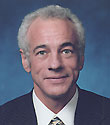 Thomas S. Buchsbaum has been a player through much of PC industry history.
In a 10-year career with the former Zenith Data Systems, he lived through the drama of the Air Force's groundbreaking Desktop series of contracts. Now, as vice president of education at Dell Computer Corp., he is witnessing the swift evolution of electronic commerce and electronic government initiatives.
Buchsbaum spent 16 years at Zenith Electronics Corp. of Glenview, Ill., where he was head of management information systems and responsible for communications and information management.
As general manager of ZDS' federal business from 1987 until 1997, he led the execution of Air Force Desktop and other contracts worth about $3 billion.
A certified public accountant, Buchsbaum received a master's degree in business administration from the University of Chicago. He also attended the Massachusetts Institute of Technology.
GCN chief technology editor Susan M. Menke interviewed Buchsbaum by telephone.
GCN:'Your PC industry career goes back quite a few years.
GCN:'You take full responsibility?
GCN:'What do you remember most about the Desktop series?
GCN:'The last time I heard, Dell was configuring about $20 million a day worth of hardware on its Web site.
GCN:'What percentage is federal?
GCN:'What are the leading boxes configured on your Web site?
GCN:'What is the percentage of federal orders that ask for Microsoft Windows NT or 2000 preinstalled?
GCN:'What about the eight-way servers? Are they selling on the Web?
GCN:'What are agencies using the big servers for?
GCN:'What is Dell doing in electronic government?
GCN:'What advice are you giving agencies that want to do scalable serving?
Thomas S. Buchsbaum
In a 10-year career with the former Zenith Data Systems, he lived through the drama of the Air Force's groundbreaking Desktop series of contracts. Now, as vice president of education at Dell Computer Corp., he is witnessing the swift evolution of electronic commerce and electronic government initiatives.
Buchsbaum spent 16 years at Zenith Electronics Corp. of Glenview, Ill., where he was head of management information systems and responsible for communications and information management.
As general manager of ZDS' federal business from 1987 until 1997, he led the execution of Air Force Desktop and other contracts worth about $3 billion.
A certified public accountant, Buchsbaum received a master's degree in business administration from the University of Chicago. He also attended the Massachusetts Institute of Technology.
GCN chief technology editor Susan M. Menke interviewed Buchsbaum by telephone.
GCN:'Your PC industry career goes back quite a few years.
GCN:'You take full responsibility?
GCN:'What do you remember most about the Desktop series?
GCN:'The last time I heard, Dell was configuring about $20 million a day worth of hardware on its Web site.
GCN:'What percentage is federal?
GCN:'What are the leading boxes configured on your Web site?
GCN:'What is the percentage of federal orders that ask for Microsoft Windows NT or 2000 preinstalled?
GCN:'What about the eight-way servers? Are they selling on the Web?
GCN:'What are agencies using the big servers for?
GCN:'What is Dell doing in electronic government?
GCN:'What advice are you giving agencies that want to do scalable serving?