
INTERVIEW: Rodney C. Adkins, IBM's futurist
Featured eBooks





Rodney C. Adkins, IBM Corp.'s general manager for Web servers, has spent his entire career with Big Blue.
ADKINS: As part of our Web server business unit, we focus on Unix products that range from workstations all the way up to large-scale supercomputers. The brands are called RS/6000 and NUMA-Q.NUMA-Q is a brand that we added to our portfolio last September when we merged with Sequent [Computer Systems Inc. of Beaverton, Ore.].ADKINS: Oak Ridge National Laboratory recently upgraded theirs. The National Weather Service has a big machine that's looking at climate control []. The National Center for Atmospheric Research has another, and the National Energy Research Scientific Computing Center is another example.ADKINS: The most visible application is clearly in the scientific and technical computing area, but we have a number of government personnel who are using the machines for typical business purposes. That would include databases, business intelligence and other commercial applications.Given the size of many of these machines, the scientific and technical uses tend to get a lot more of the visibility. ADKINS: With any technology, you approach a point where potentially you're dealing with physical barriers. But the design and the architecture of our offerings pretty much provide what I would describe as unlimited scalability.IBM has eight research labs around the world that look at advanced technologies and high-performance computing techniques. As best as most of our top scientists can tell, there is considerable leeway before we have to worry about hitting some theoretical limit in terms of the scalability of the processors or interconnect technology or even the software.ADKINS: We've been looking at that for a number of years, and every time we get to that point, there's always some technology breakthrough.We did two innovative things related to processors and fabrication technology. Last year we introduced copper as part of our microprocessor technology road map []. We also came up with something called silicon on insulator [SOI], which insulates transistors on a chip to reduce power leakage and improve performance [].This leads into a set of offerings that we will announce in the second half of 2001 and the first half of 2002, called Power IV. In that architecture, we're taking the IBM innovations like copper and SOI and adding high-speed, high-performance capabilities.ADKINS: We're doing two things with Sequent. One, as part of the acquisition, we picked up a new class of server offerings. The best way to describe them is as large servers that can start off with a building block. Through interconnection technology you can make a small server a bigger server just by adding a number of building blocks. That's what nonuniform memory access technology is about. It lets you scale from a small symmetric multiprocessing server to a larger SMP server while maintaining the same programming model.We will extend that across all our Unix servers, from entry to midrange and large-scale. That will give us capabilities across the entire product line with the ability to interconnect a number of servers and make them look like one big server.The second piece is called NUMACenter, which is an interoperability set of software that allows mixed-mode environments. A lot of customers have more than one operating system environment, and many are rolling out both Unix and Microsoft Windows NT. NUMACenter lets customers have a common managed environment with a common management structure for both Unix and NT servers.ADKINS: No, actually both. If you look at our product line today, the focus is primarily AIX. You've probably heard of a project called Monterey. With Monterey, we're taking AIX and extending it to [Intel Corp.'s 64-bit] IA-64 technology. Today AIX runs on our Power processors. All we're doing is taking those capabilities and moving them to Intel technologies.ADKINS: Actually, one of the original members was Sequent. The pieces we got from Sequent were the NUMA capabilities we were building into AIX and the feature called multipath I/O, which gets into some really exotic ways to manage the systems input/output structure.The other piece that's complementary to that is Linux. We see the open-source operating environment being an extension of common, open industry standards.Linux can also be exploited across platforms. It will run on servers ranging from our Netfinity base all the way up to System/390. So that's why we say Linux is going to be complementary to AIX. We're going to build in Linux compatibility execution environments with AIX, so you'll be able to run many Linux applications under AIX.In the future, you'll be able to run Monterey as the industrial-strength, mission-critical operating system for the back-end server. Then you can have front-end application servers running Linux under NUMACenter.ADKINS: You'll see the first release of Monterey late this year. We have a number of offerings based on Netfinity and NUMA-Q that will be rolling out after we introduce Monterey.ADKINS: I think the server you're talking about is a NUMA-Q product we'll be introducing in the first quarter of 2001. The code name is Viper, and it's an Intel Itanium server that will be able to scale from a four-way to a 16-way system. It will showcase Monterey, obviously. And since it's an Intel product, it should be able to run Windows. With the NUMACenter enhancements that we're building on the product and the Linux compatibility enhancements that we're building into AIX/Monterey, you should be able to run applications in all three environments.Customers are trying to manage their environments, and they also want to be agile in terms of adding new applications. Viper in the future will be running big databases, and it's flexible enough to run electronic business or Internet applications. The customer will have the flexibility to run the database using AIX/Monterey, which is what you want to have a highly reliable, scalable, highly available data environment. It will give the customer some flexibility to deploy Windows or Linux front-end applications based on their business model.
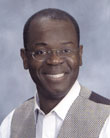 Rodney C. Adkins, IBM Corp.'s general manager for Web servers, has spent his entire career with Big Blue.
In 1981 he joined IBM as an engineer after completing his second bachelor's degree.
After a short break for graduate school, he worked in product development, business operations and general management, and eventually became IBM's vice president of development for commercial desktop computers.
In 1996, Adkins was named general manager of commercial desktop systems in IBM's personal systems group. In 1998, he took over his current post, in which he manages the Unix workstation and server product lines of IBM's enterprise systems group.
Within IBM, Adkins serves on the worldwide management committee and the board of governors of the IBM Academy of Technology. He is also co-chairman of IBM's Multicultural People in Technology initiative.
Adkins has a bachelor's degree in physics from Rollins College.
He received a second bachelor's and a master's degree in electrical engineering from the Georgia Institute of Technology.
GCN associate editor Patricia Daukantas interviewed Adkins by telephone.
GCN:'What lines of servers and workstations fall under your purview?
GCN:'IBM Corp. is working on a couple of the Energy Department's Accelerated Strategic Computing Initiative supercomputers, ASCI Blue Pacific and ASCI White. What other big RS/6000 installations are there within the government?
GCN, Feb. 21, Page 33
GCN:'Are the RS/6000 machines mainly for scientific computing, or are agencies using them for data warehousing or hosting large Web sites?
GCN:'Are there any practical limitations on RS/6000 multiprocessing?
GCN:'In the relatively near term, won't you bump up against the limits of fabrication'making spacing between transistors any smaller?
GCN, May 8, Page 36GCN, July 3, Page 38
GCN:'You mentioned the acquisition of Sequent last year. What is IBM doing with the NUMA-Q technology that you got from Sequent?
GCN:'When you're talking about Unix, you mean AIX, not Linux, right?
GCN:'How is the Monterey project coming along? You're working with Santa Cruz Operation Inc. of Santa Cruz, Calif., and Intel on it, right?
GCN:'When will Project Monterey hit the streets as a product?
GCN:'I heard that IBM is developing a flexible IA-64 server that is capable of running 64-bit Linux, Windows 2000 and Monterey simultaneously. How might such a machine have an advantage over networking standard Unix and Windows servers together?
Rodney C. Adkins
In 1981 he joined IBM as an engineer after completing his second bachelor's degree.
After a short break for graduate school, he worked in product development, business operations and general management, and eventually became IBM's vice president of development for commercial desktop computers.
In 1996, Adkins was named general manager of commercial desktop systems in IBM's personal systems group. In 1998, he took over his current post, in which he manages the Unix workstation and server product lines of IBM's enterprise systems group.
Within IBM, Adkins serves on the worldwide management committee and the board of governors of the IBM Academy of Technology. He is also co-chairman of IBM's Multicultural People in Technology initiative.
Adkins has a bachelor's degree in physics from Rollins College.
He received a second bachelor's and a master's degree in electrical engineering from the Georgia Institute of Technology.
GCN associate editor Patricia Daukantas interviewed Adkins by telephone.
GCN:'What lines of servers and workstations fall under your purview?
GCN:'IBM Corp. is working on a couple of the Energy Department's Accelerated Strategic Computing Initiative supercomputers, ASCI Blue Pacific and ASCI White. What other big RS/6000 installations are there within the government?
GCN, Feb. 21, Page 33
GCN:'Are the RS/6000 machines mainly for scientific computing, or are agencies using them for data warehousing or hosting large Web sites?
GCN:'Are there any practical limitations on RS/6000 multiprocessing?
GCN:'In the relatively near term, won't you bump up against the limits of fabrication'making spacing between transistors any smaller?
GCN, May 8, Page 36GCN, July 3, Page 38
GCN:'You mentioned the acquisition of Sequent last year. What is IBM doing with the NUMA-Q technology that you got from Sequent?
GCN:'When you're talking about Unix, you mean AIX, not Linux, right?
GCN:'How is the Monterey project coming along? You're working with Santa Cruz Operation Inc. of Santa Cruz, Calif., and Intel on it, right?
|
GCN:'When will Project Monterey hit the streets as a product?
GCN:'I heard that IBM is developing a flexible IA-64 server that is capable of running 64-bit Linux, Windows 2000 and Monterey simultaneously. How might such a machine have an advantage over networking standard Unix and Windows servers together?
NEXT STORY: Campbell: Keep SIPRnet separate from NIPRnet