Civilian lab researchers gain computing edge

A 6-TFLOPS supercomputer at the Pittsburgh Supercomputing Center will plug high-level research into the National Science Foundation's very-high-speed Backbone Network Service and the Abilene research network, the precursor of Internet 2.

NSF this month awarded a $45 million, three-year contract for the center and its vendor partner, Compaq Computer Corp., to build a massive system that executes more than 1 trillion floating-point operations per second on sustained scientific calculations.The Terascale Computing System will host research projects on a scale previously possible only for defense and weapons scientists at national laboratories.The theoretical peak speed is about 6 TFLOPS, said Robert R. Borchers, director of advanced computational infrastructure research in NSF's Directorate for Computer and Information Science and Engineering. But real-world calculations usually achieve only up to 20 percent of the hypothetical rate because of communication delays between processors.Nevertheless, theoretical peak speed is one of the few yardsticks for measuring supercomputers. The Pittsburgh machine will join an elite but growing group of massive systems at Energy Department weapons laboratories and Defense Department research labs [, and ].As proposed by the Pittsburgh center and Compaq, the Terascale Computing System will have 2,728 1.1-GHz Compaq Alpha EV68 processors grouped into 682 four-processor AlphaServer nodes.Each node will have 4G of RAM for a systemwide total memory of 2.7T. High-bandwidth interconnect switches from Quadrics Supercomputing World Ltd. of Bristol, England, will link the processors. Compaq's Tru64 Unix is the operating system.The contract allocates $36 million for the system and $3 million per year for operating costs, Borchers said. The first portion of the system is scheduled to start running in February, and the whole supercomputer should be fully operational by the end of next year.The Pittsburgh-Compaq proposal beat out four competing bids during a multistage review process earlier this year, Borchers said. He called the choice clear in terms of performance units per dollar and probable sustained performance.Jointly operated by Carnegie Mellon University and the University of Pittsburgh, the center houses its staff in Pittsburgh and its computers and storage systems at Westinghouse Government Services Co. in suburban Monroeville, Pa.Part of NSF's supercomputing program for more than a decade, the Pittsburgh center has acquired many systems with Alpha processors, including the first production models of the Cray T3D and T3E.In 1997, however, the Pittsburgh center was left out of NSF's revamped Partnerships for Advanced Computational Infrastructure (PACI) program. Since then, it has been pursuing research with funding from Energy, the National Institutes of Health, the Commonwealth of Pennsylvania and other entities.The terascale system fits in well with the PACI program, NSF Director Rita Colwell said. The latest award will have the effect of integrating the Pittsburgh center into PACI as a third leading-edge site, alongside the supercomputing facilities in Illinois and San Diego.The new system will be six times faster than any other machine in the PACI program, Borchers said.As at other NSF-funded supercomputer centers, scientists who want to use the Terascale Computing System must submit proposals to a review board that meets twice a year.NSF and center officials cited weather and storm forecasting, fluid dynamics, theoretical physics and computational chemistry as examples of research areas that will benefit from the increased computing power.For example, University of Oklahoma meteorologist Kelvin Droegemeier's models for predicting tornadoes and thunderstorms scale to thousands of processors, Borchers said.Recently, chemist Peter Kollman and his colleagues at the University of California at San Francisco have used the Pittsburgh center's Cray supercomputers to extend protein-folding simulations from a billionth of a second to a millionth of a second of real time. The simulations were so large that they had to be carried out over multiple computers, said Ralph Roskies of the University of Pittsburgh, one of the center's two scientific directors.With a single machine as large as Pittsburgh's available, researchers within a few years may come up with novel uses, said center scientific director Michael Levine of Carnegie Mellon University.In its budget request for fiscal 2001, NSF has asked for another $45 million for a second terascale computer, Borchers said. Without explicitly ruling out an encore bid from Pittsburgh and Compaq, he said, the foundation will seek 'both vendor and operator diversity' in a second contract.Compaq is relatively new to supercomputing, although it gained expertise through its acquisitions of Alpha developer Digital Equipment Corp. and Tandem Computers Inc.Compaq has placed a 512-processor AlphaServer at Energy's Lawrence Livermore National Laboratory in California and 256- and 64-processor systems at Oak Ridge National Laboratory in Tennessee. France's atomic energy agency has ordered an AlphaServer with a theoretical top speed of 5 TFLOPS, Borchers said.

By Patricia Daukantas

GCN Staff

A 6-TFLOPS supercomputer at the Pittsburgh Supercomputing Center will plug high-level research into the National Science Foundation's very-high-speed Backbone Network Service and the Abilene research network, the precursor of Internet 2.


Terascale system will give zing to modeling
Los Alamos Lab's Cray C90

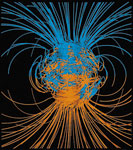
Earth's magnetic field with inward, blue, and outward, orange, field lines
Pittsburgh Supercomputing Center's SGI Origin2000

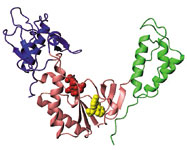
HIV's reverse transciptase ribbon with attached inhibitor drug in yellow
National Center for Atmospheric Research's Cray C90

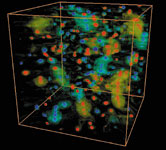
Atmospheric turbulence caused by positive, reddish, and negative, greenish, vortices

National Science Foundation officials say the Terascale Computing System will benefit researchers working on weather forecasting, fluid dynamics, theoretical physics and computational chemistry simulations.


GCN, July 3, Page 1June 12, Page 61


Research advances


NEXT STORY: PACKET RAT

X
This website uses cookies to enhance user experience and to analyze performance and traffic on our website. We also share information about your use of our site with our social media, advertising and analytics partners. Learn More / Do Not Sell My Personal Information
Accept Cookies
X
Cookie Preferences Cookie List

Do Not Sell My Personal Information

When you visit our website, we store cookies on your browser to collect information. The information collected might relate to you, your preferences or your device, and is mostly used to make the site work as you expect it to and to provide a more personalized web experience. However, you can choose not to allow certain types of cookies, which may impact your experience of the site and the services we are able to offer. Click on the different category headings to find out more and change our default settings according to your preference. You cannot opt-out of our First Party Strictly Necessary Cookies as they are deployed in order to ensure the proper functioning of our website (such as prompting the cookie banner and remembering your settings, to log into your account, to redirect you when you log out, etc.). For more information about the First and Third Party Cookies used please follow this link.

Allow All Cookies

Manage Consent Preferences

Strictly Necessary Cookies - Always Active

We do not allow you to opt-out of our certain cookies, as they are necessary to ensure the proper functioning of our website (such as prompting our cookie banner and remembering your privacy choices) and/or to monitor site performance. These cookies are not used in a way that constitutes a “sale” of your data under the CCPA. You can set your browser to block or alert you about these cookies, but some parts of the site will not work as intended if you do so. You can usually find these settings in the Options or Preferences menu of your browser. Visit www.allaboutcookies.org to learn more.

Sale of Personal Data, Targeting & Social Media Cookies

Under the California Consumer Privacy Act, you have the right to opt-out of the sale of your personal information to third parties. These cookies collect information for analytics and to personalize your experience with targeted ads. You may exercise your right to opt out of the sale of personal information by using this toggle switch. If you opt out we will not be able to offer you personalised ads and will not hand over your personal information to any third parties. Additionally, you may contact our legal department for further clarification about your rights as a California consumer by using this Exercise My Rights link

If you have enabled privacy controls on your browser (such as a plugin), we have to take that as a valid request to opt-out. Therefore we would not be able to track your activity through the web. This may affect our ability to personalize ads according to your preferences.

Targeting cookies may be set through our site by our advertising partners. They may be used by those companies to build a profile of your interests and show you relevant adverts on other sites. They do not store directly personal information, but are based on uniquely identifying your browser and internet device. If you do not allow these cookies, you will experience less targeted advertising.

Social media cookies are set by a range of social media services that we have added to the site to enable you to share our content with your friends and networks. They are capable of tracking your browser across other sites and building up a profile of your interests. This may impact the content and messages you see on other websites you visit. If you do not allow these cookies you may not be able to use or see these sharing tools.

If you want to opt out of all of our lead reports and lists, please submit a privacy request at our Do Not Sell page.

Save Settings
Cookie Preferences Cookie List

Cookie List

A cookie is a small piece of data (text file) that a website – when visited by a user – asks your browser to store on your device in order to remember information about you, such as your language preference or login information. Those cookies are set by us and called first-party cookies. We also use third-party cookies – which are cookies from a domain different than the domain of the website you are visiting – for our advertising and marketing efforts. More specifically, we use cookies and other tracking technologies for the following purposes:

Strictly Necessary Cookies

We do not allow you to opt-out of our certain cookies, as they are necessary to ensure the proper functioning of our website (such as prompting our cookie banner and remembering your privacy choices) and/or to monitor site performance. These cookies are not used in a way that constitutes a “sale” of your data under the CCPA. You can set your browser to block or alert you about these cookies, but some parts of the site will not work as intended if you do so. You can usually find these settings in the Options or Preferences menu of your browser. Visit www.allaboutcookies.org to learn more.

Functional Cookies

We do not allow you to opt-out of our certain cookies, as they are necessary to ensure the proper functioning of our website (such as prompting our cookie banner and remembering your privacy choices) and/or to monitor site performance. These cookies are not used in a way that constitutes a “sale” of your data under the CCPA. You can set your browser to block or alert you about these cookies, but some parts of the site will not work as intended if you do so. You can usually find these settings in the Options or Preferences menu of your browser. Visit www.allaboutcookies.org to learn more.

Performance Cookies

We do not allow you to opt-out of our certain cookies, as they are necessary to ensure the proper functioning of our website (such as prompting our cookie banner and remembering your privacy choices) and/or to monitor site performance. These cookies are not used in a way that constitutes a “sale” of your data under the CCPA. You can set your browser to block or alert you about these cookies, but some parts of the site will not work as intended if you do so. You can usually find these settings in the Options or Preferences menu of your browser. Visit www.allaboutcookies.org to learn more.

Sale of Personal Data

We also use cookies to personalize your experience on our websites, including by determining the most relevant content and advertisements to show you, and to monitor site traffic and performance, so that we may improve our websites and your experience. You may opt out of our use of such cookies (and the associated “sale” of your Personal Information) by using this toggle switch. You will still see some advertising, regardless of your selection. Because we do not track you across different devices, browsers and GEMG properties, your selection will take effect only on this browser, this device and this website.

Social Media Cookies

We also use cookies to personalize your experience on our websites, including by determining the most relevant content and advertisements to show you, and to monitor site traffic and performance, so that we may improve our websites and your experience. You may opt out of our use of such cookies (and the associated “sale” of your Personal Information) by using this toggle switch. You will still see some advertising, regardless of your selection. Because we do not track you across different devices, browsers and GEMG properties, your selection will take effect only on this browser, this device and this website.

Targeting Cookies

We also use cookies to personalize your experience on our websites, including by determining the most relevant content and advertisements to show you, and to monitor site traffic and performance, so that we may improve our websites and your experience. You may opt out of our use of such cookies (and the associated “sale” of your Personal Information) by using this toggle switch. You will still see some advertising, regardless of your selection. Because we do not track you across different devices, browsers and GEMG properties, your selection will take effect only on this browser, this device and this website.