
INTERVIEW: Paul Wohlleben, Grant Thornton's government guru





After a quarter-century as a federal official, Paul Wohlleben now is a partner in the global government group of Grant Thornton LLP of Chicago.
WOHLLEBEN: I do a lot of the same things I did before: dealing with people and ideas, trying to put things together.In the government you have the opportunity to create a program and work it through the stages of getting support and implementing it. You touch all facets. I find the process of doing business different.The people are very much the same. The government has talented people who are passionate about what they do, and I find that in industry.I find the government process stifles creativity and risk-taking; it's quite the opposite in industry.I often comment to colleagues who have not served in government that if you come across somebody in government who's accomplished something of significance, you have to give them a lot of respect because it was probably twice as difficult to do that than if they were in the private sector. That is not the fault of the people'that is the process of government.Take a hot issue today: the work force. In government, you've got the Office of Personnel Management that deals with personnel issues and the Office of Management and Budget that deals with budget issues and orchestrates the overall management process. You've got individual agencies that hire and retain staff. In that mix, it's difficult to make any change that's greater than marginal.I'm convinced that radical work force change is required. I don't mean to be negative, but my gut feeling is that government is not going to solve the work force issue in any meaningful way over the next five to seven years. They're going to be forced to outsource more and more.The checks and balances make it difficult to have radical change. It happens sometimes, but it's difficult, and it really has to be a crisis. Will the information technology work force be at that level of crisis? I don't think so.WOHLLEBEN: The question to me is broader. It has to do with transforming government'mainly the notion that the pace of government is going to be slow compared to the commercial sector. One of the key reasons is that government has difficulty providing decisive leadership.If you look at where radical change is happening in our economy'the dot-coms, the small start-ups'they have decisive leadership, not a five-year strategic plan. They look out 90 days or six months. They go running for it as fast as they can, because if they don't get there first, second or third, they're out of business. That's the model of decisive leadership.I'm not suggesting that government should be at that pace, but the same citizens who are served by companies in the commercial marketplace get the expectation that their government ought to provide some of those capabilities and services.So the real question is not whether the government can move at that speed, or should, but what can government do to accelerate the pace of change? I don't claim to have the answer. My best judgment is the Y2K readiness model, which was successful both because of an individual, John Koskinen, and the fact that we were focused on the crisis.When it comes to infrastructure protection, I would be in favor of an organizational structure something like that. You need an advocate in the inner circle of top government that has Cabinet-level access.Can you have a federal CIO who's responsible for everything? My personal judgment is that it would probably not be successful. You need to focus on a couple of things. If there's so much on the plate of a federal CIO that they're here, there and everywhere, they're not going to get the two or three most important things done.WOHLLEBEN: It could well be. What could one expect a CKO to accomplish? I think the value is in educating people in the organization, serving as a champion of the notion of institutional knowledge as an important asset that should be managed and shared.But knowledge management is really not a technology issue. In the marketplace you see a lot of people trying to sell knowledge management solutions, and I'm putting on a cynical hat as somebody who has bought a lot of technology over the years in government. I see a lot of that as repackaging of technology.Knowledge management is a cultural issue. If you go back 15 years before downsizing, you had middle managers who were the source of information about what was happening at the operational level. They were promoted based on what they knew and their ability to use that.Technology came along and improved communication, and as a result a lot of positions were downsized or eliminated. But you still have the notion that 'my value to the organization is what I know.'It's a cultural issue to tell people that we want you to share what you know. It goes against all the traditions. But if the incentives to share are big enough, it will happen.WOHLLEBEN: There are a few organizations that have been able to move their missions with a heavy reliance on contractors. There are issues about the proper way to contract, but in many organizations I think you can outsource 70 percent or 80 percent and perform effectively, because I was in an organization that did it.WOHLLEBEN: I think the answer is yes. Look at one of the major outsourcing initiatives, the National Security Agency's Project Groundbreaker []. Depending on the model, that's 2,000 to 7,000 jobs, probably all in IT.The intelligence community is tremendously enabled by technology. They are information. They're taking on a big challenge with a lot of ramifications.WOHLLEBEN: I do think that the structure they had'the CIOs and Congress and OMB and the Koskinen committee all playing a role'proved the government could tackle a big, vexing issue. That was an issue at Cabinet meetings. The secretaries and heads of departments went back and made it a serious issue. They relied on the CIOs to be the focal points and, by and large, that was a success. That has to help them in terms of stature.My view is that all organizations are not the same. In some that are more politically oriented, if you're not a political appointee, you're not at the table, you're not part of the senior club. If CIOs are not political appoin-tees, they are not at the same level. Then it requires an extraordinary individual to push in and be able to operate effectively.
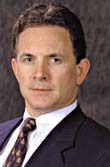 After a quarter-century as a federal official, Paul Wohlleben now is a partner in the global government group of Grant Thornton LLP of Chicago.
Wohlleben began his government career in 1976 at the Treasury Department. From 1986 to 1997 he was deputy chief information officer and director of the Office of IRM at the Environmental Protection Agency. His last federal job, which he left in 1998, was as CIO of the General Services Administration's Public Buildings Service.
Wohlleben's professional activities have included consecutive terms as president of the Association for Federal Information Resources Management. In 1996, he won the Information Technology Government Executive of the Year Award from the Federation of Government Information Processing Councils, and in 1997, AFFIRM's Special Leadership Award.
Wohlleben has a bachelor's degree in business administration from Virginia Polytechnic Institute. After a tour of duty in the Army, he attended law school at George Mason University and earned a master's in business administration from George Washington University.
GCN associate editor Patricia Daukantas interviewed Wohlleben at his Vienna, Va., office.
GCN:'How are you finding the private sector different from working in government?
GCN:'Federal chief information officers recently identified critical infrastructure protection as their most pressing concern. Would establishing a security czar help, or would the money be better spent on developing security technologies?
GCN:'Will all agencies eventually have a chief knowledge officer?
GCN:'Is the government using outsourcing as much as it could? Is there a limit to how far outsourcing can go?
GCN:'Will outsourcing ultimately involve the application service provider model?
GCN, July 10, Page 3
GCN:'The year 2000 problem seemed to give government IT executives a lot of clout. Will it carry over for the next few years?
Paul Wohlleben
Wohlleben began his government career in 1976 at the Treasury Department. From 1986 to 1997 he was deputy chief information officer and director of the Office of IRM at the Environmental Protection Agency. His last federal job, which he left in 1998, was as CIO of the General Services Administration's Public Buildings Service.
Wohlleben's professional activities have included consecutive terms as president of the Association for Federal Information Resources Management. In 1996, he won the Information Technology Government Executive of the Year Award from the Federation of Government Information Processing Councils, and in 1997, AFFIRM's Special Leadership Award.
Wohlleben has a bachelor's degree in business administration from Virginia Polytechnic Institute. After a tour of duty in the Army, he attended law school at George Mason University and earned a master's in business administration from George Washington University.
GCN associate editor Patricia Daukantas interviewed Wohlleben at his Vienna, Va., office.
GCN:'How are you finding the private sector different from working in government?
GCN:'Federal chief information officers recently identified critical infrastructure protection as their most pressing concern. Would establishing a security czar help, or would the money be better spent on developing security technologies?
GCN:'Will all agencies eventually have a chief knowledge officer?
GCN:'Is the government using outsourcing as much as it could? Is there a limit to how far outsourcing can go?
GCN:'Will outsourcing ultimately involve the application service provider model?
GCN, July 10, Page 3
GCN:'The year 2000 problem seemed to give government IT executives a lot of clout. Will it carry over for the next few years?