
Evolving standards expand wireless reach





Wireless technology is changing the way the world works'or, at least, where it works. Digital pagers, cellular and Personal Communications Services (PCS) phones, personal digital assistants and handheld PCs, and wireless notebook PCs have freed many users from their cubicles and offices.
| SPECIAL TO GCNWireless technology is changing the way the world works'or, at least, where it works. Digital pagers, cellular and Personal Communications Services (PCS) phones, personal digital assistants and handheld PCs, and wireless notebook PCs have freed many users from their cubicles and offices.Wireless has escalated into a $40 billion to $50 billion enterprise in the past few years, and most analysts predict it will continue to grow by 30 percent to 40 percent annually. The market research firm Cahners In-Stat Group of Newton, Mass., projects that there will be more than 700 million wireless Internet subscribers by 2004.And that's only part of the picture. As second-generation wireless technologies morph into more advanced third-generation systems, the world market for narrowband and broadband wireless services will expand to about 1.3 billion users by 2005, according to Allied Business Research Inc. of Oyster Bay, N.Y.Government users will not be left behind. In a GCN Reader Survey last year, 17 percent of handheld PC users said they connect wirelessly []. In a separate survey of notebook PC users [], only 4 percent said they use wireless connections, but 41 percent of those who don't said they expect to go wireless within three years.The speed of wireless development also raises red flags, though, for managers deciding whether to buy into it. Despite the lure of anywhere-to-anywhere communications, many users are reluctant to invest heavily in wireless hardware that might be hot today but obsolete within weeks or months.Nevertheless, there are products available now that can help improve an organization's productivity without much of a drain on its budget.If you or your agency are already in the market for mobile phones, consider Wireless Application Protocol phones. They feature all the goodies of advanced wireless voice technology, such as call waiting and call forwarding, along with limited Web browsing and e-mail.WAP is a set of global standards for mobile handsets and other wireless clients that defines how Web-based information is displayed using the Wireless Markup Language. WAP phones work over a variety of digital networks; the most popular in the United States is Code Division Multiple Access. CDMA sends wireless data over 800-MHz and 1.9-GHz radio frequency bands.WAP phones also can be configured to work over Cellular Digital Packet Data (CDPD), Global Standard for Mobile Communications and Motorola's proprietary networks, as well as some others.A WAP handset can be useful, as long as you have access to a national operator, such as AT&T Wireless Services, Verizon Wireless, Nextel Online or Sprint PCS, that offers CDMA or CDPD services. Many of these providers will give you a WAP phone when you sign up for their services.But the phones also have limitations. CDMA Web phones have a top data transfer rate of 14.4 Kbps, although this will improve as new phone networks come to the fore. And WAP-phone Web browsers, which are scaled down to meet limited memory and power capabilities, cannot handle the fancy graphics many users have come to expect from traditional Web browsers. Cell phone keypads also are extremely limited; most come with tiny five- or six-line displays.For a good idea of where Web phone technology is headed, check out Kyocera Wireless Corp.'s new QCP 6035 SmartPhone and NeoPoint Inc.'s forthcoming 2000/2600 series. These trimode phones can operate over 800-MHz and 1.9-GHz CDMA and traditional Advanced Mobile Phone Service (AMPS) cellular networks, and combine the best of Web phone technology with the power and convenience of PDAs.Check the WAP ForumWeb site, at , for details on WAP technology and the companies that provide it.Wireless LANs aren't new, but last summer's arrival of the Institute of Electrical and Electronics Engineers 802.11b WiFi standard has made them fast, dependable and inexpensive enough to be practical.align="right" width="85">The WiFi standard, developed by the Wireless Ethernet Compatibility Alliance (WECA), provides a top throughput of 11 Mbps within the 2.4-GHz spectrum, as opposed to the 1.6-Mbps or 2-Mbps top limit of the earlier 802.11 standard.All WiFi certified products are interoperable, so one manufacturer's wireless LAN card will work with another's WLAN card or wireless access point. The maximum indoor range of a typical WiFi LAN running at 11 Mbps is 300 feet, although recent products permit drop-back speeds of 1, 2 and 5.5 Mbps, allowing the client device to be further from the access point.WiFi and other wireless LANs have two main components. An access point generally serves as a bridge between wired and wireless networks. Wireless LAN PC Cards in Type II or Type III configurations for client notebooks and PCI configurations for client desktops work with the access point to link the remote unit to the wired LAN. Universal Serial Bus configurations also are starting to make the scene. In many cases, independent peer-to-peer wireless networks can be established by using only the WLAN cards among several notebook PCs.There's no doubt that 802.11b wireless LANs are a major breakthrough. Interoperability means that buyers are no longer limited to a single vendor's proprietary products. High throughput rates'of between 5 Mbps and 8 Mbps, depending on distance, applications and number of users'give them Ethernet-like speeds. And data security is not a concern because several levels of encryption are built into the new standard.Prices for WLAN cards are now in the $200 and under range, and many 802.11b access points sell for well under $1,000.align="right" width="179">Check the WECA site, at www.weca.net, for more about the 802.11b standard.What makes wireless handheld devices useful is the cooperation among wireless cellular carriers, Internet service providers, and manufacturers of both handheld products and the wireless modems that support them.The package for the Hewlett-Packard Jornada 540 Pocket PC, for example, includes Novatel Wireless Inc.'s Minstrel 540 modem and third-party software services that let users access and process data, view and edit Microsoft Word and Excel attachments, send and receive e-mail, and browse the Internet.Compaq Computer Corp. bundles a wireless iPAQ Pocket PC with Sierra Wireless Inc.'s AirCard 300 modem to provide 19.2-Kbps services, as well as its own CDPD-based iPAQnet for Mobile e-mail and mobile intranet services.XXXSPLITXXX-The engines of all wireless devices are built-in or add-on radio modems that operate within specific radio frequencies, the 2.4-GHz range being today's favorite.These modems are transmitters/receivers that come in a variety of forms, including Type II and Type III PC Cards, PCI modems and Universal Serial Bus modems for notebook and desktop PCs or peripherals such as printers.Other wireless transmitters/receivers are designed to fit within cradles that clamp tightly to handheld PCs such as the Palm V from Palm Inc. of Santa Clara, Calif.Web phones contain built-in wireless modems that adhere to common cellular standards.PC Card and PCI modems built for the IEEE 802.11b WiFi standard transform ordinary notebook and desktop PCs into wireless LAN client devices.Clients using the Bluetooth standard are equipped with radio chip sets.
WAP brings the Web to mobile phones, and WiFi gives computers and peripherals 11-Mbps throughput for up to 300 feet
BY J. B. MILES
GCN, Oct. 23, 2000, Page 21GCN, Sept. 11, 2000, Page 20
Wireless Web phones
www.wapforum.com
Wireless LAN clients
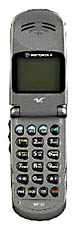
size="2" color="#FF0000">Motorola's V8162 works on the CDMA 1.9-Ghz band, with a mini-browser, synchronizing software and other features.
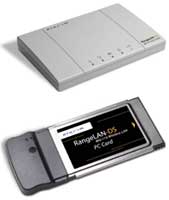
size="2" color="#FF0000">Proxim's RangeLAN-DS PC Card and access point operate with any WiFi-certified products.
In your pocket
J.B. Miles of Pahoa, Hawaii, writes about communications and computers. E-mail him at jbmiles@gte.net.
'J.B. Miles
BY J. B. MILES
' What is it? At the heart of a wireless client is the modem that transmits and receives within a specific radio frequency range. Wireless modems are used in many devices, including palmtop computers, handhelds, notebook and desktop PCs, and some cellular phones. ' What are the benefits? Wireless connectivity promises anytime, anywhere computing. Although it hasn't reached that goal yet, it greatly increases users' ability to connect, especially from the road. ' What are the drawbacks? The technology and standards are developing so fast that it can be difficult to decide when to jump onto this moving train. Web phones and palmtop computers, for instance, are rapidly merging in hybrid Web clients that incorporate the best features of each, with faster connections and a new set of standards. Wireless devices also have limitations in memory, functionality and throughput speed. ' What's on the horizon? Cellular phones will give way to Web phones, with throughput speeds up to 1.5 Mbps. Emerging wireless LAN standards such as the IEEE 802.11a and HiperLAN-2 will offer speeds up to 54 Mbps in the 5-GHz range. Bluetooth, the long-heralded standard for short-range wireless communications, is nearly ready. And the General Packet Radio Service will soon support packet-based access to the mobile Internet at data speeds significantly faster than current mobile systems. ' Must-know info? Despite the buzz around wireless devices, they are not yet must-have items. Still, if you can afford to buy one, you'll probably be glad you have it. |
GCN, Oct. 23, 2000, Page 21GCN, Sept. 11, 2000, Page 20
Wireless Web phones
www.wapforum.com
Wireless LAN clients
size="2" color="#FF0000">Motorola's V8162 works on the CDMA 1.9-Ghz band, with a mini-browser, synchronizing software and other features.
size="2" color="#FF0000">Proxim's RangeLAN-DS PC Card and access point operate with any WiFi-certified products.
In your pocket
J.B. Miles of Pahoa, Hawaii, writes about communications and computers. E-mail him at jbmiles@gte.net.
'J.B. Miles