Washington lawmakers want to regulate license plate readers
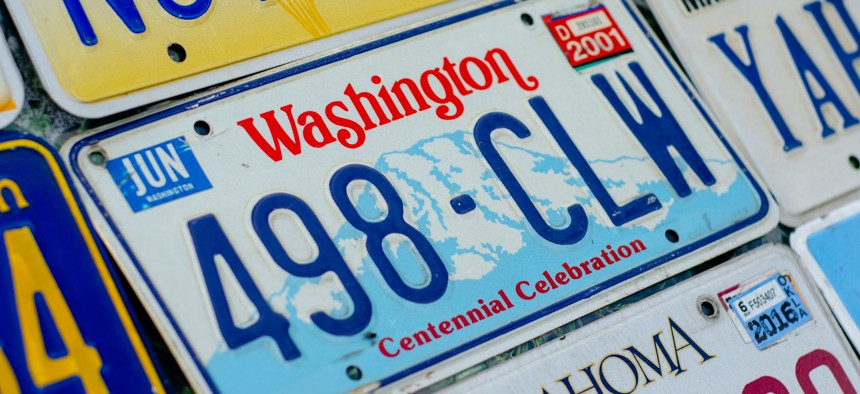
artas via Getty Images
State law is silent on the increasingly popular surveillance technology, sparking concerns over immigration enforcement and public disclosure of personal data.

This article was originally published by Washington State Standard.

Washington state lawmakers next year hope to rein in law enforcements’ use of automated license plate readers amid revelations federal immigration authorities are using the data.

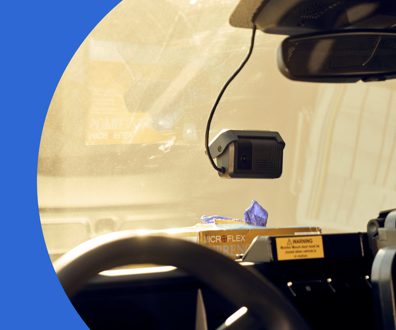
The readers are mounted everywhere from street poles to police patrol cars. They take pictures of vehicles and use artificial intelligence to analyze the data. Police can use the information, stored in a database, to track vehicles that could be tied to criminal investigations. 

At least 16 states regulate the readers. Washington does not. 

The technology has become increasingly common in Washington and across the country and is used not only by police, but also businesses and community groups.

Washington’s chapter of the American Civil Liberties Union is leading the charge to regulate the license plate readers here. The issue has taken on new urgency during the Trump administration’s campaign for mass deportations, said Tee Sannon, the organization’s technology policy program director.

A report last month out of the University of Washington found several local police departments authorized U.S. Border Patrol to use their license plate reader databases. And in other cases, Border Patrol had backdoor access without express permission. In some instances, police conducted searches on behalf of the federal agency. 

The findings raise concerns about compliance with state law limiting cooperation with federal immigration enforcement.

In a statement, the head of the Washington Association of Sheriffs and Police Chiefs acknowledged the concerns. Executive Director Steve Strachan attributed the issue to sharing permissions allowing the feds to access plate reader data unbeknownst to local police.

“We continue to remind our members to be aware of their system restrictions to ensure that their data is only shared consistent with Washington law and agency policy,” Strachan said.

Worries extend beyond immigration. 

Authorities in Texas this year searched thousands of the cameras, as far as Washington state and Illinois, in their search for a woman believed to have had a self-administered abortion.

Anxieties over public record access to data from the readers have already spurred some Washington cities to rethink using them.

The Proposal

The legislation in Washington, which is still being drafted, wouldn’t ban license plate readers. It looks to put guardrails on them in two main ways. 

One is how long agencies can hold onto the data. Currently, the information can sit indefinitely, though police departments have internal retention policies. The standard for Flock, the leading company making the cameras, is to delete pictures after 30 days if the images have no value. 

“A lot of this risk goes away if you ensure that the data is deleted,” Sannon said. “It can’t fall into the wrong hands. It can’t be requested or misused if it’s just being regularly deleted.”

The draft legislation pegs the retention period at 72 hours, said the planned prime sponsor, Sen. Yasmin Trudeau, D-Tacoma. There would be exceptions, for example, if holding onto the data helps with investigating a violent crime.

Cities feel three days isn’t enough time. 

“If you are trying to investigate a crime and determine where a stolen vehicle is ending up, you may need more than 72 hours,” said Candice Bock, government relations director at the Association of Washington Cities.

Some states allow longer retention periods, for weeks or even months. On the other end of the spectrum, most data from readers in New Hampshire has to be purged within three minutes.

The other issue the proposal seeks to address is how agencies can share their data. The policy would prohibit departments from giving direct access to license plate reader databases, Sannon said. Agencies would have to get a search warrant to access data from other departments, she added.

Some local officials also see this as potentially problematic. Bock noted “criminals don’t stop at the city limits,” so data sharing between, for example, neighboring police agencies is key to the success of automated license plate readers. 

To Trudeau, the regulations seem like a “no-brainer.”

“It’s not anything crazy,” she said. “It’s just about making sure we’ve got a framework that people can respect.”

Trudeau compared it to legislation she spearheaded in 2024 to ban police hog-tying, when there was some consensus that a change was needed.

“When I’ve had conversations with Flock directly or law enforcement, I think most folks are like, ‘No, we want to operate, but we know there’s going to be a bill. We want to be involved in a bill. We understand that there should be a policy,’” she said. “So they’re all at the table in good faith.”

Conversations around the bill began before the UW report was released in October.

Flock didn’t respond to a request for comment.

Trudeau hopes to file the proposed legislation before the Legislature convenes for a 60-day session Jan. 12. The bill will then need to pass both the Senate and House before Gov. Bob Ferguson can sign it.

In 2019, lawmakers in Washington state put forward legislation to shorten the readers’ retention periods and limit their use, but the proposal didn’t gain traction. 

Similar discussions are expected next year in the Oregon Legislature

Public Records Concerns

Law enforcement agencies also want to see changes to state law on automated license plate readers. But their focus is on public disclosure of reader data through record requests.

A Skagit County judge last month ruled the pictures and other information the cameras capture must be made available through the state’s Public Records Act. The ruling came in response to a lawsuit against Stanwood and Sedro-Woolley. The cities have appealed.

Some cities, including Redmond and Lynnwood, have suspended their license plate reader programs in response to the ruling and immigration concerns.

Local jurisdictions worry they’ll be overloaded with public disclosure requests related to their license plate readers, and that public safety will be threatened by allowing anyone access to the whereabouts of anyone’s license plate, whether they’re connected to a crime or not. 

“If somebody can request the images, the license plates through the Public Records Act, then there is no ability to control who is getting access to this and how they’re using it,” Bock said.

Police and city officials hope to exempt their reader data from disclosure under state public records law as part of Trudeau’s planned legislation. Bock hopes for something similar to the state’s treatment of red light cameras. Those images and the personally identifying information they capture aren’t releasable under state law.

Other states, including Florida, Nebraska and North Carolina, have exempted the data from their public records laws.

X
This website uses cookies to enhance user experience and to analyze performance and traffic on our website. We also share information about your use of our site with our social media, advertising and analytics partners. Learn More / Do Not Sell My Personal Information
Accept Cookies
X
Cookie Preferences Cookie List

Do Not Sell My Personal Information

When you visit our website, we store cookies on your browser to collect information. The information collected might relate to you, your preferences or your device, and is mostly used to make the site work as you expect it to and to provide a more personalized web experience. However, you can choose not to allow certain types of cookies, which may impact your experience of the site and the services we are able to offer. Click on the different category headings to find out more and change our default settings according to your preference. You cannot opt-out of our First Party Strictly Necessary Cookies as they are deployed in order to ensure the proper functioning of our website (such as prompting the cookie banner and remembering your settings, to log into your account, to redirect you when you log out, etc.). For more information about the First and Third Party Cookies used please follow this link.

Allow All Cookies

Manage Consent Preferences

Strictly Necessary Cookies - Always Active

We do not allow you to opt-out of our certain cookies, as they are necessary to ensure the proper functioning of our website (such as prompting our cookie banner and remembering your privacy choices) and/or to monitor site performance. These cookies are not used in a way that constitutes a “sale” of your data under the CCPA. You can set your browser to block or alert you about these cookies, but some parts of the site will not work as intended if you do so. You can usually find these settings in the Options or Preferences menu of your browser. Visit www.allaboutcookies.org to learn more.

Sale of Personal Data, Targeting & Social Media Cookies

Under the California Consumer Privacy Act, you have the right to opt-out of the sale of your personal information to third parties. These cookies collect information for analytics and to personalize your experience with targeted ads. You may exercise your right to opt out of the sale of personal information by using this toggle switch. If you opt out we will not be able to offer you personalised ads and will not hand over your personal information to any third parties. Additionally, you may contact our legal department for further clarification about your rights as a California consumer by using this Exercise My Rights link

If you have enabled privacy controls on your browser (such as a plugin), we have to take that as a valid request to opt-out. Therefore we would not be able to track your activity through the web. This may affect our ability to personalize ads according to your preferences.

Targeting cookies may be set through our site by our advertising partners. They may be used by those companies to build a profile of your interests and show you relevant adverts on other sites. They do not store directly personal information, but are based on uniquely identifying your browser and internet device. If you do not allow these cookies, you will experience less targeted advertising.

Social media cookies are set by a range of social media services that we have added to the site to enable you to share our content with your friends and networks. They are capable of tracking your browser across other sites and building up a profile of your interests. This may impact the content and messages you see on other websites you visit. If you do not allow these cookies you may not be able to use or see these sharing tools.

If you want to opt out of all of our lead reports and lists, please submit a privacy request at our Do Not Sell page.

Save Settings
Cookie Preferences Cookie List

Cookie List

A cookie is a small piece of data (text file) that a website – when visited by a user – asks your browser to store on your device in order to remember information about you, such as your language preference or login information. Those cookies are set by us and called first-party cookies. We also use third-party cookies – which are cookies from a domain different than the domain of the website you are visiting – for our advertising and marketing efforts. More specifically, we use cookies and other tracking technologies for the following purposes:

Strictly Necessary Cookies

We do not allow you to opt-out of our certain cookies, as they are necessary to ensure the proper functioning of our website (such as prompting our cookie banner and remembering your privacy choices) and/or to monitor site performance. These cookies are not used in a way that constitutes a “sale” of your data under the CCPA. You can set your browser to block or alert you about these cookies, but some parts of the site will not work as intended if you do so. You can usually find these settings in the Options or Preferences menu of your browser. Visit www.allaboutcookies.org to learn more.

Functional Cookies

We do not allow you to opt-out of our certain cookies, as they are necessary to ensure the proper functioning of our website (such as prompting our cookie banner and remembering your privacy choices) and/or to monitor site performance. These cookies are not used in a way that constitutes a “sale” of your data under the CCPA. You can set your browser to block or alert you about these cookies, but some parts of the site will not work as intended if you do so. You can usually find these settings in the Options or Preferences menu of your browser. Visit www.allaboutcookies.org to learn more.

Performance Cookies

We do not allow you to opt-out of our certain cookies, as they are necessary to ensure the proper functioning of our website (such as prompting our cookie banner and remembering your privacy choices) and/or to monitor site performance. These cookies are not used in a way that constitutes a “sale” of your data under the CCPA. You can set your browser to block or alert you about these cookies, but some parts of the site will not work as intended if you do so. You can usually find these settings in the Options or Preferences menu of your browser. Visit www.allaboutcookies.org to learn more.

Sale of Personal Data

We also use cookies to personalize your experience on our websites, including by determining the most relevant content and advertisements to show you, and to monitor site traffic and performance, so that we may improve our websites and your experience. You may opt out of our use of such cookies (and the associated “sale” of your Personal Information) by using this toggle switch. You will still see some advertising, regardless of your selection. Because we do not track you across different devices, browsers and GEMG properties, your selection will take effect only on this browser, this device and this website.

Social Media Cookies

We also use cookies to personalize your experience on our websites, including by determining the most relevant content and advertisements to show you, and to monitor site traffic and performance, so that we may improve our websites and your experience. You may opt out of our use of such cookies (and the associated “sale” of your Personal Information) by using this toggle switch. You will still see some advertising, regardless of your selection. Because we do not track you across different devices, browsers and GEMG properties, your selection will take effect only on this browser, this device and this website.

Targeting Cookies

We also use cookies to personalize your experience on our websites, including by determining the most relevant content and advertisements to show you, and to monitor site traffic and performance, so that we may improve our websites and your experience. You may opt out of our use of such cookies (and the associated “sale” of your Personal Information) by using this toggle switch. You will still see some advertising, regardless of your selection. Because we do not track you across different devices, browsers and GEMG properties, your selection will take effect only on this browser, this device and this website.