Not just electricity — water supplies will be taxed by data centers
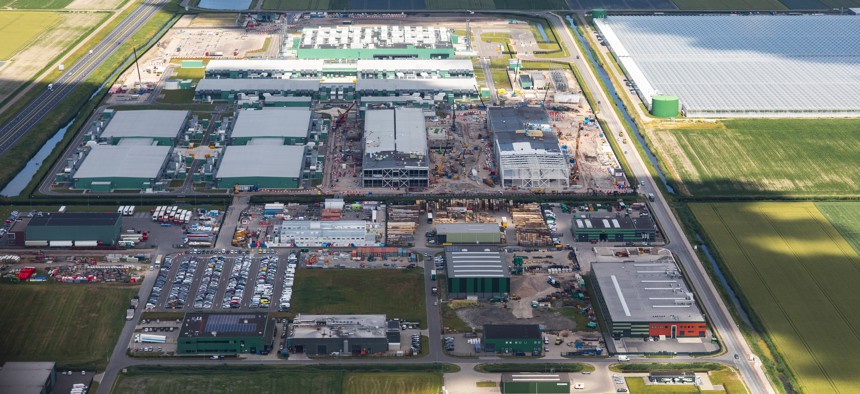
Merten Snijders via Getty Images


Proposed mines, factories and data centers threaten to deplete the underground aquifers that supply up to 40% of the Great Lakes’ volume — and drinking water reserves for nearly three-quarters of Minnesotans.

This article was originally published by Minnesota Reformer.

Americans are becoming well acquainted with data centers’ use of electricity via their utility bills, but the power-hungry warehouses that fuel our insatiable appetite for memes, movies, pics and posts is thirsty for an even more important resource: water. 

One large-scale data center can consume as much water as 12,000 households, according to the the Alliance for the Great Lakes.

“We are going to see more water conflicts as the data center sector expands at the same time as we see an expansion of irrigated agriculture into areas that haven’t needed it as much,” said Helena Volzer, a water policy manager for Alliance for the Great Lakes, in an interview. 

A Minnesota Department of Natural Resources order temporarily barring new or expanded irrigation allowances along Little Rock Creek portends broader conflicts over groundwater use across the Great Lakes region, the Alliance said in a report released Wednesday

The DNR’s April 2024 order found “substantial evidence” that agricultural irrigation and other authorized uses harmed the Mississippi River tributary, which runs along the boundary of Benton and Morrison counties in central Minnesota. Elsewhere in the region, proposed mines, factories and data centers threaten to deplete the underground aquifers that supply up to 40% of the Great Lakes’ volume — and drinking water reserves for nearly three-quarters of Minnesotans

Climate change, the artificial intelligence race, and pressure to mine and manufacture more on U.S. soil mean “we are seeing a convergence of increasing water demand from different sources,” said Volzer, who spent a year compiling the report. 

Data centers with evaporative cooling systems, in particular, can consume vast amounts of water. Though most of Minnesota lies outside the Great Lakes basin, Volzer said the concerns raised in the report apply to other major watersheds, too.

Minnesota statute allows the DNR to limit groundwater appropriations in designated groundwater management areas. But it can only take that step after determining that groundwater draws hurt nearby surface waters, as it did last year in the Little Rock Creek case, or when “there are competing demands among existing and proposed users which exceed the reasonably available waters,” Volzer said in the report.

That restricts the DNR to act only in situations where actual or proposed water withdrawals clearly impact people and businesses. In her report, Volzer advised Minnesota lawmakers to expand the state’s groundwater protection law to let the DNR intervene when water appropriations are “likelyto impact surface or groundwater reserves.

State legislators passed a series of water protection laws earlier this decade after a Lakeville-based rail company proposed shipping 500 million gallons of Dakota County groundwater each year to the U.S. Southwest, said state Rep. Rick Hansen, DFL-South St. Paul. (The DNR shot down that proposal.)

Proactive measures will help states like Minnesota get ahead of a fast-growing IT industry whose environmental impacts remain unclear, Volzer said. 

In her report, Volzer advised states to fund studies of expected water demand and groundwater resources, while expanding water use reporting requirements. That could give state and local authorities more insight into where large IT facilities could be located without unduly stressing aquifers, she told the Reformer.

The ag industry’s political sway could complicate further legislation to manage Minnesota’s groundwater, Hansen said.

“Big Ag makes water law changes hard because some legislators are susceptible to ‘cropaganda,’” he said.

Thirsty data centers have already caused political backlash in Georgia, where residents on private wells near Atlanta say a new Meta facility has rendered their water “undrinkable.” 

Meta is spending $800 million to build another data center in Rosemount, southeast of the Twin Cities. The city says that facility could draw 100,000 gallons of groundwater per day at peak capacity, or one Olympic swimming pool every six days, the Star Tribune reported in April

Data centers proposed for Chaska and Farmington could use 15 and 24 times more than Meta’s Rosemount hub, the Strib reported, though Chaska’s water manager assured the paper that the city can handle the added demand.

“We don’t have a good sense of the water footprint of a data center right now,” Volzer said. That’s due to the fact that data center developers require city officials to sign nondisclosure agreements before moving forward, she said, and because data center designs vary widely and continue to evolve. 

Newer designs favor closed-loop or waterless liquid cooling systems that are more economical than evaporative water cooling. The catch, Volzer said, is that those systems may require more electricity to run pumps, fans and heat exchangers, increasing demand on nearby thermal power plants fueled by coal, gas or uranium. 

Those plants themselves need huge amounts of cooling water, setting up a “shell game” where data centers shift water usage beyond their sphere of influence. (Wind turbines and solar panels use little or no water in their operations.)

“There is a nexus between water and energy. You can’t silo them,” Volzer said.

X
This website uses cookies to enhance user experience and to analyze performance and traffic on our website. We also share information about your use of our site with our social media, advertising and analytics partners. Learn More / Do Not Sell My Personal Information
Accept Cookies
X
Cookie Preferences Cookie List

Do Not Sell My Personal Information

When you visit our website, we store cookies on your browser to collect information. The information collected might relate to you, your preferences or your device, and is mostly used to make the site work as you expect it to and to provide a more personalized web experience. However, you can choose not to allow certain types of cookies, which may impact your experience of the site and the services we are able to offer. Click on the different category headings to find out more and change our default settings according to your preference. You cannot opt-out of our First Party Strictly Necessary Cookies as they are deployed in order to ensure the proper functioning of our website (such as prompting the cookie banner and remembering your settings, to log into your account, to redirect you when you log out, etc.). For more information about the First and Third Party Cookies used please follow this link.

Allow All Cookies

Manage Consent Preferences

Strictly Necessary Cookies - Always Active

We do not allow you to opt-out of our certain cookies, as they are necessary to ensure the proper functioning of our website (such as prompting our cookie banner and remembering your privacy choices) and/or to monitor site performance. These cookies are not used in a way that constitutes a “sale” of your data under the CCPA. You can set your browser to block or alert you about these cookies, but some parts of the site will not work as intended if you do so. You can usually find these settings in the Options or Preferences menu of your browser. Visit www.allaboutcookies.org to learn more.

Sale of Personal Data, Targeting & Social Media Cookies

Under the California Consumer Privacy Act, you have the right to opt-out of the sale of your personal information to third parties. These cookies collect information for analytics and to personalize your experience with targeted ads. You may exercise your right to opt out of the sale of personal information by using this toggle switch. If you opt out we will not be able to offer you personalised ads and will not hand over your personal information to any third parties. Additionally, you may contact our legal department for further clarification about your rights as a California consumer by using this Exercise My Rights link

If you have enabled privacy controls on your browser (such as a plugin), we have to take that as a valid request to opt-out. Therefore we would not be able to track your activity through the web. This may affect our ability to personalize ads according to your preferences.

Targeting cookies may be set through our site by our advertising partners. They may be used by those companies to build a profile of your interests and show you relevant adverts on other sites. They do not store directly personal information, but are based on uniquely identifying your browser and internet device. If you do not allow these cookies, you will experience less targeted advertising.

Social media cookies are set by a range of social media services that we have added to the site to enable you to share our content with your friends and networks. They are capable of tracking your browser across other sites and building up a profile of your interests. This may impact the content and messages you see on other websites you visit. If you do not allow these cookies you may not be able to use or see these sharing tools.

If you want to opt out of all of our lead reports and lists, please submit a privacy request at our Do Not Sell page.

Save Settings
Cookie Preferences Cookie List

Cookie List

A cookie is a small piece of data (text file) that a website – when visited by a user – asks your browser to store on your device in order to remember information about you, such as your language preference or login information. Those cookies are set by us and called first-party cookies. We also use third-party cookies – which are cookies from a domain different than the domain of the website you are visiting – for our advertising and marketing efforts. More specifically, we use cookies and other tracking technologies for the following purposes:

Strictly Necessary Cookies

We do not allow you to opt-out of our certain cookies, as they are necessary to ensure the proper functioning of our website (such as prompting our cookie banner and remembering your privacy choices) and/or to monitor site performance. These cookies are not used in a way that constitutes a “sale” of your data under the CCPA. You can set your browser to block or alert you about these cookies, but some parts of the site will not work as intended if you do so. You can usually find these settings in the Options or Preferences menu of your browser. Visit www.allaboutcookies.org to learn more.

Functional Cookies

We do not allow you to opt-out of our certain cookies, as they are necessary to ensure the proper functioning of our website (such as prompting our cookie banner and remembering your privacy choices) and/or to monitor site performance. These cookies are not used in a way that constitutes a “sale” of your data under the CCPA. You can set your browser to block or alert you about these cookies, but some parts of the site will not work as intended if you do so. You can usually find these settings in the Options or Preferences menu of your browser. Visit www.allaboutcookies.org to learn more.

Performance Cookies

We do not allow you to opt-out of our certain cookies, as they are necessary to ensure the proper functioning of our website (such as prompting our cookie banner and remembering your privacy choices) and/or to monitor site performance. These cookies are not used in a way that constitutes a “sale” of your data under the CCPA. You can set your browser to block or alert you about these cookies, but some parts of the site will not work as intended if you do so. You can usually find these settings in the Options or Preferences menu of your browser. Visit www.allaboutcookies.org to learn more.

Sale of Personal Data

We also use cookies to personalize your experience on our websites, including by determining the most relevant content and advertisements to show you, and to monitor site traffic and performance, so that we may improve our websites and your experience. You may opt out of our use of such cookies (and the associated “sale” of your Personal Information) by using this toggle switch. You will still see some advertising, regardless of your selection. Because we do not track you across different devices, browsers and GEMG properties, your selection will take effect only on this browser, this device and this website.

Social Media Cookies

We also use cookies to personalize your experience on our websites, including by determining the most relevant content and advertisements to show you, and to monitor site traffic and performance, so that we may improve our websites and your experience. You may opt out of our use of such cookies (and the associated “sale” of your Personal Information) by using this toggle switch. You will still see some advertising, regardless of your selection. Because we do not track you across different devices, browsers and GEMG properties, your selection will take effect only on this browser, this device and this website.

Targeting Cookies

We also use cookies to personalize your experience on our websites, including by determining the most relevant content and advertisements to show you, and to monitor site traffic and performance, so that we may improve our websites and your experience. You may opt out of our use of such cookies (and the associated “sale” of your Personal Information) by using this toggle switch. You will still see some advertising, regardless of your selection. Because we do not track you across different devices, browsers and GEMG properties, your selection will take effect only on this browser, this device and this website.