Nevada still mum on whether it paid ransom to cyber attackers
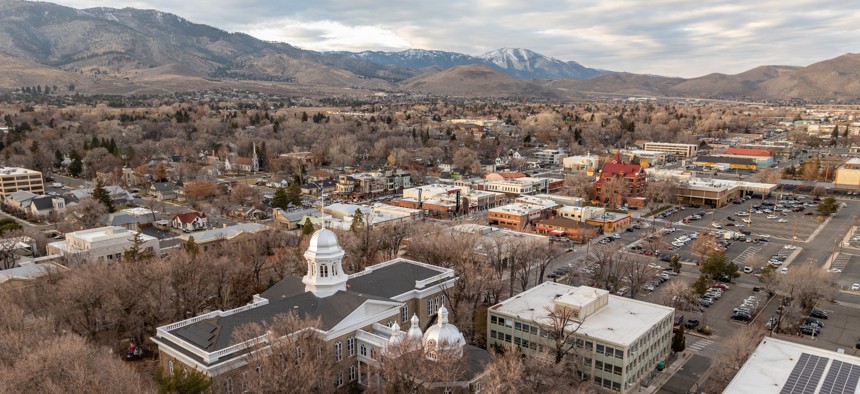
JasonDoiy via Getty Images

The governor’s office did not directly respond to questions about additional details on the cyber attack, including what ransom was demanded by the attackers, and whether a ransom was paid by the state.

This article was originally published by Nevada Current.

More than six weeks have passed since Gov. Joe Lombardo’s office announced the State of Nevada had been breached by cyberattackers and Nevadans are still in the dark about the scope of the damage done, or whether the state has paid a ransom.

Cybersecurity professionals say investigations of incidents of this scale will likely take months, so it’s expected that additional information is not available, but some worry information might be downplayed or delayed for political purposes.

On Aug. 24, the governor’s office announced a “cyber incident.” All state agencies, including the Department of Motor Vehicles and social services offices, were physically shuttered for at least two days. All state agency websites were taken offline in what the governor’s office described as a proactive and precautionary measure.

For weeks: The agency that processes Medicaid, SNAP and TANF applications reverted to having new applicants fill out paper forms; mandatory background checks for firearms were unavailable, halting legal sales and transfers for anyone without a concealed carry permit;  law enforcement databases containing information about criminal records and registered sex offenders were  inaccessible; and businesses like car dealerships and smog check shops that use DMV databases experienced delays and issues.

Greg Moody, director of the cybersecurity program at UNLV, called it “the largest state-focused attack in modern history.” Others in the cybersecurity world have described it as an unprecedented attack.

On Sept. 12, the governor’s office announced that “90%” of public-facing state agency websites had been restored. Since then, the governor has provided no additional updates.

On Monday, the recovery update page set up by the state displayed a banner stating all state agency websites have been restored and the recovery page will no longer be updated. It’s unclear when that banner went up, and the governor’s office did not directly respond to the Nevada Current’s question asking when the last state website was restored.

“All major constituent-facing services are back online, and Nevada is operational again,” said Josh Meny, the governor’s press secretary, in an emailed statement. “Our agencies are diligently working to resolve any intermittent back-end issues, but the majority of these issues are not directly attributable to the cyber incident but are instead linked to other recent enhancements aimed at strengthening and securing our cyber environment.”

Some specific features of agency websites may still be down, but no full accounting of that is publicly available. As Meny put it, “it may be challenging to precisely quantify the minor adjustments currently being implemented by agencies” but the state “is actively compiling an inventory of these efforts.”

The governor’s office did not directly respond to questions about additional details on the cyber attack, including what ransom was demanded by the attackers, and whether that ransom was paid by the state.

“The state remains committed to transparent communication and will share a final update once all efforts have been successfully completed,” said Meny in the statement.

Moody from UNLV says it’s not surprising there hasn’t been additional information released. Nevada is working with the U.S. Department of Homeland Security’s Cybersecurity and Infrastructure Security Agency and the FBI on the investigation, and one or both of those agencies is likely the lead, he says.

It takes a lot of time and effort to retrace electronic actions, says Moody, and investigators must preserve evidence for possible prosecution.

“It makes the process go slower,” he added.

Meny, for the governor’s office, emphasized that the state still “has not seen evidence of any constituent PII (personally identifiable information) being compromised in this attack.”

He added, “As Governor Lombardo has previously said, if investigators eventually discover otherwise, the state will follow Nevada’s strict statutes about personal data breaches by notifying any affected individuals promptly and providing resources to help protect them.”

The state has previously said that data was exfiltrated — meaning taken off the state’s system and moved elsewhere. But it has not said what that data entailed.

Moody notes Nevada Revised Statute includes a strict definition for “personal information.” To meet the definition, the data must include a full or partial name as well as another element, such as a driver’s license number or password information.

If the information was encrypted, it would not meet the state definition, he added, because there’s “some reasonable assurance” that attackers would not have access to it.

Moody says the attackers could have gotten information that does not meet the state’s definition of personal identifiable information, or they could have been exploring how the state’s centralized IT system is set up in hopes of replicating an attack elsewhere.

“Who knows,” he said, “Until we know the hacker and the motivation it’ll be hard to know what they were looking for.”

Lombardo in an earlier press conference has described the incident as a ransomware attack, and he has suggested the motivation was a financial ransom.

While some states have passed laws banning the paying of such ransoms, Nevada has no such law.

“They could have cut a deal or paid a ransom,” said Michael Leonard, a former IT professional and publisher of Mike’s Reno Report who’s been following the cyberattack. “‘Keep quiet and we’ll give you money.’”

Leonard is critical of the lack of info, acknowledging that while the investigation must be taken into account, the state still needs “to come forward with enough information to ensure us they’re investigating and credible.”

He suspects the silence is as driven by politics as much as by the investigation itself.

“I would say it’s equal motivation,” said Leonard. “To protect the reputation of government officials and elected officials.”

“There are unanswered questions and we should be asking them,” he added.

Lombardo is up for reelection next year and considered one of the most vulnerable governors in the nation. Candidate filing does not begin until March, but Attorney General Aaron Ford is currently considered the frontrunner to challenge him, though Ford faces a Democratic primary first.

Democratic legislative leaders expressed criticism of Lombardo in the days immediately after the cyberattack but have remained relatively quiet on the issue since.

Assembly Speaker Steve Yeager on Sept. 9 announced he would form a legislative working group on cybersecurity. His caucus did not respond to the Current’s request Thursday for an update on that effort.

X
This website uses cookies to enhance user experience and to analyze performance and traffic on our website. We also share information about your use of our site with our social media, advertising and analytics partners. Learn More / Do Not Sell My Personal Information
Accept Cookies
X
Cookie Preferences Cookie List

Do Not Sell My Personal Information

When you visit our website, we store cookies on your browser to collect information. The information collected might relate to you, your preferences or your device, and is mostly used to make the site work as you expect it to and to provide a more personalized web experience. However, you can choose not to allow certain types of cookies, which may impact your experience of the site and the services we are able to offer. Click on the different category headings to find out more and change our default settings according to your preference. You cannot opt-out of our First Party Strictly Necessary Cookies as they are deployed in order to ensure the proper functioning of our website (such as prompting the cookie banner and remembering your settings, to log into your account, to redirect you when you log out, etc.). For more information about the First and Third Party Cookies used please follow this link.

Allow All Cookies

Manage Consent Preferences

Strictly Necessary Cookies - Always Active

We do not allow you to opt-out of our certain cookies, as they are necessary to ensure the proper functioning of our website (such as prompting our cookie banner and remembering your privacy choices) and/or to monitor site performance. These cookies are not used in a way that constitutes a “sale” of your data under the CCPA. You can set your browser to block or alert you about these cookies, but some parts of the site will not work as intended if you do so. You can usually find these settings in the Options or Preferences menu of your browser. Visit www.allaboutcookies.org to learn more.

Sale of Personal Data, Targeting & Social Media Cookies

Under the California Consumer Privacy Act, you have the right to opt-out of the sale of your personal information to third parties. These cookies collect information for analytics and to personalize your experience with targeted ads. You may exercise your right to opt out of the sale of personal information by using this toggle switch. If you opt out we will not be able to offer you personalised ads and will not hand over your personal information to any third parties. Additionally, you may contact our legal department for further clarification about your rights as a California consumer by using this Exercise My Rights link

If you have enabled privacy controls on your browser (such as a plugin), we have to take that as a valid request to opt-out. Therefore we would not be able to track your activity through the web. This may affect our ability to personalize ads according to your preferences.

Targeting cookies may be set through our site by our advertising partners. They may be used by those companies to build a profile of your interests and show you relevant adverts on other sites. They do not store directly personal information, but are based on uniquely identifying your browser and internet device. If you do not allow these cookies, you will experience less targeted advertising.

Social media cookies are set by a range of social media services that we have added to the site to enable you to share our content with your friends and networks. They are capable of tracking your browser across other sites and building up a profile of your interests. This may impact the content and messages you see on other websites you visit. If you do not allow these cookies you may not be able to use or see these sharing tools.

If you want to opt out of all of our lead reports and lists, please submit a privacy request at our Do Not Sell page.

Save Settings
Cookie Preferences Cookie List

Cookie List

A cookie is a small piece of data (text file) that a website – when visited by a user – asks your browser to store on your device in order to remember information about you, such as your language preference or login information. Those cookies are set by us and called first-party cookies. We also use third-party cookies – which are cookies from a domain different than the domain of the website you are visiting – for our advertising and marketing efforts. More specifically, we use cookies and other tracking technologies for the following purposes:

Strictly Necessary Cookies

We do not allow you to opt-out of our certain cookies, as they are necessary to ensure the proper functioning of our website (such as prompting our cookie banner and remembering your privacy choices) and/or to monitor site performance. These cookies are not used in a way that constitutes a “sale” of your data under the CCPA. You can set your browser to block or alert you about these cookies, but some parts of the site will not work as intended if you do so. You can usually find these settings in the Options or Preferences menu of your browser. Visit www.allaboutcookies.org to learn more.

Functional Cookies

We do not allow you to opt-out of our certain cookies, as they are necessary to ensure the proper functioning of our website (such as prompting our cookie banner and remembering your privacy choices) and/or to monitor site performance. These cookies are not used in a way that constitutes a “sale” of your data under the CCPA. You can set your browser to block or alert you about these cookies, but some parts of the site will not work as intended if you do so. You can usually find these settings in the Options or Preferences menu of your browser. Visit www.allaboutcookies.org to learn more.

Performance Cookies

We do not allow you to opt-out of our certain cookies, as they are necessary to ensure the proper functioning of our website (such as prompting our cookie banner and remembering your privacy choices) and/or to monitor site performance. These cookies are not used in a way that constitutes a “sale” of your data under the CCPA. You can set your browser to block or alert you about these cookies, but some parts of the site will not work as intended if you do so. You can usually find these settings in the Options or Preferences menu of your browser. Visit www.allaboutcookies.org to learn more.

Sale of Personal Data

We also use cookies to personalize your experience on our websites, including by determining the most relevant content and advertisements to show you, and to monitor site traffic and performance, so that we may improve our websites and your experience. You may opt out of our use of such cookies (and the associated “sale” of your Personal Information) by using this toggle switch. You will still see some advertising, regardless of your selection. Because we do not track you across different devices, browsers and GEMG properties, your selection will take effect only on this browser, this device and this website.

Social Media Cookies

We also use cookies to personalize your experience on our websites, including by determining the most relevant content and advertisements to show you, and to monitor site traffic and performance, so that we may improve our websites and your experience. You may opt out of our use of such cookies (and the associated “sale” of your Personal Information) by using this toggle switch. You will still see some advertising, regardless of your selection. Because we do not track you across different devices, browsers and GEMG properties, your selection will take effect only on this browser, this device and this website.

Targeting Cookies

We also use cookies to personalize your experience on our websites, including by determining the most relevant content and advertisements to show you, and to monitor site traffic and performance, so that we may improve our websites and your experience. You may opt out of our use of such cookies (and the associated “sale” of your Personal Information) by using this toggle switch. You will still see some advertising, regardless of your selection. Because we do not track you across different devices, browsers and GEMG properties, your selection will take effect only on this browser, this device and this website.