How Iranian hackers pose a threat to US critical infrastructure
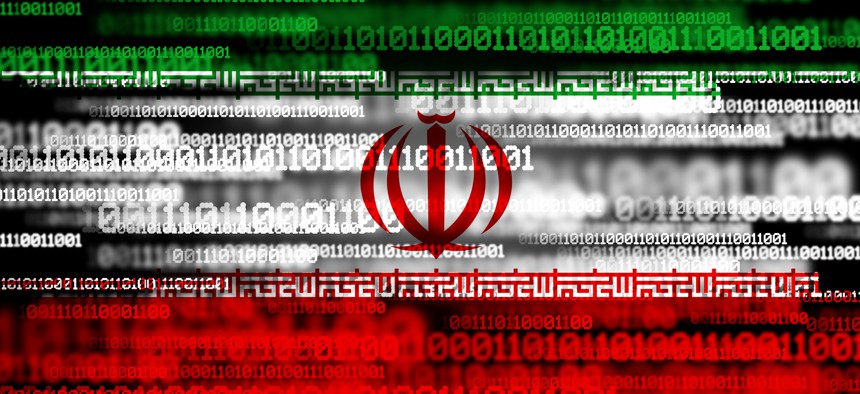
mirsad sarajlic via Getty Images

COMMENTARY | A cyberattack on a US corporation illustrates how state-aligned hackers operate, and how damage in war today isn’t always visible or geographically confined.

This article was originally published by The Conversation.

Michigan may be more than 6,000 miles away from the war in Iran, but, virtually speaking, it’s well within striking distance.

An Iran-linked group calling itself Handala claimed responsibility for a cyberattack on Portage, Michigan-based medical device maker Stryker Corp., carried out on March 11, 2026. Handala said the attack was in retaliation for events related to the conflict in Iran.

The cyberattack affected Stryker’s internal Microsoft software system, disrupting the company’s order processing, manufacturing and shipping.

As a scholar who researches cyber conflict, I’ve found that in periods of geopolitical tension such as the current U.S./Israel-Iran war, cyber operations often sit right next to missiles and airstrikes as a tool that states and state-linked groups use to inflict damage, probe weaknesses and signal resolve to their enemies.

The Stryker case is notable because it shows how quickly a regional conflict can translate into disruption for organizations far from the battlefield. It also illustrates the vulnerabilities of U.S. organizations, including those involved in critical infrastructure.

Modern critical infrastructure does not only involve the obvious big targets like power plants or water utilities. It also relies on suppliers and service providers that sit one or two links upstream – such as managed information technology providers, cloud and data center operators and specialized parts suppliers – that keep everything from hospitals to transit systems running.

This is one reason U.S. officials emphasize critical infrastructure as a whole-of-society problem, not a niche government issue. The Cybersecurity and Infrastructure Security Agency’s “Shields Up” guidance is written for exactly this reality: a world where geopolitical shocks can threaten organizations that did not think they were part of the battlefield.

Cyber Operations Are Often About Options

When people imagine cyber warfare, many often picture dramatic outcomes. The lights go out. The water turns toxic. The trains stop. Those scenarios are real risks. But they are not the only objective, and often not the main one. The real strategic value is access.

Cyber access is like a set of keys. If you can get into a network quietly, stay there and learn how it works, you create options for later. You can steal information, map dependencies and position yourself to cause disruption. You can keep the option to strike in your pocket, so that in a crisis, you can cause or credibly threaten to cause harm.

That is why U.S. agencies took the China-linked Volt Typhoon group’s hacking activity so seriously. In joint advisories, U.S. officials described a campaign that compromised the information technology systems of organizations across multiple critical infrastructure sectors and used so-called living-off-the-land techniques that can blend into normal administrative activity.

This is an important point. A lot of state-linked cyber activity is not designed to create immediate, visible chaos. It is designed to build leverage.

How State-Sponsored Cyberattacks Typically Work

Most state-backed cyber operations, including those carried out by the United States, follow a common sequence.

First, the attackers gain initial access through techniques such as phishing, exploiting known vulnerabilities or abusing weak remote access. Once inside, attackers try to learn where the valuable data and sensitive systems are. They seek higher privileges and move laterally, often using legitimate administrative tools to blend in.

That stealthy maneuvering is one reason campaigns like Volt Typhoon raised alarms. Defenders can have a hard time distinguishing an intruder from a normal administrator in a busy environment, especially when the intruder is deliberately trying to make their actions look like ordinary activity.

The attackers then establish persistence, meaning they can sustain their access. If the goal is leverage, the attackers want to survive defenders’ cleanup efforts after they discover they’ve been hacked. That can mean gaining multiple footholds, altering authentication settings or gaining access via third parties.

Finally, they choose the effects they want to have. Consider the “Shamoon” attack in 2012 in Saudi Arabia. After gaining access, the attackers used malware to wipe data on thousands of computers at oil giant Saudi Aramco, disrupting business operations.

But not every intrusion ends in destruction. Sometimes it ends with data theft, where the prize is information rather than causing downtime. An example is the 2015 breach of the U.S. Office of Personnel Management, in which attackers stole sensitive personnel data. Other times, the point is disruption designed to send a message such as the cyberattack on Sony Pictures in 2014, when hackers sought to keep the company from releasing the comedy film “The Interview.”

What Defenses Does the US Have?

The U.S. has a growing defense ecosystem, but it is not a single shield you can switch on. The Cybersecurity and Infrastructure Security Agency encourages organizations to heighten their cybersecurity vigilance during periods of elevated geopolitical risk. The agency, along with the FBI, the National Security Agency and international partners, also publishes advisories with indicators and recommended mitigations when they see active campaigns.

Because critical infrastructure is mostly privately owned, federal defense also depends on partnership. For instance, the Cybersecurity and Infrastructure Security Agency’s Joint Cyber Defense Collaborative is designed to support coordinated public-private planning and information sharing around major cyber risks.

Congress has also pushed the private sector toward reporting incidents more quickly. The Cyber Incident Reporting for Critical Infrastructure Act of 2022 sets reporting timelines that include reporting cyber incidents within 72 hours and ransomware payments within 24 hours after payment. The Cybersecurity and Infrastructure Security Agency has been implementing these requirements through ongoing rulemaking.

These are meaningful steps, but they do not erase the basic constraints: uneven resources, uneven incentives and the reality that many targets sit outside direct federal control.

Lessons From the Stryker Hack

The Stryker episode is a reminder that cyber operations are now a routine tool that state-linked actors can use to project power during international crises. They can aim at theft, disruption or signaling. Sometimes they hit government networks, and other times they hit private companies that sit inside essential supply chains.

Either way, the consequences can be felt far from the conflict itself.

In cyber conflict, the quiet part – gaining access, establishing persistence and preparing for deployment – typically comes first. The visible disruption often gets headlines, but it is the hidden positioning that sets the stage for offensive cyber operations in a crisis.

Wars today are not only fought with missiles and airstrikes you can see in the sky. They are also fought with what you cannot see moving through computer networks.

The Conversation

William Akoto is Assistant Professor of Global Security, American University

X
This website uses cookies to enhance user experience and to analyze performance and traffic on our website. We also share information about your use of our site with our social media, advertising and analytics partners. Learn More / Do Not Sell My Personal Information
Accept Cookies
X
Cookie Preferences Cookie List

Do Not Sell My Personal Information

When you visit our website, we store cookies on your browser to collect information. The information collected might relate to you, your preferences or your device, and is mostly used to make the site work as you expect it to and to provide a more personalized web experience. However, you can choose not to allow certain types of cookies, which may impact your experience of the site and the services we are able to offer. Click on the different category headings to find out more and change our default settings according to your preference. You cannot opt-out of our First Party Strictly Necessary Cookies as they are deployed in order to ensure the proper functioning of our website (such as prompting the cookie banner and remembering your settings, to log into your account, to redirect you when you log out, etc.). For more information about the First and Third Party Cookies used please follow this link.

Allow All Cookies

Manage Consent Preferences

Strictly Necessary Cookies - Always Active

We do not allow you to opt-out of our certain cookies, as they are necessary to ensure the proper functioning of our website (such as prompting our cookie banner and remembering your privacy choices) and/or to monitor site performance. These cookies are not used in a way that constitutes a “sale” of your data under the CCPA. You can set your browser to block or alert you about these cookies, but some parts of the site will not work as intended if you do so. You can usually find these settings in the Options or Preferences menu of your browser. Visit www.allaboutcookies.org to learn more.

Sale of Personal Data, Targeting & Social Media Cookies

Under the California Consumer Privacy Act, you have the right to opt-out of the sale of your personal information to third parties. These cookies collect information for analytics and to personalize your experience with targeted ads. You may exercise your right to opt out of the sale of personal information by using this toggle switch. If you opt out we will not be able to offer you personalised ads and will not hand over your personal information to any third parties. Additionally, you may contact our legal department for further clarification about your rights as a California consumer by using this Exercise My Rights link

If you have enabled privacy controls on your browser (such as a plugin), we have to take that as a valid request to opt-out. Therefore we would not be able to track your activity through the web. This may affect our ability to personalize ads according to your preferences.

Targeting cookies may be set through our site by our advertising partners. They may be used by those companies to build a profile of your interests and show you relevant adverts on other sites. They do not store directly personal information, but are based on uniquely identifying your browser and internet device. If you do not allow these cookies, you will experience less targeted advertising.

Social media cookies are set by a range of social media services that we have added to the site to enable you to share our content with your friends and networks. They are capable of tracking your browser across other sites and building up a profile of your interests. This may impact the content and messages you see on other websites you visit. If you do not allow these cookies you may not be able to use or see these sharing tools.

If you want to opt out of all of our lead reports and lists, please submit a privacy request at our Do Not Sell page.

Save Settings
Cookie Preferences Cookie List

Cookie List

A cookie is a small piece of data (text file) that a website – when visited by a user – asks your browser to store on your device in order to remember information about you, such as your language preference or login information. Those cookies are set by us and called first-party cookies. We also use third-party cookies – which are cookies from a domain different than the domain of the website you are visiting – for our advertising and marketing efforts. More specifically, we use cookies and other tracking technologies for the following purposes:

Strictly Necessary Cookies

We do not allow you to opt-out of our certain cookies, as they are necessary to ensure the proper functioning of our website (such as prompting our cookie banner and remembering your privacy choices) and/or to monitor site performance. These cookies are not used in a way that constitutes a “sale” of your data under the CCPA. You can set your browser to block or alert you about these cookies, but some parts of the site will not work as intended if you do so. You can usually find these settings in the Options or Preferences menu of your browser. Visit www.allaboutcookies.org to learn more.

Functional Cookies

We do not allow you to opt-out of our certain cookies, as they are necessary to ensure the proper functioning of our website (such as prompting our cookie banner and remembering your privacy choices) and/or to monitor site performance. These cookies are not used in a way that constitutes a “sale” of your data under the CCPA. You can set your browser to block or alert you about these cookies, but some parts of the site will not work as intended if you do so. You can usually find these settings in the Options or Preferences menu of your browser. Visit www.allaboutcookies.org to learn more.

Performance Cookies

We do not allow you to opt-out of our certain cookies, as they are necessary to ensure the proper functioning of our website (such as prompting our cookie banner and remembering your privacy choices) and/or to monitor site performance. These cookies are not used in a way that constitutes a “sale” of your data under the CCPA. You can set your browser to block or alert you about these cookies, but some parts of the site will not work as intended if you do so. You can usually find these settings in the Options or Preferences menu of your browser. Visit www.allaboutcookies.org to learn more.

Sale of Personal Data

We also use cookies to personalize your experience on our websites, including by determining the most relevant content and advertisements to show you, and to monitor site traffic and performance, so that we may improve our websites and your experience. You may opt out of our use of such cookies (and the associated “sale” of your Personal Information) by using this toggle switch. You will still see some advertising, regardless of your selection. Because we do not track you across different devices, browsers and GEMG properties, your selection will take effect only on this browser, this device and this website.

Social Media Cookies

We also use cookies to personalize your experience on our websites, including by determining the most relevant content and advertisements to show you, and to monitor site traffic and performance, so that we may improve our websites and your experience. You may opt out of our use of such cookies (and the associated “sale” of your Personal Information) by using this toggle switch. You will still see some advertising, regardless of your selection. Because we do not track you across different devices, browsers and GEMG properties, your selection will take effect only on this browser, this device and this website.

Targeting Cookies

We also use cookies to personalize your experience on our websites, including by determining the most relevant content and advertisements to show you, and to monitor site traffic and performance, so that we may improve our websites and your experience. You may opt out of our use of such cookies (and the associated “sale” of your Personal Information) by using this toggle switch. You will still see some advertising, regardless of your selection. Because we do not track you across different devices, browsers and GEMG properties, your selection will take effect only on this browser, this device and this website.