
Alleging ‘secrecy,’ ACLU and Eugene resident sue city for Flock camera records
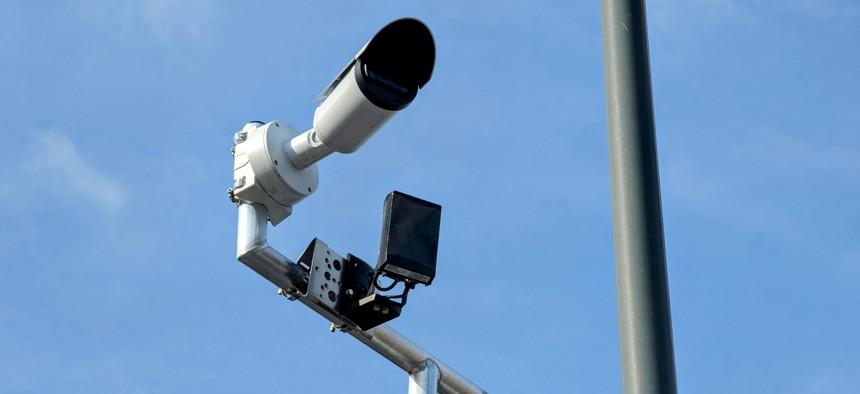
deepblue4you via Getty Images





Other cities with cameras have released similar records, complaint alleges.
This article was originally published by Oregon Capital Chronicle.
A Eugene resident backed by Oregon’s chapter of the American Civil Liberties Union sued his city for access to the locations of license-plate readers using software that privacy watchdogs and activists say could target out-of-state abortion seekers and immigrants without permanent legal status.
Seth May, a member of the anti-surveillance group Eyes Off Eugene, filed the suit on Monday in Lane County Circuit Court following a months-long battle seeking records related to nearly 60 undisclosed locations of cameras created by the American manufacturing and security software company Flock Safety.
Cities including Springfield, Woodburn and Medford have disclosed records showing the number and “general placement” of Flock cameras through public records requests already, the suit alleges.
“Mass surveillance through the use of technology like Flock cameras present a dangerous threat to every Oregonian’s privacy and rights to be free from invasive and unjustified government searches into our personal lives,” Kelly Simon, the ACLU of Oregon’s legal director, said in a statement. “The concern is heightened by the extreme levels of federal aggression being currently directed at immigrants, transgender people, Black and Brown people and people exercising their First Amendment rights.”
The lawsuit traces back to a June request May made for records from Eugene city officials, who denied the request on the grounds of a state public records law exemption protecting information that “would reveal or otherwise identify security measures” or “weaknesses or potential weaknesses in security measures.” At least six cameras in the city have been vandalized, a police spokesperson told Lookout Eugene-Springfield Oct. 15.
May appealed that denial, saying there was a strong public interest in law enforcement use of mass surveillance. But Lane County District Attorney Christopher Parosa told the Capital Chronicle that May failed to identify a public interest that would outweigh the concerns around security measures.
“We do the best we can in an area of law we do not practice under incredible statutory time constraints when we already have more work to do than my team can reasonably and morally be asked to handle,” Parosa wrote in an email.
Flock Safety cameras have stoked increasing controversy in recent months, though they’ve been used for years nationwide in thousands of law enforcement agencies and almost all states. This year, the company announced new artificial intelligence tools allowing officers to search for vehicles with unique characteristics.
Civil rights advocates have raised concerns that the data collected by those cameras could be used to track immigrants and people seeking abortions, even in states including Oregon that have laws to protect access to reproductive care and bar local police from working to enforce immigration law. At least 10 Washington police departments had their databases searched by U.S. Customs and Border Patrol without explicit authorization, according to a Tuesday report from human rights scholars at the University of Washington.
On Monday, the city of Springfield reaffirmed that it would not move forward with the use of 25 cameras the city previously installed amid concerns about privacy. In the wake of community opposition, Eugene’s city manager announced Oct. 13 that the city would turn off the cameras, following an earlier vote by the city council recommending a pause on their use.
Police in Eugene installed the cameras in July 2025, arguing that the cameras have allowed them to quickly intercept violent crime and thefts. The technology tracks more than license plates, including features such as car color, make or physical condition. University researchers and journalists have documented how U.S. Customs and Border Patrol and Immigrations and Customs Enforcement accessed camera data in states like Oregon and Washington.
Separately, a Texas officer reportedly searched thousands of Flock’s cameras with a broad search for “had an abortion, search for female.” Flock claimed a news report detailing the incident was misleading and cited a local sheriff claiming it was for an investigation into a missing woman. Follow-up reporting from the Electronic Frontier Foundation, a San Francisco-based nonprofit digital rights group, found that local authorities had opened a “death investigation” of a “non-viable fetus.”
Claims of Deception
Flock has accused its critics of spreading misinformation. Among the most vocal opponents of Flock Safety is Oregon’s Democratic U.S. Sen. Ron Wyden, who in a statement earlier this month slammed the company for “deceiving state and local law enforcement customers about its sharing of their data with the Department of Homeland Security and other federal agencies.”
Wyden had previously announced in July that he secured a deal with the security company restricting out-of-state access to Oregon license plate data by law enforcement for abortion or immigration-related inquiries. Citing Eugene’s decision to back away from the readers, however, he said that Flock’s filters “are easy to circumvent and lack meaningful privacy protections.”
“I now believe that abuses of your product are not only likely but inevitable, and that Flock is unable and uninterested in preventing them,” Wyden wrote in an Oct. 16 letter to the company. “In my view, local elected officials can best protect their constituents from the inevitable abuses of Flock cameras by removing Flock from their communities.”
Responding to those claims, Dan Haley, Flock Safety’s chief legal officer, said the company engaged in good faith with Wyden in complying with his requests for information on the grounds of supporting congressional oversight. He wrote in a letter that abuses of the technology have been rare, but “those responsible have been held to account by relevant local oversight entities due to the very transparency features your letter deems insufficient.”
Paris Lewbel, a spokesperson for Flock Safety, said in an email that the company is instituting a mechanism to ensure searches for information require specified parameters like a mandatory offense to combat the use of unclear search terms. Another feature that Oregon uses is a filter for sanctuary states preventing their camera data from appearing in nationwide searches, he said.
Flock Safety also removed federal agencies from its nationwide and statewide search tools after admitting in August that it “didn’t create distinct permissions and protocols in the Flock system to ensure local compliance for federal agency users.”
“Flock does not proactively or randomly conduct audits of the use of our products by our customers, many of whom are government entities empowered by law to conduct sensitive investigations, because Flock is not an enforcement body and because laws and policies governing use of our tools vary significantly customer to customer,” Lewbel said.