A new Oregon law regulates police use of license plate readers. Here’s how it works.
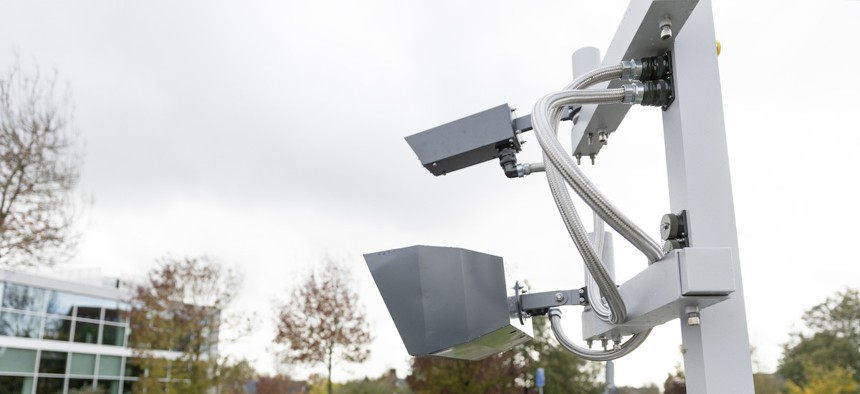
Lorado via Getty Images


The legislation empowers Oregonians to sue technology vendors who violate the law’s privacy protections.

This story was originally published by the Oregon Capital Chronicle.

Oregonians will soon be able to sue private companies that sell or otherwise improperly use data captured by license plate-reading cameras under a new state law. 

Senate Bill 1516, signed into law by Gov. Tina Kotek on March 31, went into effect immediately due to an emergency clause lawmakers tucked into the legislation. The 16-page law was part of a public safety omnibus package that received bipartisan support, but it stood out for its restrictions placed on the use of automated license plate reading software and the street cameras it employs. Law enforcement agencies have used that technology to dismantle criminal networks, but their use has drawn increased scrutiny amid increased federal immigration enforcement.

“We have the possibility of multiple law enforcement agencies in the state entering into contracts that may not have those private protections of data,” Sen. Floyd Prozanski, a Eugene Democrat who chairs the Senate Judiciary Committee, told the Capital Chronicle in January. “There may be the ability for other entities (to be) getting access to that material for purposes that are not lawful within the state, specifically sharing with the federal government or other states.”

Oregon’s sanctuary laws prevent state and local law enforcement from assisting federal immigration enforcement without a court order. But civil rights advocates have raised concerns that the data collected by cameras could be used to track immigrants and people seeking abortions, even in states including Oregon that have laws to protect access to reproductive care and bar local police from working to enforce immigration law. 

The technology tracks more than license plates, including features such as car color, make or physical condition, and some researchers have found that its use can lead to misread plates or arrests of innocent individuals.

U.S. Border Patrol employed automated license plate-reading technology in the 1990s, and it spread to police departments across the country in the next decade. One vendor in particular, the Atlanta-based Flock Safety, has drawn condemnation from U.S. Sen. Ron Wyden, who previously said the company is “unable and uninterested” in preventing abuses of its products.

University researchers and journalists have documented how U.S. Border Patrol and Immigration and Customs Enforcement accessed camera data in states like Oregon and Washington. U.S. Border Patrol had access to at least 10 Washington police departments’ databases without explicit authorization, according to an October 2025 report from the University of Washington. And in June 2025, some local agencies outside of Oregon searched the networks of Oregon’s local law enforcement agencies hundreds of times on behalf of ICE, according to the Oregon Law Center.

In response to concerns from privacy advocates, the law limits the retention of such data to 30 days unless it is linked to a criminal inquiry or court proceedings, allowing for law enforcement to hold onto it as they pursue their investigations. Authorities would have to log the purpose of their searches and the specific type of crime or violation being targeted if their search through the data is for a criminal investigation. They are barred from using the technology in a manner that violates the state’s sanctuary laws.

Flock Safety cameras, meanwhile, have stoked increasing controversy in recent months, prompting some Oregon cities to turn off their usage. But they’ve been used for years nationwide in thousands of law enforcement agencies. This past year, the company announced new artificial intelligence tools allowing officers to search for vehicles with unique characteristics. 

The company has also issued guidance around the new law and praised it for establishing Oregon’s “first comprehensive ALPR framework, setting rules for ALPR use while preserving its ability to help solve crime and locate missing persons.” 

“Flock Safety remains committed to responsible ALPR regulation and continued collaboration with policymakers and law enforcement agencies across Oregon and the country,” the company’s website reads. “As SB 1516 takes effect, our priority is to help agencies adjust to the new law while continuing to protect their communities.”

Enforcement Questioned

Any member of the public could sue for damages caused by vendors who act “intentionally or with gross negligence” by selling, disclosing or sharing the data. That could include a vendor accessing and providing data to federal immigration authorities without a local law enforcement body’s consent or judicial warrant.

But that leaves a great amount of onus on individual Oregonians to enforce the law, according to Ky Fireside, an Oregon House candidate and Springfield-based progressive organizer who was part of a license plate reader workgroup convened by Prozanski.

“If I wanted to take a private right of action against a vendor, I’m gonna need to find some very powerful lawyers that are willing to work on contingency or something,” Fireside told the Capital Chronicle.

Under the law, non-Oregon law enforcement can also access Oregon law enforcement agencies’ database for information “relevant to the law enforcement purpose” rather than “unrestricted or ongoing access to captured license plate data.” The agency sharing data must log which government agency or entity requested the search and the number of cameras or devices accessed. 

And any vendor that contracts with law enforcement agencies must give the agency monthly and quarterly audits. Those audits, which must also be available to the public, would include information such as the number of unique vehicles the system has captured, what kind of data was searched for, the purpose of a search and any government agencies for whom a law enforcement agency conducted a search. 

Fireside said this transparency is particularly important given the public’s involvement with holding the technology accountable. Prior to halting their use, local authorities in Eugene confirmed that a license plate reading camera in the area was turned on without the city’s consent.

“Every misuse of the system that we found was because of the public auditing these companies, watching them, doing public records requests or just looking at transparency portals,” Fireside said. “It was not like internal affairs investigating themselves and realizing someone did something wrong. It was the public.”

Although the bill exempts license plate reader data used by law enforcement agencies from public records requests, it notes that audits can be disclosed if they are edited to remove personally identifiable information. Videos or images, for instance, would need to be “edited in a manner as to render the faces of all persons within the recording or image unidentifiable.”

One thing privacy advocates wanted, but didn’t get? The law requires that the captured license plate data be encrypted through end-to-end encryption, the process by which secure data is encoded before it is transferred to its destination and decoded. But it doesn’t spell out how that process is defined, a major issue for Fireside.

“The bill requires it, but doesn’t define it. My biggest concern is that these vendors are going to try and skirt that aspect of the bill,” Fireside said. “That is the most dangerous part, because that requirement was the thing that kept the data out of the hands of these private corporations.”

Oregon Capital Chronicle is part of States Newsroom, a nonprofit news network supported by grants and a coalition of donors as a 501c(3) public charity. Oregon Capital Chronicle maintains editorial independence. Contact Editor Julia Shumway for questions: info@oregoncapitalchronicle.com.

X
This website uses cookies to enhance user experience and to analyze performance and traffic on our website. We also share information about your use of our site with our social media, advertising and analytics partners. Learn More / Do Not Sell My Personal Information
Accept Cookies
X
Cookie Preferences Cookie List

Do Not Sell My Personal Information

When you visit our website, we store cookies on your browser to collect information. The information collected might relate to you, your preferences or your device, and is mostly used to make the site work as you expect it to and to provide a more personalized web experience. However, you can choose not to allow certain types of cookies, which may impact your experience of the site and the services we are able to offer. Click on the different category headings to find out more and change our default settings according to your preference. You cannot opt-out of our First Party Strictly Necessary Cookies as they are deployed in order to ensure the proper functioning of our website (such as prompting the cookie banner and remembering your settings, to log into your account, to redirect you when you log out, etc.). For more information about the First and Third Party Cookies used please follow this link.

Allow All Cookies

Manage Consent Preferences

Strictly Necessary Cookies - Always Active

We do not allow you to opt-out of our certain cookies, as they are necessary to ensure the proper functioning of our website (such as prompting our cookie banner and remembering your privacy choices) and/or to monitor site performance. These cookies are not used in a way that constitutes a “sale” of your data under the CCPA. You can set your browser to block or alert you about these cookies, but some parts of the site will not work as intended if you do so. You can usually find these settings in the Options or Preferences menu of your browser. Visit www.allaboutcookies.org to learn more.

Sale of Personal Data, Targeting & Social Media Cookies

Under the California Consumer Privacy Act, you have the right to opt-out of the sale of your personal information to third parties. These cookies collect information for analytics and to personalize your experience with targeted ads. You may exercise your right to opt out of the sale of personal information by using this toggle switch. If you opt out we will not be able to offer you personalised ads and will not hand over your personal information to any third parties. Additionally, you may contact our legal department for further clarification about your rights as a California consumer by using this Exercise My Rights link

If you have enabled privacy controls on your browser (such as a plugin), we have to take that as a valid request to opt-out. Therefore we would not be able to track your activity through the web. This may affect our ability to personalize ads according to your preferences.

Targeting cookies may be set through our site by our advertising partners. They may be used by those companies to build a profile of your interests and show you relevant adverts on other sites. They do not store directly personal information, but are based on uniquely identifying your browser and internet device. If you do not allow these cookies, you will experience less targeted advertising.

Social media cookies are set by a range of social media services that we have added to the site to enable you to share our content with your friends and networks. They are capable of tracking your browser across other sites and building up a profile of your interests. This may impact the content and messages you see on other websites you visit. If you do not allow these cookies you may not be able to use or see these sharing tools.

If you want to opt out of all of our lead reports and lists, please submit a privacy request at our Do Not Sell page.

Save Settings
Cookie Preferences Cookie List

Cookie List

A cookie is a small piece of data (text file) that a website – when visited by a user – asks your browser to store on your device in order to remember information about you, such as your language preference or login information. Those cookies are set by us and called first-party cookies. We also use third-party cookies – which are cookies from a domain different than the domain of the website you are visiting – for our advertising and marketing efforts. More specifically, we use cookies and other tracking technologies for the following purposes:

Strictly Necessary Cookies

We do not allow you to opt-out of our certain cookies, as they are necessary to ensure the proper functioning of our website (such as prompting our cookie banner and remembering your privacy choices) and/or to monitor site performance. These cookies are not used in a way that constitutes a “sale” of your data under the CCPA. You can set your browser to block or alert you about these cookies, but some parts of the site will not work as intended if you do so. You can usually find these settings in the Options or Preferences menu of your browser. Visit www.allaboutcookies.org to learn more.

Functional Cookies

We do not allow you to opt-out of our certain cookies, as they are necessary to ensure the proper functioning of our website (such as prompting our cookie banner and remembering your privacy choices) and/or to monitor site performance. These cookies are not used in a way that constitutes a “sale” of your data under the CCPA. You can set your browser to block or alert you about these cookies, but some parts of the site will not work as intended if you do so. You can usually find these settings in the Options or Preferences menu of your browser. Visit www.allaboutcookies.org to learn more.

Performance Cookies

We do not allow you to opt-out of our certain cookies, as they are necessary to ensure the proper functioning of our website (such as prompting our cookie banner and remembering your privacy choices) and/or to monitor site performance. These cookies are not used in a way that constitutes a “sale” of your data under the CCPA. You can set your browser to block or alert you about these cookies, but some parts of the site will not work as intended if you do so. You can usually find these settings in the Options or Preferences menu of your browser. Visit www.allaboutcookies.org to learn more.

Sale of Personal Data

We also use cookies to personalize your experience on our websites, including by determining the most relevant content and advertisements to show you, and to monitor site traffic and performance, so that we may improve our websites and your experience. You may opt out of our use of such cookies (and the associated “sale” of your Personal Information) by using this toggle switch. You will still see some advertising, regardless of your selection. Because we do not track you across different devices, browsers and GEMG properties, your selection will take effect only on this browser, this device and this website.

Social Media Cookies

We also use cookies to personalize your experience on our websites, including by determining the most relevant content and advertisements to show you, and to monitor site traffic and performance, so that we may improve our websites and your experience. You may opt out of our use of such cookies (and the associated “sale” of your Personal Information) by using this toggle switch. You will still see some advertising, regardless of your selection. Because we do not track you across different devices, browsers and GEMG properties, your selection will take effect only on this browser, this device and this website.

Targeting Cookies

We also use cookies to personalize your experience on our websites, including by determining the most relevant content and advertisements to show you, and to monitor site traffic and performance, so that we may improve our websites and your experience. You may opt out of our use of such cookies (and the associated “sale” of your Personal Information) by using this toggle switch. You will still see some advertising, regardless of your selection. Because we do not track you across different devices, browsers and GEMG properties, your selection will take effect only on this browser, this device and this website.