The drone threat is here. Is your community ready?
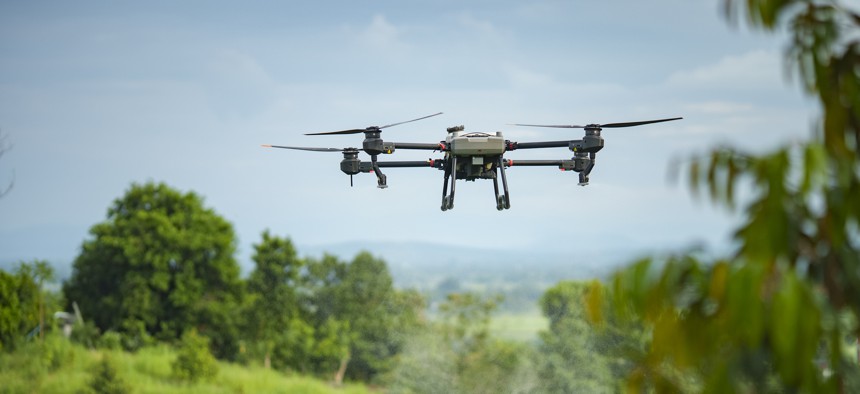
skaman306 via Getty Images

COMMENTARY | The technology exists to mitigate threats, and governments must act now to make policy and planning decisions, get people trained and establish a command structure.

Drone activity is no longer a problem for distant battlefields; it has landed on our doorstep. 

This month, dozens of flights were canceled in Belgium after drone sightings forced an airport shutdown. Days earlier, unidentified drones were spotted near Kleine Brogel Air Base, where U.S. nuclear weapons are stored, raising serious espionage concerns. Closer to home, a recent analysis of aviation safety found that drones contributed to two-thirds of near midair collisions at the 30 busiest U.S. airports. 

These incidents are a stark warning: if drones can disrupt major U.S. airports and approach nuclear sites in Europe, America’s cities, stadiums, and critical infrastructure are far from immune. As the U.S. prepares to host millions of visitors for the 2026 World Cup, the nation’s 250th birthday celebrations, and the 2028 Olympics, the risk of drone-based incidents is an urgent homeland security concern. But the first line of defense won’t be the Pentagon. It will be the state, city, county and local governments and emergency management services responsible for protecting our communities and critical assets.

The Drone Threat Facing States and Cities

State, city, county, and other local governments have embraced drones as invaluable tools for saving lives, supporting search-and-rescue missions, damage assessments, and wildfire responses. Yet few have prepared for the moment when drones become a threat. 

The war in Ukraine has shown how quickly commercially available drones can be weaponized, transforming inexpensive quadcopters into precision tools for reconnaissance, disruption, and attack. Globally, weaponized and commercially modified drones with autonomous capability have been used to strike power substations, oil fields, disable communications networks, and surveil security operations. With nearly one million drones registered in the United States, and many more unregistered, the potential for misuse is significant, and large public gatherings are highly vulnerable. 

Unauthorized drone flights over stadiums have surged dramatically. The National Football League reported a 20,000% increase between 2017 and 2023. Incidents like these led to major sports leagues supporting the Disabling Enemy Flight Entry and Neutralizing Suspect Equipment (DEFENSE) Act in Congress, which would give state and local law enforcement more agency to respond to drone threats.

Despite increasing awareness of the threat, most state and local governments and emergency management agencies still lack the awareness, training, technology and legal authority to detect, track, or neutralize drones. 

Even a single drone targeting a crowded stadium or critical infrastructure could trigger cascading disruptions across power, communications, and transportation systems, demanding an immediate local emergency response. Effectively managing such incidents will require seamless coordination and integration among federal, state, and local agencies. The question is no longer whether drones will be used maliciously, but whether local authorities will be prepared when they are.

A New Opportunity to Act

State governments have a new opportunity to build meaningful counter-drone capabilities. The Department of Homeland Security’s newly established Counter-Unmanned Aircraft Systems Grant Program provides $500 million to strengthen state, local, tribal and territorial governments’ abilities to detect, identify, monitor, track and mitigate UAS. 

Funding will support public safety officials in protecting public and critical infrastructure and will prioritize 11 states directly or indirectly hosting FIFA World Cup 2026 events, as well as the National Capital Region. This marks a substantial federal investment to expand non-federal counter-UAS preparedness and response capabilities.

To use this opportunity effectively, states must move quickly and strategically. Building effective counter-UAS capability is not as simple as buying sensors or deploying new equipment. It requires planning, clear policy decisions, defined coordination roles, training, communications support, and sustained readiness. Before moving forward, states must consider: Where will systems be deployed? Who will operate them? How are they trained? How will information be shared? And what happens when a drone shifts from nuisance to threat?

It’s More Than Just Hardware

Buying counter-UAS equipment is easy. Building a reliable, lawful, integrated and operationally effective counter-drone posture is far more complex. States, counties, cities and their departments must begin with threat-informed planning to understand what types of drones are most likely to be used in specific areas and events, how they could target critical infrastructure or mass gatherings, and what indicators would signal an escalating threat. 

Without this foundation, even the best counter-drone technology risks being deployed against the wrong problem.

Effective systems require trained people, not just sensors. Emergency managers, law enforcement, and critical infrastructure operators must know how to analyze detection data, distinguish nuisance flights from real threats, and receive clear and direct guidance on when and how to execute coordinated responses under pressure. These skills cannot be improvised during an incident; they must be built through consistent training, education, and exercises.

Equally important is establishing a clear command and control architecture, known as C2. States need defined roles for who detects, who assesses, who communicates with federal partners, and who is authorized to act. A counter-drone response without C2 will result in delays, miscommunication, or unsafe mitigation attempts.

And ultimately, all of this must be integrated. Detection systems, personnel, C2 processes, data collection, and emergency response plans must function as a single, synchronized enterprise, not a series of disconnected tools and agencies. Drone threats are mobile and adaptive, and counter-UAS planning must be equally agile. Counter-UAS readiness is not just about buying hardware. It is about creating a threat-informed, trained, coordinated, and integrated system that can protect communities and infrastructure when it matters.

The Time to Act Is Now

The drone threat is no longer theoretical. These platforms are real, evolving, and capable of attacking critical infrastructure and public spaces in seconds. The safety of our cities, stadiums, and communities depends on a robust state and local layer of counter-UAS preparedness. 

The technology to detect, track and neutralize these threats already exists and continues to advance rapidly. State and local governments must take advantage of new opportunities to act, but the window to build effective defenses is closing. The time to prepare, train, and integrate counter-drone capabilities is now, before the next major event becomes a target.

Lieutenant General Keith J. Stalder (U.S. Marine Corps, Ret.) is the Founder and President of KSA Integration, LLC, an award-winning defense and homeland security provider that delivers advanced solutions through cutting-edge technologies, strategic partnerships, and operational reach. A former F-4 and F/A-18 pilot, LtGen Stalder served over 37 years in the U.S. Marine Corps, where he led U.S. Marine Corps Forces Pacific, II Marine Expeditionary Force, and 3D Marine Aircraft Wing.

X
This website uses cookies to enhance user experience and to analyze performance and traffic on our website. We also share information about your use of our site with our social media, advertising and analytics partners. Learn More / Do Not Sell My Personal Information
Accept Cookies
X
Cookie Preferences Cookie List

Do Not Sell My Personal Information

When you visit our website, we store cookies on your browser to collect information. The information collected might relate to you, your preferences or your device, and is mostly used to make the site work as you expect it to and to provide a more personalized web experience. However, you can choose not to allow certain types of cookies, which may impact your experience of the site and the services we are able to offer. Click on the different category headings to find out more and change our default settings according to your preference. You cannot opt-out of our First Party Strictly Necessary Cookies as they are deployed in order to ensure the proper functioning of our website (such as prompting the cookie banner and remembering your settings, to log into your account, to redirect you when you log out, etc.). For more information about the First and Third Party Cookies used please follow this link.

Allow All Cookies

Manage Consent Preferences

Strictly Necessary Cookies - Always Active

We do not allow you to opt-out of our certain cookies, as they are necessary to ensure the proper functioning of our website (such as prompting our cookie banner and remembering your privacy choices) and/or to monitor site performance. These cookies are not used in a way that constitutes a “sale” of your data under the CCPA. You can set your browser to block or alert you about these cookies, but some parts of the site will not work as intended if you do so. You can usually find these settings in the Options or Preferences menu of your browser. Visit www.allaboutcookies.org to learn more.

Sale of Personal Data, Targeting & Social Media Cookies

Under the California Consumer Privacy Act, you have the right to opt-out of the sale of your personal information to third parties. These cookies collect information for analytics and to personalize your experience with targeted ads. You may exercise your right to opt out of the sale of personal information by using this toggle switch. If you opt out we will not be able to offer you personalised ads and will not hand over your personal information to any third parties. Additionally, you may contact our legal department for further clarification about your rights as a California consumer by using this Exercise My Rights link

If you have enabled privacy controls on your browser (such as a plugin), we have to take that as a valid request to opt-out. Therefore we would not be able to track your activity through the web. This may affect our ability to personalize ads according to your preferences.

Targeting cookies may be set through our site by our advertising partners. They may be used by those companies to build a profile of your interests and show you relevant adverts on other sites. They do not store directly personal information, but are based on uniquely identifying your browser and internet device. If you do not allow these cookies, you will experience less targeted advertising.

Social media cookies are set by a range of social media services that we have added to the site to enable you to share our content with your friends and networks. They are capable of tracking your browser across other sites and building up a profile of your interests. This may impact the content and messages you see on other websites you visit. If you do not allow these cookies you may not be able to use or see these sharing tools.

If you want to opt out of all of our lead reports and lists, please submit a privacy request at our Do Not Sell page.

Save Settings
Cookie Preferences Cookie List

Cookie List

A cookie is a small piece of data (text file) that a website – when visited by a user – asks your browser to store on your device in order to remember information about you, such as your language preference or login information. Those cookies are set by us and called first-party cookies. We also use third-party cookies – which are cookies from a domain different than the domain of the website you are visiting – for our advertising and marketing efforts. More specifically, we use cookies and other tracking technologies for the following purposes:

Strictly Necessary Cookies

We do not allow you to opt-out of our certain cookies, as they are necessary to ensure the proper functioning of our website (such as prompting our cookie banner and remembering your privacy choices) and/or to monitor site performance. These cookies are not used in a way that constitutes a “sale” of your data under the CCPA. You can set your browser to block or alert you about these cookies, but some parts of the site will not work as intended if you do so. You can usually find these settings in the Options or Preferences menu of your browser. Visit www.allaboutcookies.org to learn more.

Functional Cookies

We do not allow you to opt-out of our certain cookies, as they are necessary to ensure the proper functioning of our website (such as prompting our cookie banner and remembering your privacy choices) and/or to monitor site performance. These cookies are not used in a way that constitutes a “sale” of your data under the CCPA. You can set your browser to block or alert you about these cookies, but some parts of the site will not work as intended if you do so. You can usually find these settings in the Options or Preferences menu of your browser. Visit www.allaboutcookies.org to learn more.

Performance Cookies

We do not allow you to opt-out of our certain cookies, as they are necessary to ensure the proper functioning of our website (such as prompting our cookie banner and remembering your privacy choices) and/or to monitor site performance. These cookies are not used in a way that constitutes a “sale” of your data under the CCPA. You can set your browser to block or alert you about these cookies, but some parts of the site will not work as intended if you do so. You can usually find these settings in the Options or Preferences menu of your browser. Visit www.allaboutcookies.org to learn more.

Sale of Personal Data

We also use cookies to personalize your experience on our websites, including by determining the most relevant content and advertisements to show you, and to monitor site traffic and performance, so that we may improve our websites and your experience. You may opt out of our use of such cookies (and the associated “sale” of your Personal Information) by using this toggle switch. You will still see some advertising, regardless of your selection. Because we do not track you across different devices, browsers and GEMG properties, your selection will take effect only on this browser, this device and this website.

Social Media Cookies

We also use cookies to personalize your experience on our websites, including by determining the most relevant content and advertisements to show you, and to monitor site traffic and performance, so that we may improve our websites and your experience. You may opt out of our use of such cookies (and the associated “sale” of your Personal Information) by using this toggle switch. You will still see some advertising, regardless of your selection. Because we do not track you across different devices, browsers and GEMG properties, your selection will take effect only on this browser, this device and this website.

Targeting Cookies

We also use cookies to personalize your experience on our websites, including by determining the most relevant content and advertisements to show you, and to monitor site traffic and performance, so that we may improve our websites and your experience. You may opt out of our use of such cookies (and the associated “sale” of your Personal Information) by using this toggle switch. You will still see some advertising, regardless of your selection. Because we do not track you across different devices, browsers and GEMG properties, your selection will take effect only on this browser, this device and this website.