
Massachusetts establishes nation’s first union for ride-hailing drivers
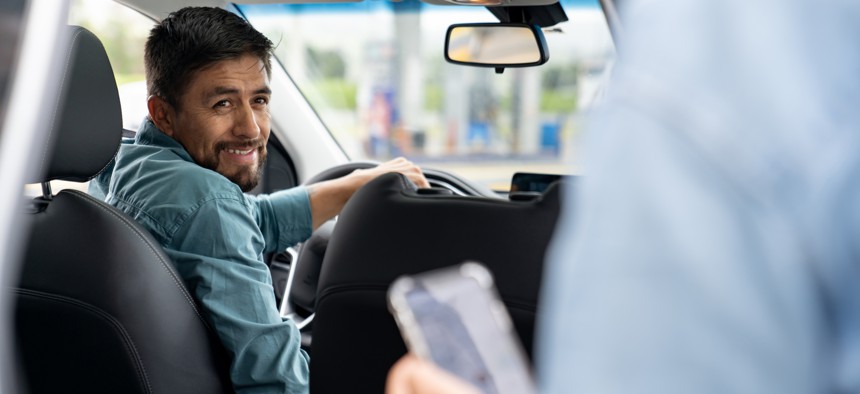
Hispanolistic via Getty Images




 By
Chris Teale
By
Chris Teale
The state’s almost 70,000 drivers can now join the App Driver’s Union, following voter approval of the right to unionize in November 2024 via ballot question.
Massachusetts this week became the first state to establish a union for ride-hailing drivers, in what officials said is one of the biggest expansions of collective bargaining rights in modern history.
The state’s Department of Labor Relations last week certified the App Driver’s Union as the exclusive bargaining unit for ride-hailing drivers, where they can collectively bargain for wages, benefits and other work conditions.
The certification means the almost 70,000 ride-hailing drivers in the state can unionize while maintaining their status as independent contractors. Voters first approved the right for them to unionize in November 2024 through Ballot Question 3. State officials said this represents the largest private sector bargaining victory since the 1940s, and it is the first gig worker union in the country.
“Massachusetts has always been at the forefront of the labor movement — from the mills of Lowell to the innovation economy of today. This is a historic moment for workers, for fairness and for the future of our economy,” Massachusetts Gov. Maura Healey said in a statement. “Rideshare drivers are crucial members of our workforce and our communities, and they deserve a real voice in shaping their wages, benefits and working conditions.”
Studies in the past several years have found that ride-hailing drivers and other independent contractors in the gig economy struggle with low wages; a lack of benefits typically granted to employees, including sick pay; and other issues like violence and sexual harassment. Federal and state lawmakers have tried with varying degrees of success to get those issues under control.
But this unionization effort in Massachusetts, kicked off by the ballot initiative and a 2024 law, looked to make it easier for ride-hailing drivers to unionize and collectively bargain in the state. Drivers could obtain each other’s contact information to organize by showing support from 5% of their peers, a lower threshold than the 30% support required under the National Labor Relations Act.
Then, if drivers showed at least 25% support, they could begin the bargaining process. This Massachusetts law also provides for bargaining across a sector, so sets standards across an entire industry, rather than at an individual work site. The Center for American Progress said in an analysis that the new App Drivers Union bargaining unit could be the largest in the private sector since 1941, when more than 80,000 Ford workers at the River Rouge plant in Dearborn, Michigan, unionized and joined the United Auto Workers union.
For their part, major ride-hailing companies indicated a willingness to work with the ADU and its members.
Lyft spokesman CJ Macklin said the company is “committed to engaging in good faith, while Uber spokeswoman Katie Franger said the efforts of 2024 show “what we can achieve when we listen to drivers.”
“Lyft does well when drivers do well, and we'll stay focused on helping drivers succeed while keeping rideshare affordable and dependable for everyone who counts on it," Macklin continued.
“As we enter this next phase, we will work closely with the ADU, our broader driver community, and the Department of Labor Relations,” Franger added. “Together, we will ensure that driver flexibility and hard-won benefits remain the foundation of our progress, while upholding the highest standards of safety, data security, transparency, and public accountability.”
Similar bargaining efforts are underway in Illinois and Minnesota, and there is hope this model could continue to spread. One thing that could stand in its way, however, would be if President Donald Trump’s administration, the National Labor Relations Board or the U.S. Supreme Court chooses to classify ride-hailing drivers or other gig economy workers as employees.
But those present at a rally at the Massachusetts State House said it represents a historic accomplishment.
“As industries evolve, Massachusetts remains committed to ensuring that worker protections evolve alongside them,” State Rep. Paul McMurtry, a Democrat who chairs the Joint Committee on Labor and Workforce Development, said in a statement. “Today’s achievement sends a clear message that innovation and strong labor standards can coexist, and that our Commonwealth will always fight to ensure workers have the opportunity to live, work, and raise their families with security and dignity.”
Experts said this kind of sectoral bargaining, which looks to represent workers across an entire industry rather than at an individual work site, could be a model for others.
“Technology and artificial intelligence are rapidly reshaping work, but this effort shows that workers do not have to face those changes alone,” David Madland, senior adviser to the American Worker Project at the Center for American Progress, said in a statement.