
Montana governor announced EO for AI, trades workforce development
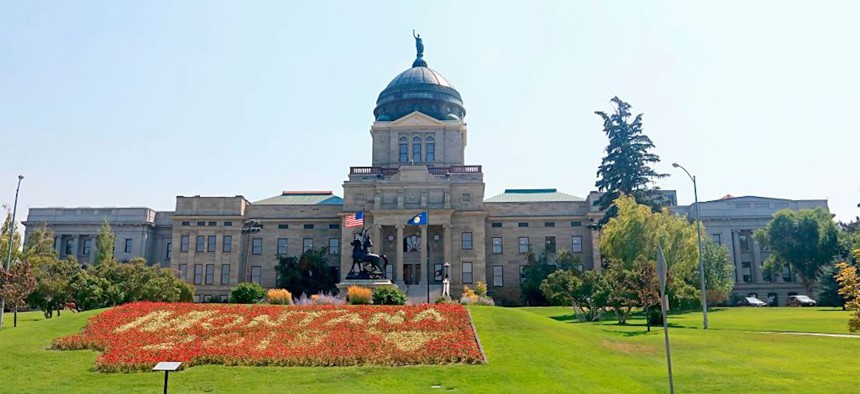
Education Images/Universal Images Group via Getty Images





The 406 JOBS Initiative directs the Montana Department of Labor and Industry to develop and implement a statewide framework to align with federal executive orders.
This story was originally published by the Daily Montanan.
Gov. Greg Gianforte announced Monday a new statewide initiative to bolster workforce development in skilled trades and AI usage.
Gianforte signed Executive Order 5-2025 creating the 406 JOBS Initiative, which directs the Department of Labor and Industry’s State Workforce Innovation Board to put Montana in line with national education and workforce development goals set by President Donald Trump.
“406 JOBS stands for four pathways to employment, zero barriers to work, and six high-demand sectors,” Gianforte said during a press conference held at Helena’s Boeing manufacturing center on Monday. “Those sectors include health care, construction, hospitality and recreation, advanced manufacturing and computing education and child care and financial and professional services.
Earlier this year, Trump signed two executive orders directing federal agencies to implement workforce development initiatives focused on training for skilled trade jobs and advancing artificial intelligence in education.
Within the state, Gianforte’s executive order establishes the State Workforce Innovation Board as the lead coordinating body for 406 JOBS. According to the order, the board will develop and oversee the implementation of the JOBS initiative, “facilitate industry-led workforce strategies that reflect current and future labor market demands, and consult with tribal governments, tribal colleges, and Native-led organizations in the design and implementation of strategies that reflect the needs of tribal communities.”
“Under this plan, we will ensure that our workforce system values all the ways that people enter and move around our labor market — apprenticeships, industry-recognized credentials, Sprint degrees, military service, entrepreneurship and traditional college degree programs,” DLI Commissioner Sarah Swanson said during the press conference. “406 JOBS will focus us on a statewide level, on those things that are keeping people from attaining work.”
According to a DLI report released last week analyzing the roughly 340,000 Montanans who are not actively participating in the labor force, more than 100,000 working-age Montanans are not employed, and not seeking work.
Citing that data, Swanson said some of those people are “making the choice to be stay at home parents or to retire early, and when family finances allow for that, we celebrate those choices.” But she said others are prevented from participating in the workforce due to serious systemic or lifestyle barriers.
Those barriers can include a lack of access to child care, chronic illness or disability, criminal justice history, or even challenges transitioning from military to civilian service,” Swanson said.“We need to build some bridges back to work especially in these high demand sectors,” Swanson said.
Jason Yager, a State Workforce and Innovation Board Member and Executive Director of the Montana Photonics & Quantum Alliance, also spoke at the governor’s press conference about the importance of developing a stronger pipeline for workers seeking to enter the labor market in manufacturing and computing fields.
“I can tell you firsthand that Montana’s opportunities in advanced manufacturing, information technology and computing are enormous,” Yager said. “Companies from all over the world are looking to come to Montana, and they need a skilled, prepared workforce.”
Over the next few weeks, DLI staff and members of the State Workforce Innovation Board will be traveling the state to share more details and goals of the 406 JOBS initiative, and will “seek input from Montana citizens, members of the Montana Legislature, Montana associations whose members are impacted by workforce development challenges, and other appropriate stakeholders,” according to the order.
“You’ll hear us talking more about industry recognized credentials, apprenticeships, opportunities for young people and more access to training programs in our rural communities,” Yager said.
Gianforte’s executive order also directs DLI to expand the training and use of AI in schools and job fields.
The initiative directs the Department of Labor to:
- promote and expand opportunities that equip Montanans with AI skills
- provide professional development opportunities that support educators in incorporating AI-skills development into career awareness and readiness instruction
- identify opportunities to integrate AI tools that assist job seekers in navigating career pathways, accessing training, and securing employment
- encourage public-private partnerships that accelerate AI workforce development and adoption across key sectors
- support small businesses in upskilling workers and incorporating AI technologies into business operations
- prioritize digital modernization, including AI-readiness, in workforce service delivery and talent development programs.
DLI is directed to work with the Office of Public Instruction, the Office of the Commissioner of Higher Education, the Montana University System, and the Department of Commerce for its AI initiatives.
Through his executive orders, Trump directed some federal funding to states that implement programs like the one announced by Gianforte, which Swanson said the state would seek.
DLI will be “maximizing the workforce investments that are already in existence in Montana, focusing on letting the private sector and the employers lead and going where they’d like us to follow,” Swanson said. “This is a reorganization of existing agency workforce programs across all of the state agencies that the governor leads.”
Per the executive order, SWIB is expected to deliver an implementation plan within 90 days to examine existing agency workforce initiatives and establish annual reporting mechanisms.
Daily Montanan is part of States Newsroom, a nonprofit news network supported by grants and a coalition of donors as a 501c(3) public charity. Daily Montanan maintains editorial independence. Contact Editor Darrell Ehrlick for questions: info@dailymontanan.com.