
How tech is helping improve avalanche forecasting
Andrii Lutsyk/ Ascent Xmedia via Getty Images



 By
Chris Teale
By
Chris Teale
The Utah Avalanche Center has already embraced technology to try and help prevent disasters, and it is looking to emerging areas to do even better in spite of staffing shortages.
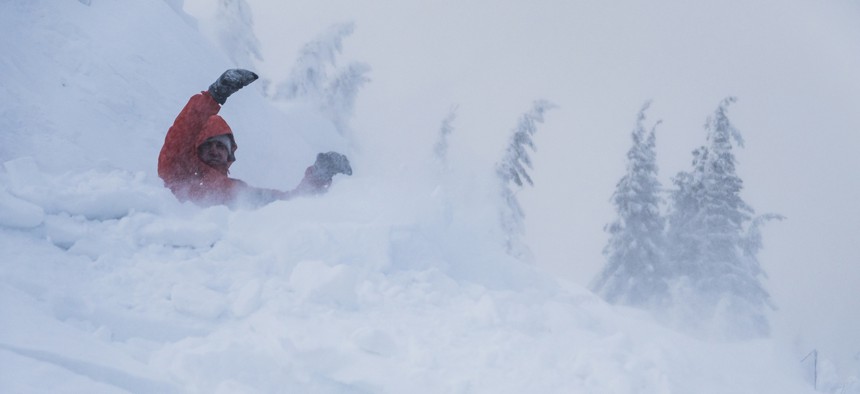
In February, an avalanche in Big Cottonwood Canyon near Salt Lake City in Utah led to the death of an 11-year-old from Massachusetts who was skiing in the area.
A report from the nonprofit Utah Avalanche Center found that the victim was carried more than 200 vertical feet by the snow and ice that was between 400 and 600 feet wide. The report estimated she was buried four feet below the snow surface for around 17 minutes, and was later declared dead at the hospital despite the efforts of local ski patrol and rescuers.
The incident highlighted the risks of avalanches and the efforts of the Utah Avalanche Center and others to not only rescue the stranded but forecast the disasters and educate the public so they can stay safe. The risk of avalanche is only increasing as climate and weather pattern shifts change snowpack, and technology can play a role in helping make forecasting easier.
“If we can create more accurate avalanche forecasts that help people understand those changing conditions, our goal is to always save lives of people who live, work and play in snow covered mountains, and so we're always looking at, how can we get better at that?” said Chad Brackelsberg, the UAC’s executive director emeritus and special projects lead. “Using some of these technologies to help our forecast team be more accurate, more efficient, and getting the word out to more people is our end goal.”
Avalanche forecasting is a fairly manual procedure for staff at the UAC, which was founded in 1980 in collaboration with the U.S. Forest Service before the nonprofit Friends of the Utah Avalanche Center was founded a decade later to help raise money and operate the center. Staff members must go out and manually inspect the snowpack and test it, determining whether it is weak enough to potentially slide downhill.
Technology can help collate and analyze the data they collect on the slopes, however.
Brackelsberg said UAC has a “big history of innovation in the avalanche world,” including consolidating its data from various databases and producing online dashboards for their team to study. The center was also an early adopter of publishing forecasts online and making them more visual, rather than text based. Now, UAC leans on social media to deliver its public communications, and they have also embraced television.
Having the staffing availability to analyze the data is a challenge, and that is where artificial intelligence and machine learning can come in.
A recent ShipSummit event in Park City, Utah, hosted by Rise8, a software development company that typically works in the defense sector and for the federal government, showed what’s possible in how data aggregation and emerging tech can help improve avalanche forecasting.
Through various hands-on sessions, 200 participants who used over 1 million AI tokens came up with solutions to some of the UAC’s most pressing challenges. One of those, said Adam Furtado, Rise8’s director of enablement, included an idea to analyze satellite imagery for topography changes that may indicate if an avalanche is about to happen. Brackelsberg said a full prototype could happen in the future.
“With the introduction of these types of technologies, we can iterate on experiments super rapidly,” he said. “We were able to see that in real time and in more of a training environment, from what we were putting together. They were able to see these things and come up with their own ideas.”
And Brackelsberg said the unique public-private nature of the UAC, which is a nonprofit backed in part by state, local and federal help, as well as donations, shows what is possible too.
“The private side allows us to be nimble and flexible, and even cutting edge when it applies,” he said. “It allowed us here, historically, to not get sidetracked through so much process and instead take that tech route of failing fast and testing things to see what works. It's important for us to be able to quickly put a post on social media or a blog on the website, or get in front of a news station or a radio station, to continually get that message out. This partnership helps that be successful.”