
GIS data helps California utility prepare for increasing wildfire threats
Toa55 via Getty Images






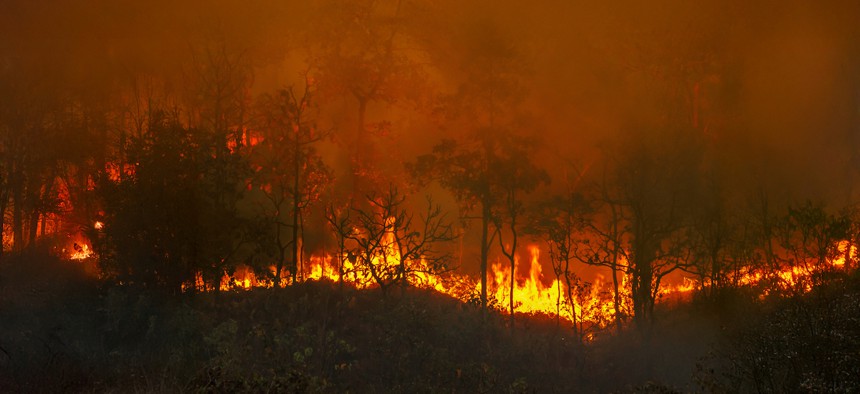
In southern California, where water can be hard to come by, one utility is increasingly relying on GIS data to proactively prepare critical resources to combat wildfires.
The threat and impacts of wildfires across the U.S. show little signs of slowing down. Data is helping one local agency in California prepare critical resources to combat the growing risk and build community resilience against wildfires.
About 50 miles south of Los Angeles, California, the Santa Margarita Water District is increasingly turning to geographic information system data to inform the utility’s efforts to manage and store water resources.
The technology helps the Santa Margarita Water District allocate three billion gallons of water in reservoirs for aerial firefighting units and 9,000 fire hydrants across eight cities the utility serves in South Orange County. SMWD is also responsible for storing 500 million gallons of emergency drinking water for more than 220,000 residents, said Nate Adams, director of water resilience and customer care for SMWD.
“We do not, unfortunately, have the luxury of plentiful groundwater,” Adams said. The district has to import water from sources like northern California or the Colorado River, so efficient water storage and use is particularly critical for officials, he explained.
The utility has leveraged GIS capabilities for about a decade already, but the tech has become increasingly valuable as officials grapple with the increasing severity and frequency of wildfires, he said.
Adams pointed to last year’s Airport Fire in southern California, where the district is located, as an example. The fire burned more than 23,526 acres of land, destroyed 160 homes and buildings and injured 22 people across two counties, according to state officials.
Leveraging Esri’s ArcGIS platform, utility and local fire authorities mapped the fire as it spread for nearly a month. “We could see the path it was on [and] how it was spreading in relation to where our assets were,” Adams said.
For instance, the platform also includes SMWD’s data on where water supplies like reservoirs, fire hydrants and pipelines are located. Together, those insights helped officials ensure that 700,000 gallons of water were available to local firefighters to mitigate the Airport Fire, he said.
More broadly, with the GIS data and dashboard, Adams said “I can use it to think through how we can use data to help support planning efforts to think about water resiliency … when you need it most in a firefighting situation.”
SMWD is a growing utility, he added, with officials expecting to add 700 water connections per year for the next 10 years to the current infrastructure system. GIS data will be critical “to understand what our potential fire demands are going to be, so that we build big enough reservoirs … and that we maintain enough water to help us fight expected fire flows,” Adams explained.
The district is also using GIS tech to monitor fire hydrant and pipeline conditions across the county. Using a dashboard, officials can view pipeline data by size, material and location to track where leaks are occurring.
That data enables officials to proactively plan infrastructure improvements and repairs to improve water resiliency and financial management for local agencies, Adams said.
“Emergencies spark innovation,” he said. With data tools at the ready, “the good news out of tragedies is that you can become more prepared or at least aware of what can occur.”