
Texts to 988 hotline must now be georouted to local crisis centers
Smith Collection/Gado via Getty Images





 By
Chris Teale
By
Chris Teale
The Federal Communications Commission approved rules requiring wireless providers to route texts to the mental health line based on their origin, rather than area code.
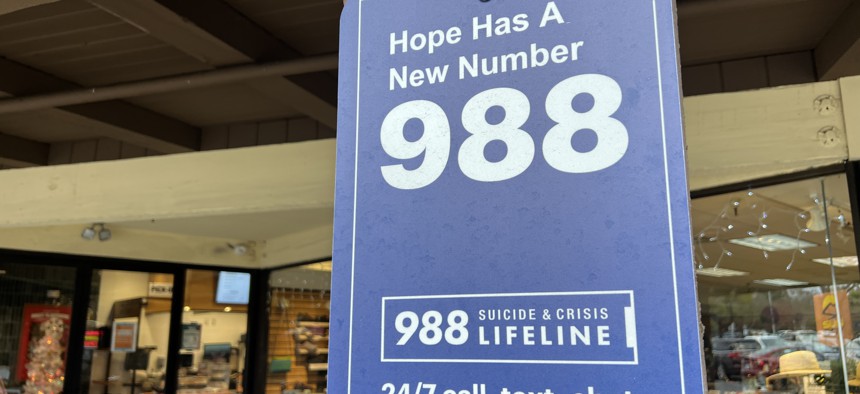
The Federal Communications Commission voted last week to require text messages to the 988 suicide and mental health crisis hotline to be georouted to local crisis centers based on where they are sent from.
Previously, texts to 988, also known as Lifeline, had been routed to crisis centers based on the area code of the texter’s phone number. Mental health and crisis counseling experts had long warned the FCC that the discrepancy could limit Lifeline’s ability to connect those in crisis with local resources.
The FCC voted in Oct. 2024 to require that phone calls to 988 be georouted based on callers’ area codes. The crisis line service has been active for just over three years and in that time has received 11.1 million calls, 2.9 million texts and 2.4 million chats via instant message. FCC Chair Brendan Carr said georouting means service is more consistent regardless of whether someone calls or texts.
“With mobile phones and number portability, the number that people call from may have an area code that doesn’t match their actual geographic area,” Carr said in a statement after the FCC’s latest vote. “That means that someone calling the Lifeline living in one state could have their call or text routed to a help center in a completely different part of the country. This matters because local crisis centers are often better suited to help Lifeline users during the initial point of contact and with follow-up care in their communities.”
Under the rules adopted by the FCC, wireless providers will be required to develop the technical capability to transmit georouting data based on where a handset is located when a text message is sent. They also will be required to provide georouting data for 988 text messages to the Lifeline Administrator when available, and aggregate location data generated from cell-based technology in such a way that it does not identify the texter’s precise location, to protect the privacy of 988 users.
Nationwide providers have 18 months to comply with the rules, while non-nationwide providers have 36 months to comply.
“As we make this change, we also want to ensure that people aren’t worried about their privacy, which may discourage someone from reaching out to 988,” Carr’s statement continued. “With this in mind, the rules we adopt today require text providers to route calls based on aggregated data that does not identify the precise location of the initiating handset. I am confident the step we take today will save more lives, consistent with what we’ve seen from the prior enhancements to 988.”
The Suicide and Crisis Lifeline is overseen by the Department of Health and Human Services’ Substance Abuse and Mental Health Services Administration and has been popular since its inception based on the number of messages it has received. But it has struggled with various challenges, not just the need for better georouting.
A Dec. 2022 cyberattack led to a day-long disruption, while workforce shortages and spending cuts have left many worried about its long-term future. Lawmakers introduced a bipartisan, bicameral bill earlier this year to strengthen Lifeline. Experts have also suggested that a phone fee or surcharge could help make up the service’s budgetary shortfall, while stories about callers being left on hold abound.
More recently, President Donald Trump’s administration announced it would eliminate specialized suicide prevention and support for LGBTQ+ youth callers, leading several states, including California and Illinois, to announce they would step up in their stead.
In a statement supporting text message georouting, Commissioner Anna Gomez said the ending of specialized support for LGBTQ+ youth is a “shameful stain on the legacy of an otherwise successful effort to help more Americans in crisis.”
“This has always been about saving lives,” Gomez continued. “It has always been about people, not politics. But now, this Administration is picking between those who deserve support versus those who don’t. It is choosing to make callous, heartless decisions about who may live and who may die. Because that will be the end result of this action: young people in crisis will lose their lives.”
And Gomez said cuts to SAMHSA wrought by the Department of Government Efficiency and an overall restructuring at HHS could mean that this georouting effort is effectively neutered. To counter that, Gomez said she added language to mandate that if SAMHSA is reorganized or has its responsibilities transferred, a successor can carry out its 988 responsibilities without any interruption.
“That work must continue,” Gomez said. “We cannot turn a blind eye to this pressing need. So, I am glad we are being sensible in this case to expect the best but prepare for the worst.”