Innovative mapping tool reveals hidden wetlands and enhances conservation efforts
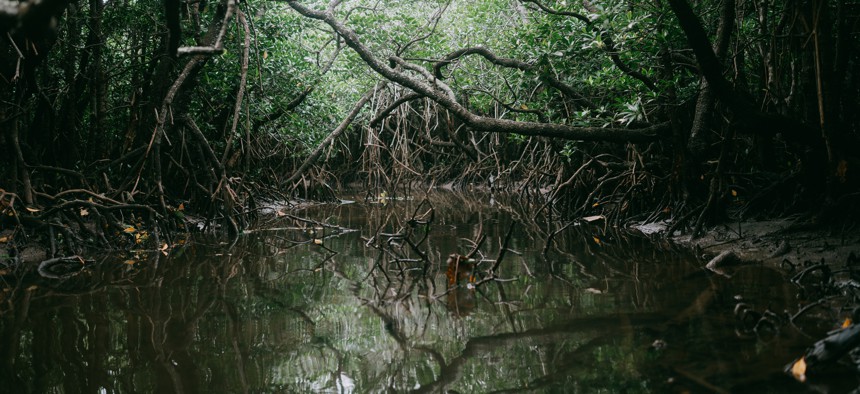
Ippei Naoi via Getty Images


An AI-powered model aids states and countries in planning and restoration priorities.

This article was originally published by The Pew Charitable Trusts.

Over the past 200 years, the United States has lost more than half of its wetlands, largely because of commercial development and agricultural practices that drain or fill wetlands. Even worse, recent data shows that the rate of wetlands loss in the U.S. is accelerating.

A major challenge in addressing wetlands loss is that many types of wetlands — especially forested and seasonal wetlands, and those that were drained, filled, or otherwise heavily altered — are underrepresented in or missing from national datasets. The most widely used resource, the U.S. Fish and Wildlife Service’s National Wetlands Inventory, provides information about wetlands and habitats, but the agency lacks the money to fully modernize its mapping techniques. Because the inventory was built using aerial photography, it often misses subtle features in the terrain or wetlands hidden beneath tree cover, meaning their crucial functions are unrecognized in planning and policy efforts.

These gaps make it difficult to account for wetlands’ substantial ecological and economic contributions, including protecting communities from flooding and wildfires; providing habitat for commercially and recreationally important species; controlling erosion; and filtering pollutants and excess nutrients from the water.

Novel Tool Improves Mapping with Data and AI

A promising development in overcoming these challenges is the Wetland Intrinsic Potential (WIP) tool. During a recent webinar hosted by The Pew Charitable Trusts’ Blue Carbon Network, three Washington state experts discussed the artificial intelligence-powered tool, which they helped to develop. The tool combines satellite imagery and data on hydrology, elevation, and vegetation with machine learning — a branch of AI that detects patterns and makes predictions — to model where wetlands are likely to exist.

The WIP tool is a marked advancement from the USFWS wetlands inventory because it “detects fine-scale topographic cues invisible to the eye and standard imagery,” said Meghan Halabisky, an earth observation scientist at the University of Washington. The tool goes beyond surface wetness and analyzes hydrology, topography, and vegetation to pinpoint probable wetlands, even those that are hidden or degraded. The result is a powerful, flexible model that complements traditional mapping and provides new insights that can inform decision-making.

The WIP tool is “something that we just haven’t had until now — to be able to combine all these different pieces of information,” said Amy Yahnke, a wetlands scientist with the Washington Department of Ecology.

One of the tool’s key innovations is its ability to produce high-resolution maps that identify carbon-rich soils. When combined with on-site soil data, this allows researchers to more accurately model where carbon is stored. “This spatially aligned foundation allows us to truly map the value of wetlands on the landscape — everything from flood protection to carbon storage,” Halabisky said.

Improved wetlands mapping can empower states and agencies to better integrate wetlands into climate plans and resilience initiatives. In fact, the tool has already helped numerous state and local governments to identify previously unknown wetlands, refine boundaries, and inform planning and restoration priorities.

WIP Tool Used in Washington State — And Beyond

Since 2021, the tool has helped to improve local and regional wetland inventories and management in areas including Washington state and a NASA-led project in Hawaii.

In Tukwila, Washington, a city of about 21,000 in suburban Seattle, the tool identified new wetlands, updated other wetlands’ boundaries, and helped officials understand restoration potential within the city’s Green River watershed, said Connor Racette, a geographic information system expert for the Washington Department of Ecology. Racette also noted the utility of the tool for evaluating forestry practices on wetlands.

Racette also previously worked with NASA DEVELOP — a research internship program that addresses environmental and public policy issues — to build WIP models for the island of Hawaii, the largest of the state of Hawaii’s seven islands, to inform risk management and support storm surge management by identifying wetlands of high value that should be restored or conserved. Wetlands historically also are important to Native Hawaiian communities, Racette said, “and this data also helped inform cultural resources research and planning efforts.”

The tool has also been used in other states and Canada, as well as Africa through a partnership with Digital Earth Africa (a free online platform that offers open access to satellite imagery), to develop wetland inventories for countries on the continent.

The WIP tool can be continually improved over time, Halabisky said, if quality data is used to train the model. “Good training data is really more important than any kind of fancy AI model,” she noted. The tool’s iterative design allows users to incorporate new, more accurate data points from which the model’s outputs can be refined.

Continued investments in instruments like the WIP tool can empower policymakers to tap into the power of wetlands to strengthen communities and bolster biodiversity in a changing world.

As Halabisky said, “Better mapping means better decision-making.”

Jazmin Dagostino is a senior associate with The Pew Charitable Trusts’ U.S. conservation project.

X
This website uses cookies to enhance user experience and to analyze performance and traffic on our website. We also share information about your use of our site with our social media, advertising and analytics partners. Learn More / Do Not Sell My Personal Information
Accept Cookies
X
Cookie Preferences Cookie List

Do Not Sell My Personal Information

When you visit our website, we store cookies on your browser to collect information. The information collected might relate to you, your preferences or your device, and is mostly used to make the site work as you expect it to and to provide a more personalized web experience. However, you can choose not to allow certain types of cookies, which may impact your experience of the site and the services we are able to offer. Click on the different category headings to find out more and change our default settings according to your preference. You cannot opt-out of our First Party Strictly Necessary Cookies as they are deployed in order to ensure the proper functioning of our website (such as prompting the cookie banner and remembering your settings, to log into your account, to redirect you when you log out, etc.). For more information about the First and Third Party Cookies used please follow this link.

Allow All Cookies

Manage Consent Preferences

Strictly Necessary Cookies - Always Active

We do not allow you to opt-out of our certain cookies, as they are necessary to ensure the proper functioning of our website (such as prompting our cookie banner and remembering your privacy choices) and/or to monitor site performance. These cookies are not used in a way that constitutes a “sale” of your data under the CCPA. You can set your browser to block or alert you about these cookies, but some parts of the site will not work as intended if you do so. You can usually find these settings in the Options or Preferences menu of your browser. Visit www.allaboutcookies.org to learn more.

Sale of Personal Data, Targeting & Social Media Cookies

Under the California Consumer Privacy Act, you have the right to opt-out of the sale of your personal information to third parties. These cookies collect information for analytics and to personalize your experience with targeted ads. You may exercise your right to opt out of the sale of personal information by using this toggle switch. If you opt out we will not be able to offer you personalised ads and will not hand over your personal information to any third parties. Additionally, you may contact our legal department for further clarification about your rights as a California consumer by using this Exercise My Rights link

If you have enabled privacy controls on your browser (such as a plugin), we have to take that as a valid request to opt-out. Therefore we would not be able to track your activity through the web. This may affect our ability to personalize ads according to your preferences.

Targeting cookies may be set through our site by our advertising partners. They may be used by those companies to build a profile of your interests and show you relevant adverts on other sites. They do not store directly personal information, but are based on uniquely identifying your browser and internet device. If you do not allow these cookies, you will experience less targeted advertising.

Social media cookies are set by a range of social media services that we have added to the site to enable you to share our content with your friends and networks. They are capable of tracking your browser across other sites and building up a profile of your interests. This may impact the content and messages you see on other websites you visit. If you do not allow these cookies you may not be able to use or see these sharing tools.

If you want to opt out of all of our lead reports and lists, please submit a privacy request at our Do Not Sell page.

Save Settings
Cookie Preferences Cookie List

Cookie List

A cookie is a small piece of data (text file) that a website – when visited by a user – asks your browser to store on your device in order to remember information about you, such as your language preference or login information. Those cookies are set by us and called first-party cookies. We also use third-party cookies – which are cookies from a domain different than the domain of the website you are visiting – for our advertising and marketing efforts. More specifically, we use cookies and other tracking technologies for the following purposes:

Strictly Necessary Cookies

We do not allow you to opt-out of our certain cookies, as they are necessary to ensure the proper functioning of our website (such as prompting our cookie banner and remembering your privacy choices) and/or to monitor site performance. These cookies are not used in a way that constitutes a “sale” of your data under the CCPA. You can set your browser to block or alert you about these cookies, but some parts of the site will not work as intended if you do so. You can usually find these settings in the Options or Preferences menu of your browser. Visit www.allaboutcookies.org to learn more.

Functional Cookies

We do not allow you to opt-out of our certain cookies, as they are necessary to ensure the proper functioning of our website (such as prompting our cookie banner and remembering your privacy choices) and/or to monitor site performance. These cookies are not used in a way that constitutes a “sale” of your data under the CCPA. You can set your browser to block or alert you about these cookies, but some parts of the site will not work as intended if you do so. You can usually find these settings in the Options or Preferences menu of your browser. Visit www.allaboutcookies.org to learn more.

Performance Cookies

We do not allow you to opt-out of our certain cookies, as they are necessary to ensure the proper functioning of our website (such as prompting our cookie banner and remembering your privacy choices) and/or to monitor site performance. These cookies are not used in a way that constitutes a “sale” of your data under the CCPA. You can set your browser to block or alert you about these cookies, but some parts of the site will not work as intended if you do so. You can usually find these settings in the Options or Preferences menu of your browser. Visit www.allaboutcookies.org to learn more.

Sale of Personal Data

We also use cookies to personalize your experience on our websites, including by determining the most relevant content and advertisements to show you, and to monitor site traffic and performance, so that we may improve our websites and your experience. You may opt out of our use of such cookies (and the associated “sale” of your Personal Information) by using this toggle switch. You will still see some advertising, regardless of your selection. Because we do not track you across different devices, browsers and GEMG properties, your selection will take effect only on this browser, this device and this website.

Social Media Cookies

We also use cookies to personalize your experience on our websites, including by determining the most relevant content and advertisements to show you, and to monitor site traffic and performance, so that we may improve our websites and your experience. You may opt out of our use of such cookies (and the associated “sale” of your Personal Information) by using this toggle switch. You will still see some advertising, regardless of your selection. Because we do not track you across different devices, browsers and GEMG properties, your selection will take effect only on this browser, this device and this website.

Targeting Cookies

We also use cookies to personalize your experience on our websites, including by determining the most relevant content and advertisements to show you, and to monitor site traffic and performance, so that we may improve our websites and your experience. You may opt out of our use of such cookies (and the associated “sale” of your Personal Information) by using this toggle switch. You will still see some advertising, regardless of your selection. Because we do not track you across different devices, browsers and GEMG properties, your selection will take effect only on this browser, this device and this website.