With federal penalties looming, Washington looks to curb food stamp payment errors
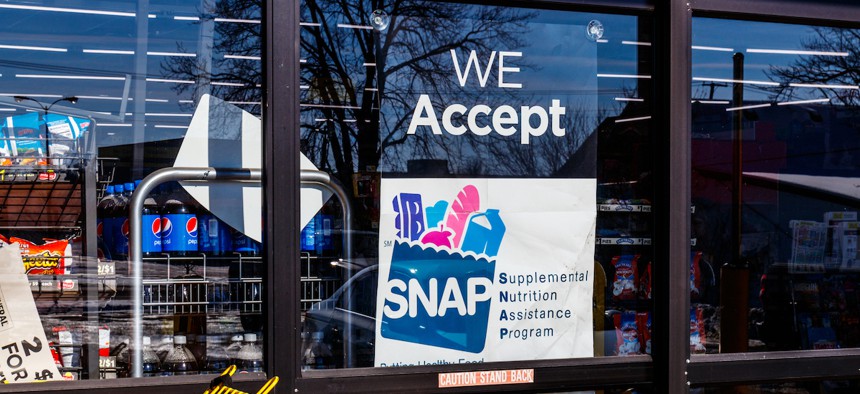
jetcityimage via Getty Images


States that routinely overpay or underpay food stamp recipients could now lose hundreds of millions of dollars in federal funding.

This story was originally published by the Washington State Standard.

States that routinely overpay or underpay food stamp recipients could now lose hundreds of millions of dollars in federal funding.

This has Washington officials trying to improve the state’s already well below-average error rate in providing benefits under the Supplemental Nutrition Assistance Program, or SNAP. Ideas include increasing case reviews and establishing a new team focused on reducing mishaps.

The so-called “big, beautiful bill” that congressional Republicans passed in July is set to reduce federal spending on nutrition programs nationwide by an estimated $186 billion over 10 years

This could cost over 130,000 enrollees their food benefits due to more stringent work requirements, according to state officials. And it stands to shift tens of millions in administrative costs from the federal government to the state.

But Washington could face many tens of millions more in new costs if it doesn’t address its error rate. 

While the federal government funds SNAP benefits, states run the program for low-income residents. The two levels of government share administrative expenses. In May, the most recent month for which data is available, over 905,000 Washingtonians received a total of $167 million in SNAP benefits.

Under the new law, states will have to cover between 5% and 15% of food stamp benefits usually paid for by the feds, depending on how often they make mistakes doling out payments. 

Those with error rates between 6% and 8% would pay for 5% of benefits, amounting to around $100 million in Washington. Between 8% and 10% would cost the state about $200 million. And anything over 10% will force the state to shoulder a staggering $300 million in new costs.

“This change is a completely fundamental shift in the responsibility of the federal government to the states,” said Claire Lane, director of the Seattle-based Anti-Hunger and Nutrition Coalition. 

States will have to start paying those shares in October 2027, as part of the Trump administration’s self-described crusade against waste, fraud and abuse.

The costs could force some states to limit enrollment or doom their food stamp programs altogether. 

“There are a lot of states concerned that this is not sustainable,” Lane said. “Making states pay enormously to feed a lot fewer people is going to be tragic for many hungry people.”

Luckily, Washington is ahead of the pack on this issue. Its error rate in the 2024 federal fiscal year was 6.06%, just above the minimum threshold. Most of those mistakes were overpayments. The national average is just under 11%. 

For federal fiscal year 2025, Washington’s SNAP program, known as Basic Food, was trending toward an error rate over 8%, according to the state Department of Social and Health Services, which runs the program. This would put its penalty at $200 million annually. 

Before this, Washington had been on the right track, reducing its rate from 9.33% in fiscal year 2022.

States have the option to choose between their 2025 and 2026 fiscal year error rates to decide how much they’ll pay. Federal fiscal years start Oct. 1. In subsequent years, penalties will be based on the rate from three years earlier. 

But with major changes to eligibility on the way, officials fear the state will slip up more often, not less. 

Preventing Mistakes

The Department of Social and Health Services wants a half-dozen new full-time employees to increase case reviews and monitor error trends. 

It’s looking to establish a small data-driven team with the sole mission of minimizing mistakes. The department also proposed expanded reviews of cases handled by staff with above-average error rates. Money to use artificial intelligence that can automate some of the process would also help, the agency said. 

The Department of Social and Health Services is seeking nearly $1.7 million to bring the ideas to fruition. The agency recently submitted a request for supplemental funding to the governor’s office. Gov. Bob Ferguson in December will propose to state lawmakers a budget tweaking the two-year spending plan he signed in May. 

In its request to the governor, the department described the ask as the “bare minimum,” as it continues to develop other plans.

“We will continue to ensure accuracy while we work with Gov. Ferguson’s office and the Legislature to find solutions that avoid or reduce increased costs to an already strained state budget,” Department of Social and Health Services spokesperson Norah West said in an email. “This makes good fiscal sense and provides additional support to DSHS employees and the Washingtonians they serve when they get the correct benefit amounts the first time.” 

Other states are taking similar action. Oregon, for example, has created a dedicated team focused on finding ways to reduce its 14.06% error rate. 

Some states with particularly high error rates, like Oregon, could get an extension before they have to pay benefit costs. That provision was added to win over Sen. Lisa Murkowski, R-Alaska, the key vote to get President Donald Trump’s megabill through the U.S. Senate. Alaska’s error rate is highest in the nation, at nearly 25%. 

The Department of Social and Health Services also wants $4.6 million for information technology upgrades to respond to changes in the new federal law. And $2.1 million is sought to join a national clearinghouse to avoid duplicate benefits across state lines.

Washington State Standard is part of States Newsroom, a nonprofit news network supported by grants and a coalition of donors as a 501c(3) public charity. Washington State Standard maintains editorial independence. Contact Editor Bill Lucia for questions: info@washingtonstatestandard.com.

X
This website uses cookies to enhance user experience and to analyze performance and traffic on our website. We also share information about your use of our site with our social media, advertising and analytics partners. Learn More / Do Not Sell My Personal Information
Accept Cookies
X
Cookie Preferences Cookie List

Do Not Sell My Personal Information

When you visit our website, we store cookies on your browser to collect information. The information collected might relate to you, your preferences or your device, and is mostly used to make the site work as you expect it to and to provide a more personalized web experience. However, you can choose not to allow certain types of cookies, which may impact your experience of the site and the services we are able to offer. Click on the different category headings to find out more and change our default settings according to your preference. You cannot opt-out of our First Party Strictly Necessary Cookies as they are deployed in order to ensure the proper functioning of our website (such as prompting the cookie banner and remembering your settings, to log into your account, to redirect you when you log out, etc.). For more information about the First and Third Party Cookies used please follow this link.

Allow All Cookies

Manage Consent Preferences

Strictly Necessary Cookies - Always Active

We do not allow you to opt-out of our certain cookies, as they are necessary to ensure the proper functioning of our website (such as prompting our cookie banner and remembering your privacy choices) and/or to monitor site performance. These cookies are not used in a way that constitutes a “sale” of your data under the CCPA. You can set your browser to block or alert you about these cookies, but some parts of the site will not work as intended if you do so. You can usually find these settings in the Options or Preferences menu of your browser. Visit www.allaboutcookies.org to learn more.

Sale of Personal Data, Targeting & Social Media Cookies

Under the California Consumer Privacy Act, you have the right to opt-out of the sale of your personal information to third parties. These cookies collect information for analytics and to personalize your experience with targeted ads. You may exercise your right to opt out of the sale of personal information by using this toggle switch. If you opt out we will not be able to offer you personalised ads and will not hand over your personal information to any third parties. Additionally, you may contact our legal department for further clarification about your rights as a California consumer by using this Exercise My Rights link

If you have enabled privacy controls on your browser (such as a plugin), we have to take that as a valid request to opt-out. Therefore we would not be able to track your activity through the web. This may affect our ability to personalize ads according to your preferences.

Targeting cookies may be set through our site by our advertising partners. They may be used by those companies to build a profile of your interests and show you relevant adverts on other sites. They do not store directly personal information, but are based on uniquely identifying your browser and internet device. If you do not allow these cookies, you will experience less targeted advertising.

Social media cookies are set by a range of social media services that we have added to the site to enable you to share our content with your friends and networks. They are capable of tracking your browser across other sites and building up a profile of your interests. This may impact the content and messages you see on other websites you visit. If you do not allow these cookies you may not be able to use or see these sharing tools.

If you want to opt out of all of our lead reports and lists, please submit a privacy request at our Do Not Sell page.

Save Settings
Cookie Preferences Cookie List

Cookie List

A cookie is a small piece of data (text file) that a website – when visited by a user – asks your browser to store on your device in order to remember information about you, such as your language preference or login information. Those cookies are set by us and called first-party cookies. We also use third-party cookies – which are cookies from a domain different than the domain of the website you are visiting – for our advertising and marketing efforts. More specifically, we use cookies and other tracking technologies for the following purposes:

Strictly Necessary Cookies

We do not allow you to opt-out of our certain cookies, as they are necessary to ensure the proper functioning of our website (such as prompting our cookie banner and remembering your privacy choices) and/or to monitor site performance. These cookies are not used in a way that constitutes a “sale” of your data under the CCPA. You can set your browser to block or alert you about these cookies, but some parts of the site will not work as intended if you do so. You can usually find these settings in the Options or Preferences menu of your browser. Visit www.allaboutcookies.org to learn more.

Functional Cookies

We do not allow you to opt-out of our certain cookies, as they are necessary to ensure the proper functioning of our website (such as prompting our cookie banner and remembering your privacy choices) and/or to monitor site performance. These cookies are not used in a way that constitutes a “sale” of your data under the CCPA. You can set your browser to block or alert you about these cookies, but some parts of the site will not work as intended if you do so. You can usually find these settings in the Options or Preferences menu of your browser. Visit www.allaboutcookies.org to learn more.

Performance Cookies

We do not allow you to opt-out of our certain cookies, as they are necessary to ensure the proper functioning of our website (such as prompting our cookie banner and remembering your privacy choices) and/or to monitor site performance. These cookies are not used in a way that constitutes a “sale” of your data under the CCPA. You can set your browser to block or alert you about these cookies, but some parts of the site will not work as intended if you do so. You can usually find these settings in the Options or Preferences menu of your browser. Visit www.allaboutcookies.org to learn more.

Sale of Personal Data

We also use cookies to personalize your experience on our websites, including by determining the most relevant content and advertisements to show you, and to monitor site traffic and performance, so that we may improve our websites and your experience. You may opt out of our use of such cookies (and the associated “sale” of your Personal Information) by using this toggle switch. You will still see some advertising, regardless of your selection. Because we do not track you across different devices, browsers and GEMG properties, your selection will take effect only on this browser, this device and this website.

Social Media Cookies

We also use cookies to personalize your experience on our websites, including by determining the most relevant content and advertisements to show you, and to monitor site traffic and performance, so that we may improve our websites and your experience. You may opt out of our use of such cookies (and the associated “sale” of your Personal Information) by using this toggle switch. You will still see some advertising, regardless of your selection. Because we do not track you across different devices, browsers and GEMG properties, your selection will take effect only on this browser, this device and this website.

Targeting Cookies

We also use cookies to personalize your experience on our websites, including by determining the most relevant content and advertisements to show you, and to monitor site traffic and performance, so that we may improve our websites and your experience. You may opt out of our use of such cookies (and the associated “sale” of your Personal Information) by using this toggle switch. You will still see some advertising, regardless of your selection. Because we do not track you across different devices, browsers and GEMG properties, your selection will take effect only on this browser, this device and this website.