
What California has learned from an AI-enabled early wildfire detection system
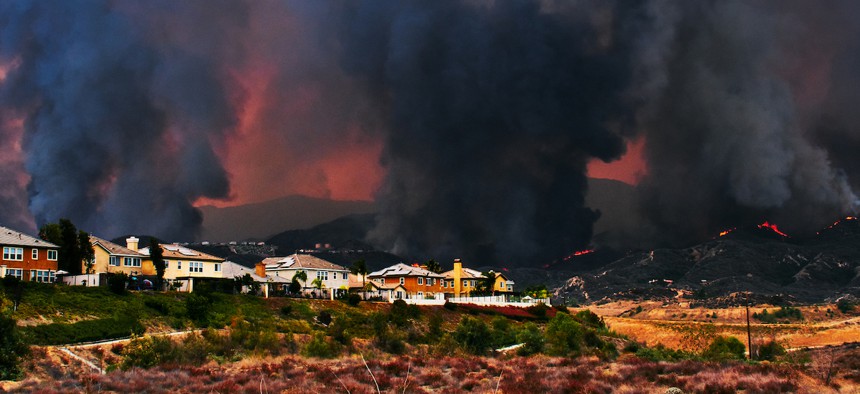
MLGXYZ via Getty Images






A public safety program in the state is using a sensor network and real-time data to suppress wildfires more quickly and gain insights on developing climate-related risks.
State and local governments are keen to harness efficiency gains from artificial intelligence, and climate resilience and emergency response are emerging as key use cases. For a public safety program in California, the tech is showing potential to assist emergency response teams’ mitigation of ongoing and incoming climate-related events like wildfires.
The month of June marks the peak wildfire season that typically lasts until October for several parts of the state. Indeed, this year could be an “above-average peak fire season,” one state official recently told CBS News. Several fires last month, for example, surpassed more than 1,000 acres.
As California faces intensifying wildfire conditions, emergency responders “want to stay on the offensive — not the defensive,” Neal Driscoll, professor of geology and geophysics at the University of California San Diego, told Route Fifty.
Enter ALERTCalifornia, a public safety data platform that aims to streamline state and local agencies’ response to wildfire threats across California through real-time camera and sensor data feeds. The program has been in use since 2017, but UCSD partnered with the state’s Department of Forestry and Fire Protection — or CAL FIRE — in 2023 to deploy artificial intelligence-enabled wildfire early detection, explained Driscoll, director of ALERTCalifornia.
Today, the network has expanded to include 1,263 camera sensors that transmit real-time alerts and visual data to all 21 emergency command centers across the state, he said. The program is used by state and local fire agencies, emergency management organizations, utilities and other public- and private-sector entities.
“We can fight fires in the incipient phase before they get too large,” Driscoll said, adding that there have been “numerous examples where fires were limited to much smaller [events] given the rapid response, early detection and suppression” enabled by the network’s early detection capabilities.
In 2025, for instance, the ALERTCalifornia platform helped inform CAL Fire’s efforts to mitigate approximately 3,600 wildfire incidents, Driscoll said. In more than half of those cases, the system made state fire officials aware of potential wildfire activity, such as changing smoke color or density, before 911 callers reported an issue.
During life-threatening events like wildfires, “seconds matter,” and an automated data solution like ALERTCalifornia “cuts down delays” for public safety teams to coordinate verifying a 911 report and sending local first responders to a scene, Driscoll explained.
The network’s cameras also help officials monitor “cascading disasters” from wildfires to inform recovery and restoration efforts to damaged landscapes, he said. For instance, “we can see [landscapes] where we’re having extreme erosion because [flames] have burnt off the root structures that hold the soils fast,” Driscoll explained.
Such insights have helped ALERTCalifornia secure funding to support ongoing wildfire prevention and mitigation efforts from the state of California, the U.S. Geological Survey, utility commissions and CAL Fire, according to Driscoll.
Increasing the state’s capacity to proactively plan for and respond to wildfire threats remains a top priority for officials, as 10 of California’s most costly and destructive fires have occurred in the years since 2015, according to the California Department of Fish and Wildlife.
To date, ALERTCalifornia continues “providing a tool for firefighters to remain safe while they keep us safe” and “providing data to drive decisions” aimed at reducing the risk and damage from wildfires, Driscoll said.