
Should Lyft and Uber charge more if your battery is low? California may soon ban that
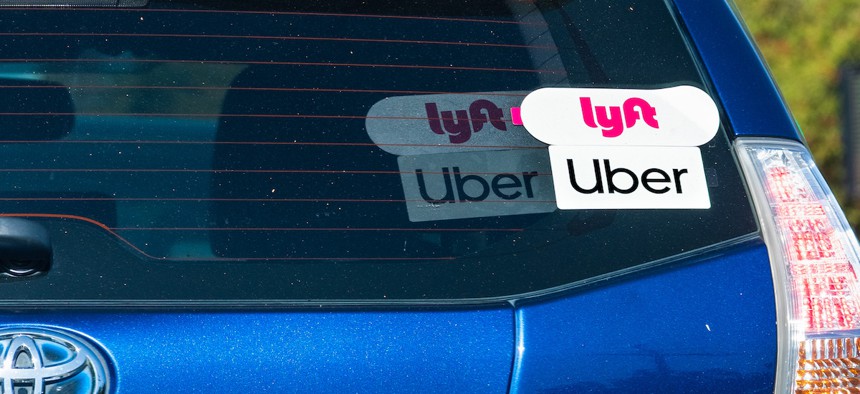





California lawmakers are backing a bill to ban rideshare services from using customers' information like a cellphone’s battery life, model and geolocation data to set different prices.
This article was originally published on CalMatters and was republished under the Creative Commons Attribution-NonCommercial-NoDerivatives license.
It’s late at night, and you badly need a ride. Your cellphone’s battery is dangerously low.
Should a ridehailing company such as Uber or Lyft be able to charge you more because its artificial intelligence programming thinks you’re desperate since it knows your phone is about to die?
Not if Hayward Democratic Sen. Aisha Wahab has her way.
Her Senate Bill 259 would prevent retailers from using artificial intelligence to jack up prices using the information stored on customers’ phones. That could include the phone’s battery life, whether it's an older model, what apps are installed, what time of day it is, where its user is located and where they live.
“Our devices are being weaponized against us in order for large corporations to increase profits, and it has to stop,” Wahab told the Assembly Judiciary Committee last month.
Wahab’s bill to limit surveillance pricing that's coasting through the Legislature is the latest example of California lawmakers trying to reign in the explosion of AI technology this year. Their 29 other legislative proposals this year include a ban on using algorithmic systems to set rent prices and a measure to protect people from automated discrimination by AI models that make critical decisions about a person’s employment, education, housing, health care, finance, criminal sentencing and access to government services.
Wahab’s measure has been an easier sell than some of the other AI proposals that have already failed thanks, in part, to it being billed as part of Democrats’ post-election pledges to cut costs for Californians.
It also has the backing of the state’s influential labor unions, which tend to get their way in the Legislature.
Its labor supporters include the American Federation of State, County and Municipal Employees (AFSCME) and the California Labor Federation. In total, those labor groups have donated at least $8.5 million to lawmakers in the last 10 years, according to CalMatters Digital Democracy database.
‘A High-Tech Assault on Working People’
The unions argue that using algorithms and AI to generate higher prices for customers is inherently discriminatory and should be illegal.
Ivan Fernandez, a lobbyist with the California Labor Federation, called the practice of surveillance pricing a “high-tech assault on working people” during a hearing before the Assembly privacy committee in June. He argued that people are already struggling to afford the high cost of living in California, and companies should not be able to “use our data to squeeze every cent they can.”
“Using data such as a person’s geolocation or their phone battery to determine how much to upcharge them for a good or service further exacerbates this issue of affordability for our affiliate members and for workers,” Fernandez said.
On the other side are business and tech groups that also have donated heavily to legislators but tend to get their way less often than labor does.
Opponents include the California Chamber of Commerce and the Silicon Valley lobbying organizations TechNet and Chamber of Progress. The 17 groups opposed to the measure have given at least $11.7 million to legislators since 2015, according to Digital Democracy.
The opposition argues that the bill is unnecessary under California’s existing data privacy laws, would stifle innovation, cut into tech company profits and lead to higher prices.
“The bill would unfairly cause companies to overhaul their pricing models and strategies at significant cost, to the detriment of both the businesses themselves and their consumers,” wrote Ronak Daylami, a policy analyst with CalChamber, in an opposition letter to the Assembly Judiciary Committee. That committee voted 10-4 to send the bill to the Assembly floor.
CalChamber spokesperson John Myers declined to comment further.
So far, the bill has faced little resistance from lawmakers. Only Republicans have voted against it as it easily passed the California Senate and as it made its way through the Assembly.
“This overregulation is impeding how we do business and how people want to do business,” said Assemblywoman Diane Dixon, a Republican who represents the Huntington Beach area, during an Assembly judiciary committee hearing. “I just believe that the market resolves these issues.”
A few Democrats, such as assemblymembers Chris Ward of San Diego and Lori Wilson of Suisun City, asked about enforcement and also some exceptions for “legitimate uses” of geolocation data, but Wahab has mostly received kudos.
“It's modern-day redlining,” Assemblymember Liz Ortega, a Democrat who represents the Hayward area, told the Assembly privacy committee, referring to racist lending practices that relegated Black and other non-white families into less safe and less desirable neighborhoods prior to the Fair Housing Act of 1968. Proponents of SB 259 argue that without additional guardrails, companies could use consumers’ data to engage in similarly racist price discrimination.
“It was not OK then, and it's not OK today,” Ortega said.
Notwithstanding her concerns about equitable pricing, Ortega’s support for the union-supported proposal isn’t surprising. She is the former statewide political director for one of AFSCME’s local unions. Since 2023, she voted with AFSCME and its affiliate unions’ positions on legislation 100% of the time in 127 opportunities, according to Digital Democracy. She’s also received $77,800 in campaign donations from AFSCME and its affiliates.
Testing Newsom’s Tech Loyalty
As she pitched her proposal, Wahab has frequently referred to herself as “a former tech worker in Silicon Valley” and leaned on her experience working with tech companies as a business IT consultant. Yet she is also strongly aligned with labor and unions, voting their way more than 90% of the time. Since 2021 she has received nearly $50,000 in campaign contributions from the California Labor Federation and AFSCME, according to the Digital Democracy database.
Wahab painted the companies in her former industry as profit-hungry villains that unscrupulously use Californians’ personal data to pad their bottom lines.

Wahab pointed to a ProPublica report that exposed the test prep company Princeton Review charging higher prices for online SAT tutoring to customers in zip codes that had a high percentage of Asian residents, even in neighborhoods with low median incomes.
“You are being discriminated against based on your perceived socioeconomic status,” Wahab told CalMatters.
She also cited reporting from SFGate that alleged hotel booking platforms would upcharge users whose devices showed they were browsing from the Bay Area, sometimes up to $500 a night more than users in other parts of the country.
And she highlighted a report from the advocacy group Consumer Watchdog that alleged ridehailing apps such as Uber and Lyft charged higher prices to riders whose phone batteries were low – a claim that the companies deny.
“Suggestions that our systems manipulate pricing unfairly or discriminate are simply false and not supported by evidence,” wrote Zahid Arab, a spokesperson for Uber, in an emailed statement. Shadawn Reddick-Smith, a representative for Lyft, said in an emailed statement that the company “does not base fares on battery percentage.”
At least one expert on tech says the critiques from business groups that the bill would stifle innovation and lead to profit losses are inaccurate, specious and “wildly overblown.”
“Industries have built a business model around systematically violating our privacy in ways that we do not want, and generally do not consent to,” said David Evan Harris, a former research manager at Meta and a lecturer at the UC Berkeley Haas School of Business. “People shouldn't have to be misled into consenting to things.”
Robert Boykin, a representative for the trade group TechNet, noted that California’s privacy law already gives consumers “meaningful rights,” such as the ability to opt out of the sale of precise geolocation and protection from discrimination should they choose to do so.
He said the law also allows companies to offer customers “benefits like loyalty programs and pricing discounts, as long as they’re tied to the value of the data and meet strict standards.”
Wahab’s measure is likely to be heard by the full Assembly when lawmakers reconvene from their summer recess in mid-August. It could end up on Gov. Gavin Newsom’s desk soon after.
The governor has a friendlier relationship with tech companies than the Legislature does. Last year, Newsom vetoed a handful of bills that sought to regulate AI. They included bans on self-driving trucks and weaponized robots as well as a comprehensive measure compelling testing of AI models.
In July, Newsom convened a panel of California tech executives to identify inefficiencies in state government operations, a nod to Trump’s deployment of Tesla CEO Elon Musk to remake the federal bureaucracy. He reportedly even sent “burner” phones to nearly 100 tech executives so they could contact him confidentially.
Tara Gallegos, a Newsom spokesperson, told CalMatters the governor’s office does not comment on pending legislation.