
FCC ends federal funding for Wi-Fi hotspots, access on buses
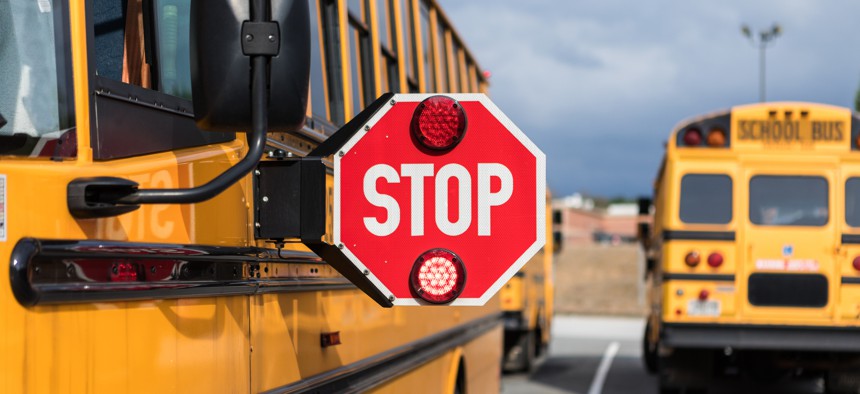
Marilyn Nieves via Getty Images




 By
Chris Teale
By
Chris Teale
Chair Brendan Carr said the two uses of E-Rate funding were unlawful and it represented “overreach” by the Biden administration.
The Federal Communications Commission voted Tuesday to end federal funding that helped pay for Wi-Fi access on school buses and for schools and libraries to loan out Wi-Fi hotspots.
Commissioners voted 2-1 to cut federal funding via the E-Rate program to the two initiatives that began during the COVID-19 pandemic and were extended once the public health emergency was over. The rules, which were adopted during former President Joe Biden’s tenure, allowed schools and libraries to buy Wi-Fi hotspots using E-Rate money that they could then loan out, and fund Wi-Fi access on school buses.
The E-Rate program provides discounts on various communications services and internet access to schools and libraries. In a statement, FCC Chair Brendan Carr said the previous administration had been guilty of “overreach” and gone beyond the limits of the Communications Act. Carr and Commissioner Olivia Trusty voted to end funding; Commissioner Anna Gomez voted against.
“[The law] is clear: E-Rate funding is meant to enhance access to telecommunications services in classrooms and libraries,” Carr said in a statement before the vote. “A school bus is neither. We cannot simply reinterpret “classrooms” to mean any place where learning might occur. That’s not how statutory interpretation works, and it’s not how responsible policymaking should work either.”
Opponents of these uses of E-Rate funding had said they risked exposing young people to harmful content on the internet in uncontrolled environments.
“Children are among the most impressionable members of our society,” Carr said. “Parents have a right to decide when — and how — their kids access the internet. Wi-Fi on school buses removes both the supervision that helps keep kids safe and the parental control that protects them from harmful or inappropriate content.”
Carr also criticized the use of E-Rate for hotspots, alleging that “most hotspots that were implemented through these types of programs were quickly lost or stolen, wasting millions. The FCC has failed to demonstrate that these funding decisions would advance legitimate classroom or library purposes.”
The U.S. Senate already passed a resolution to overturn the two FCC rules in May. U.S. Sen. Ted Cruz, a Texas Republican, said in a statement before this latest FCC vote that Congress needs to act to “prevent this or similar harmful rules in the future.”
“I’m pleased that the FCC is moving to protect both taxpayers and parents’ ability to decide what their children can access online,” Cruz, who is chair of the Senate Commerce Committee, said in a statement released by the FCC in early September. “The Biden FCC hotspot program endangered kids, duplicated existing federal funding and violated the law.”
But proponents of these programs argued they had merit, especially after the COVID-19 pandemic brutally exposed the digital divide. A 2023 survey by the American Library Association found that 46.9% of public libraries offered hotspot loan programs, a figure that has increased by 14.6% since 2020.
“Libraries have offered hotspot lending for a decade, and their experience proved transformative for people facing emergency situations,” ALA President Sam Helmick said in a statement before the vote. “While libraries and schools are working hard to bridge digital learning gaps, Chairman Carr is tossing out the bricks of those bridges. Withdrawing the opportunity for people to check out Wi-Fi hotspots from their library is a step backwards.”
After the vote, Helmick said there had been a “lack of due process,” which left little time for interested groups to comment on Carr’s proposal.
Other nonprofit leaders agreed that eliminating funding for Wi-Fi hotspots would undermine one of the FCC’s central missions of closing the homework gap and ensuring that everyone can benefit from the internet.
“The losers today are the children and lifelong learners who will be cut off from the internet,” Revati Prasad, executive director of the Benton Institute for Broadband & Society, said in a statement. “Chairman Carr’s cruel move to delete our kids’ Internet connections won’t make America smarter. Parents, teachers, students, and lifelong learners throughout the country understand firsthand how the Internet has become one of the most transformative learning tools of our generation. Today’s major digital disconnect will likely leave those we care about less prepared to compete and win the jobs of the future.”
Carr, however, rejected claims that the FCC was stepping back from working to eliminate the digital divide with this decision. He said that E-Rate’s purpose is not to deal with bigger societal challenges.
“Opponents of today’s decision claim that many Americans lack Internet access for homework, telemedicine, online banking, and job searches,” Carr said. “But E-Rate was never designed to solve those broader challenges. … E-Rate, however, was not created for the purpose of funding connectivity efforts outside the school. Unlawfully expanding E-Rate to fund Wi-Fi hotspots is not a legitimate or effective use of FCC authority.”