
With driverless cars a reality, what can cities do to prepare for them?
lupengyu via Getty Images





Companies have made tremendous strides in various urban areas across the U.S. But leaders have a lot more work ahead to integrate AVs properly.
Since it began in 2009 as “the secret Google Self-Driving Car Project,” Waymo has turned a pilot project into a viable product by scaling rider-only service across multiple cities, logging more than 200 million miles of fully autonomous, driverless operation on public roads as of Feb. 2026.
Waymo has already expanded into airports such as Phoenix Sky Harbor and San Jose International and is logging miles in numerous major cities nationally, including Phoenix, San Francisco, Los Angeles and Austin, Texas. Expansion to Dallas, Houston, San Antonio, Chicago, Baltimore and other markets is now in the works, while volume currently surpasses 400,000 fully autonomous, paid rides weekly.
And while safety continues to be a concern, programs such as the University of Michigan’s Connected Environment and Smart Intersections Project, which focus on creating reference architecture that cities can copy for performance measures, crash reduction and traffic signal priority, are enabling autonomous vehicles and human drivers to respond better. As a result, data from the first 127 million miles of operation recorded by Waymo shows a 10-fold reduction in crashes involving serious injuries and a 12-fold reduction in crashes involving pedestrians compared to human benchmarks.
The technology that propels autonomous vehicles is no longer in question. Automated vehicles like Waymo clearly can drive a city block safely. It’s the reason why U.S. competitors such as Tesla and Amazon’s Zoox are beginning to scale their factories while international players are working to drive costs down in the wake of analyst concerns about profitability. Per unit costs of autonomous vehicles, after all, still top $100,000 per vehicle.
The bigger question, however, is whether a city can host thousands of autonomous vehicles that self-organize without clogging its curbs or blocking bike lanes. Robotaxis need continual pickup and drop-off areas, short-term staging areas and legal idling between trips, all of which will put more pressure on the need for curb parking. Cities that have not yet priced or designated sufficient curb parking will experience significant spillovers, including lane blockages and rising neighborhood complaints.
To dispatch, price, and park vehicles without experiencing extreme challenges, the National League of Cities is recommending cities employ dynamic pricing and clear geofenced areas for pickup and drop-off to rebalance right-of-way for people, transit, and high turnover loading. The Institute of Transportation Engineers’ Curbside Management Guide, meanwhile, lays out pilot programs for implementation and enforcement. Curb policies containing best practices around data-driven allocation and dynamic controls are also proliferating.
In the short-term, there are a number of steps city officials should be taking to get ready for the inevitable onslaught of automated vehicles. These include:
- Ensuring that the city has a strong curb management program by inventorying blocks and examining a pilot dynamic pickup/drop-off pricing zone
- Adopting data standards and safety key performance indicators, requiring anonymized pickup and drop-off data, and measuring injury crash rates not just disengagements
- Designing city streets and blocks for conversion by updating zoning for reuse and requiring conversion friendly specifications
- Adopting pricing that varies dynamically by location, time of day, and direction of travel
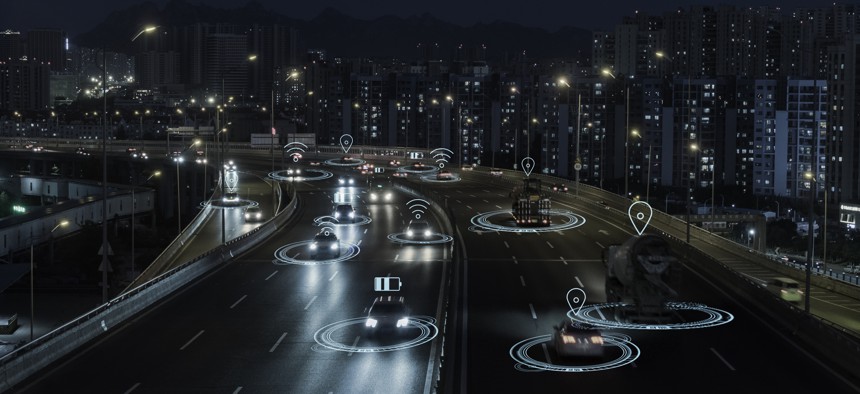
- Retrofitting intersections with vehicle-to-everything use which involves vehicles communicating with other vehicles, and infrastructure such as traffic lights, pedestrians, and networks designed to boost safety and efficiency
- Staying up-to-date on the ongoing research being done on automated vehicles and developments that are taking place within the industry and throughout the country
That last item is particularly important. Because the AV industry is still in its infancy, there will be numerous developments in the near future. Going forward, cities should start watching airports, especially San Jose, the first California airport to green-light Waymo, because they have been serving as crucial test markets for self-driving vehicles.
Keep an eye too on the Zoox production facility, whose success will increase competition and likely lead to greater adoption of self-driving vehicles. And with increased use, expect greater regulatory tightening and certification on the part of the National Highway Traffic Safety Administration. Public trust moves at the speed of video. Unfortunately, while high-profile incidents can reset sentiment, Waymo’s transparency shows a path forward.
In the longer term, robotaxi use is expected to grow while private ownership will decline modestly in dense districts, accompanied by a downshift in peak parking demand. This may lead to adaptive reuse of parking garages in cities nationwide.
Look too for significant system level parking reductions as autonomous vehicles become more widespread and pricing discourages empty miles. Early autonomous vehicle adoption can increase vehicle miles traveled if cities fail to price curb use.
Like it or not, Waymo is now the benchmark for autonomous vehicles dealing with airport access, regulatory validation, and recalls. And while autonomous vehicle usage is unlikely to become widespread over the next 2-3 years, the reality for dozens of pilot cities around the country is that the future of driverless vehicles is being shaped now and falling behind is not an option.
Paul Dorr heads The Traffic Group’s Engineering Graphics and Design Division, with responsibility for creating and overseeing the firm’s design and graphic enhancements as it relates to design drawings, exhibits, and overlays of existing traffic design scenarios.