
Montana lawmakers take a closer look at autonomous vehicles
JasonDoiy via Getty Images



Waymo officials were mum on the financial side of the business, but did describe the learning abilities of the software the cars run on. Essentially cars take photos of the route, learning curb heights and even if there’s a new pothole.
This story was originally published by the Daily Montanan.
Earlier this year, Montana passed a law allowing for the use of autonomous vehicles on the state’s roadways.
Part of the bill — Senate Bill 67 —also gave the state’s Department of Transportation and Department of Justice some rulemaking authority over their use.
“The intention of this legislation is to get all parties to the table to promote the safest ways to promote autonomous technology incorporating the diverse roadways, weather, and animal-human encounters in Montana and to make Montana the showcase for advancing new technologies in transportation,” the bill’s preamble states.
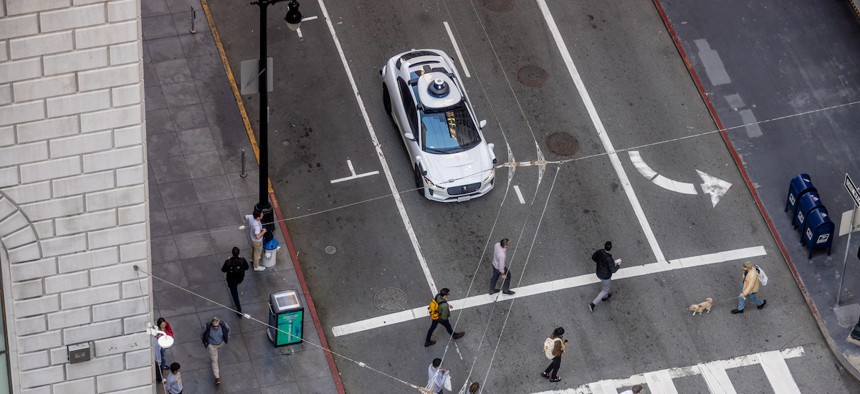
The Legislature’s interim transportation committee has taken up the issue as part of a study into mass transportation and sent state Sens. Russ Tempel and Denley Loge on a mission to Arizona to find out more about Waymo, an autonomous taxi service.
The pair spoke about the experience during the transportation committee meeting on Monday.
“When Senator Tempel ordered up the Waymo, a car pulled up with a little ball on top, and his initials were on it. That’s how we knew that was the one that was coming for him,” Loge, an St. Regis Republican, told the committee.
“It’s comparable to a taxi price, but it is impressive,” he added
They described that it changed speed limits appropriately, if fast (“It wasted no time,” Loge said) and that it turned corners well. It recognized a pickup truck pulling out in front and was able to change lanes without issue, they added.
Meetings with Waymo gave them an opportunity to see more of their business. Waymo officials were mum on the financial side of the business, but did describe the learning abilities of the software the cars run on. Essentially cars take photos of the route, learning curb heights and even if there’s a new pothole. They added that it seemed to perform well around pedestrians.
With emerging obstacles like a pothole, the car will download that information when it gets back and the other cars will now have the knowledge of the pothole as well.
“There was one instance there was a car backing out of a parking spot. It waited till that car got backed out, and then it took that spot to go into the charger,” Loge said. “And I asked the guys, I said, is it like milk cows? They go back to the same stall? And they said, ‘No, they talk to each other, and whatever stall is open, they go to, and if somebody’s backing out, it waits, or it backs up, if it has to.’ It’s pretty incredible.”
The committee did have some questions, including on animal collisions and road conditions. Part of SB 67 gives the Department of Transportation some authority over that matter, including limiting autonomous vehicles in certain situations, but also allows the department the ability to exempt them as well.
“The Department of Transportation may exempt from limitation commercial vehicles with an automated driving system that are demonstrated to be capable of operating safely during dangerous road conditions,” the bill reads.The company is testing their vehicles in Buffalo, New York, though has been mostly limited to southern markets, they said.
The Department of Justice has some authority, too.
“The Department of Justice shall consult interested stakeholders prior to proposing rules on vehicles with an automated driving system, such as members of the transportation interim committee and representatives of law enforcement agencies, motor vehicle and insurance industries, drivers, pedestrians, and tribal and local governments.”
The lawmakers also got some advice on rulemaking from the mayor of Mesa, who said part of the reason Waymo came to the city was because they didn’t put any restrictions up.
“One thing he mentioned was, ‘Be careful putting any restrictions on these things until they work through it and explain to you what they’re capable of,’” said Tempel, a Chester Republican.
Daily Montanan is part of States Newsroom, a nonprofit news network supported by grants and a coalition of donors as a 501c(3) public charity. Daily Montanan maintains editorial independence. Contact Editor Darrell Ehrlick for questions: info@dailymontanan.com.