
Data center growth goes full steam ahead across the US
BackyardProduction via Getty Images





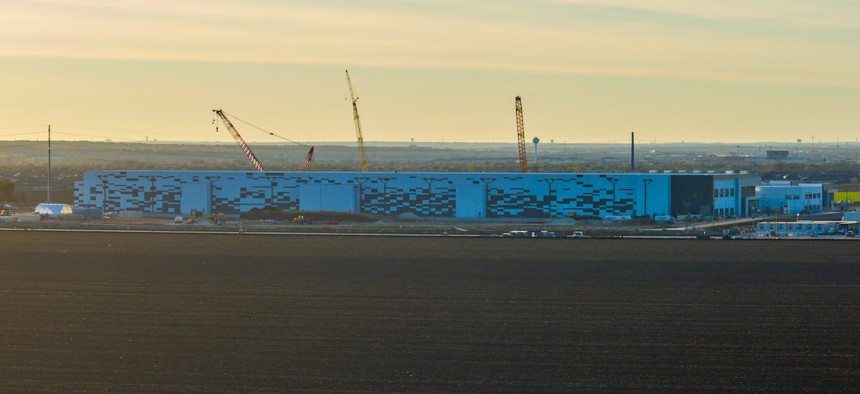
Investments in and construction of data centers are increasing across the U.S., particularly in areas where such facilities have previously lagged.
State and local governments are increasingly going digital, relying on advanced computing and infrastructure to help operations and service delivery be more streamlined and efficient. To do that, leaders are turning to data centers to support their tech advancements, and a new report suggests the U.S. in store for significant data center development in coming years.
Across North America, more than 35 gigawatts of data center capacity are under construction with anticipated delivery dates in 2027 and 2028, according to a report released this week from the commercial real estate firm JLL. Researchers also found that vacancy rates for data center construction have sat at 1% for the second year in a row — down from 5% in 2020 — and are likely to remain there for several years.
The growing appetite for data center expansion can be tied to the public and private sector’s interest in artificial intelligence, which relies on infrastructure that can handle high computing demands, said Matt Landek, global division president of data centers and critical environments at JLL. The heightened interest in data center construction also reflects state and local governments’ increasing efforts to incentivize and regulate the construction of data centers in their communities to unlock AI’s potential.
“There is an overall realization that the market as a whole is going through a sophistication enhancement that we have not seen [before] today,” he said.
State and local governments, for example, are engaging with data center operators at unprecedented levels to explore how to balance the construction of centers with their impact on local energy consumption, resident well-being and local revenue, Landek explained.
Oklahoma lawmakers, for instance, are considering a bill that would establish a moratorium on data center development across the state in order to give state officials time to assess the potential impacts of data centers on water supplies, utility rates, property values and other factors.
The proposed bill also calls for the state to identify ideal locations for data centers and develop recommended regulations aimed at protecting the electric grid, water, environment and citizen privacy before the moratorium expires on Nov. 1, 2029.
Data center operators, in turn, are also considering where they can branch out to newer markets to support the growth of data center capabilities, he said.
Indeed, Virginia remains a national and global leader in data center development, but the report suggests Texas’ data center market is on track to surpass Virginia. More broadly, 64% of data center construction is taking place in frontier markets where such facilities have been less prevalent, including Texas, Tennessee, Wisconsin and Ohio, according to the report.
Research is showing that data center operators are flocking to areas that are demonstrating “friendly markets that are open to data center development,” Landek said.
Texas, for instance, saw an influx of data center project requests after lawmakers passed a law in 2023 that requires officials to consider projects in power demand forecasts, even if they had not signed an agreement to connect to the state’s electric grid.
Plus, states like Texas can offer more land and infrastructure availability to build at scale, which is encouraging data center operators to “follow the power” when it comes to expanding the data center market, Landek said.
Ultimately, governments and data center developers have a shared goal of expanding data and tech capabilities across the U.S., and one way to do that is “to level the playing field” when it comes to where data centers are being developed to help “build out that network,” Landek said.