I was mayor when self-driving cars came to Austin. Here’s what New York should know.
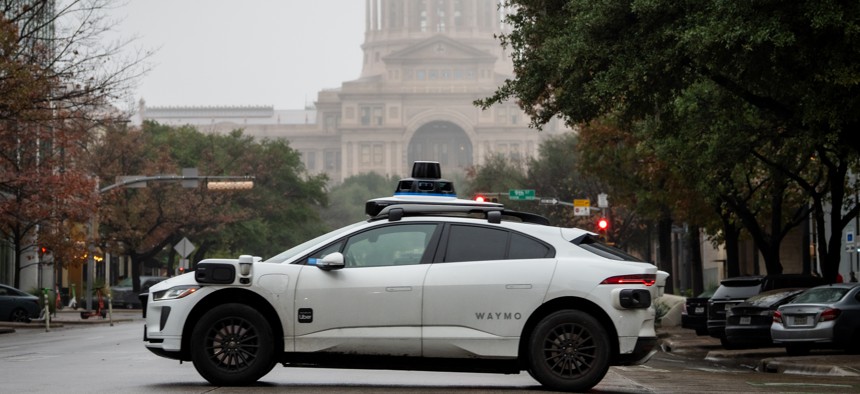
A Waymo drives across in front of the Capitol Building in Austin, Texas, on Jan. 23, 2025.

A Waymo drives across in front of the Capitol Building in Austin, Texas, on Jan. 23, 2025. Sara Diggins/The Austin American-Statesman via Getty Images

COMMENTARY | The key question is whether autonomous vehicle companies view government as a partner or an enemy.

Gov. Kathy Hochul recently announced a proposal to bring autonomous vehicles to communities across New York. I served as the mayor of Austin, Texas, when our city became the Kitty Hawk of driverless cars ten years ago. Since leaving office, I am constantly asked how to protect the public interest when disruptive technology hits the streets. Those questions grow more urgent every time an autonomous vehicle makes headlines for the wrong reasons, as they did last week. 

My answer is simple: The outcome depends less on the technology itself than whether the companies behind it view government as a partner or an enemy. To understand what’s coming to New York, let me tell you the story of two companies. 

In 2015, we welcomed Google’s self-driving cars to Austin. I wanted the jobs and energy that came with being a welcoming city for new technology, but I also had to keep residents safe. These were untested vehicles sharing roads with cyclists, pedestrians and schoolchildren. 

Google treated the city as a partner in an experiment, not an obstacle to be overcome. They were transparent and shared data. They coordinated with police. They understood that the trust of Austin residents mattered to their success, and when we raised concerns about specific intersections or scenarios, their engineers made adjustments. The city learned from working with Google how best to regulate in a time of innovation and new economies.

Our biggest “problem”? Our local transportation reporter discovered he could confuse the cars at stop signs by inching forward, stopping and inching again – playing a game of "you go, no you go." His column taught the whole city the trick.

We tried to offer the same collaborative partnership to Uber and Lyft, but the response was different.

In 2015, news broke about sexual assaults by rideshare drivers, leading residents to demand that the City Council make rides safer. We didn’t default to old practices of regulation. We asked the companies to have fingerprinted drivers – the standard best practice for verifying identity. We offered to subsidize the costs and to qualify the drivers. We even offered to write the code for a feature letting passengers choose screened drivers, allowing the market, not the city, to decide if this kind of safety mattered.

Instead, the companies refused every overture, even ones that required no changes to their platforms. When the City Council stood firm on safety, the companies spent millions on a ballot measure to defeat our efforts. Austin voters rejected it decisively. At this point, rather than working constructively with the city, Uber and Lyft successfully lobbied the Texas state Legislature to preempt our local authority.

The consequences were predictable: rider safety became a defining liability for Uber and Lyft. By rejecting the safety tools we proposed, they invited a reputational crisis that led to regulatory backlash in cities across the country and years of damaging headlines.

Hochul’s proposal would allow autonomous vehicles in upstate New York, while excluding New York City for now. It’s a reasoned approach, because it’s an opportunity to test both the technology and the corporate citizenship of the companies deploying it.

The companies operating upstate will eventually want full access to the five boroughs. Constructive partnership should be the price of entry. If they share data, work with local officials, help solve problems collaboratively in Buffalo and Albany and build a track record in New York state that shows that safety is a top priority, then the conversation can turn to expansion into New York City.

If they refuse to recognize the responsibilities of government – and threaten to leave if they don't get their way – New York should call their bluff.

Austin showed that government and tech can both benefit from working together. New York and autonomous vehicle companies have a chance to get this right, but only if both sides are willing to act as true partners.

Steve Adler is the former mayor of Austin, Texas, and is a partner at Commonweal Ventures.

X
This website uses cookies to enhance user experience and to analyze performance and traffic on our website. We also share information about your use of our site with our social media, advertising and analytics partners. Learn More / Do Not Sell My Personal Information
Accept Cookies
X
Cookie Preferences Cookie List

Do Not Sell My Personal Information

When you visit our website, we store cookies on your browser to collect information. The information collected might relate to you, your preferences or your device, and is mostly used to make the site work as you expect it to and to provide a more personalized web experience. However, you can choose not to allow certain types of cookies, which may impact your experience of the site and the services we are able to offer. Click on the different category headings to find out more and change our default settings according to your preference. You cannot opt-out of our First Party Strictly Necessary Cookies as they are deployed in order to ensure the proper functioning of our website (such as prompting the cookie banner and remembering your settings, to log into your account, to redirect you when you log out, etc.). For more information about the First and Third Party Cookies used please follow this link.

Allow All Cookies

Manage Consent Preferences

Strictly Necessary Cookies - Always Active

We do not allow you to opt-out of our certain cookies, as they are necessary to ensure the proper functioning of our website (such as prompting our cookie banner and remembering your privacy choices) and/or to monitor site performance. These cookies are not used in a way that constitutes a “sale” of your data under the CCPA. You can set your browser to block or alert you about these cookies, but some parts of the site will not work as intended if you do so. You can usually find these settings in the Options or Preferences menu of your browser. Visit www.allaboutcookies.org to learn more.

Sale of Personal Data, Targeting & Social Media Cookies

Under the California Consumer Privacy Act, you have the right to opt-out of the sale of your personal information to third parties. These cookies collect information for analytics and to personalize your experience with targeted ads. You may exercise your right to opt out of the sale of personal information by using this toggle switch. If you opt out we will not be able to offer you personalised ads and will not hand over your personal information to any third parties. Additionally, you may contact our legal department for further clarification about your rights as a California consumer by using this Exercise My Rights link

If you have enabled privacy controls on your browser (such as a plugin), we have to take that as a valid request to opt-out. Therefore we would not be able to track your activity through the web. This may affect our ability to personalize ads according to your preferences.

Targeting cookies may be set through our site by our advertising partners. They may be used by those companies to build a profile of your interests and show you relevant adverts on other sites. They do not store directly personal information, but are based on uniquely identifying your browser and internet device. If you do not allow these cookies, you will experience less targeted advertising.

Social media cookies are set by a range of social media services that we have added to the site to enable you to share our content with your friends and networks. They are capable of tracking your browser across other sites and building up a profile of your interests. This may impact the content and messages you see on other websites you visit. If you do not allow these cookies you may not be able to use or see these sharing tools.

If you want to opt out of all of our lead reports and lists, please submit a privacy request at our Do Not Sell page.

Save Settings
Cookie Preferences Cookie List

Cookie List

A cookie is a small piece of data (text file) that a website – when visited by a user – asks your browser to store on your device in order to remember information about you, such as your language preference or login information. Those cookies are set by us and called first-party cookies. We also use third-party cookies – which are cookies from a domain different than the domain of the website you are visiting – for our advertising and marketing efforts. More specifically, we use cookies and other tracking technologies for the following purposes:

Strictly Necessary Cookies

We do not allow you to opt-out of our certain cookies, as they are necessary to ensure the proper functioning of our website (such as prompting our cookie banner and remembering your privacy choices) and/or to monitor site performance. These cookies are not used in a way that constitutes a “sale” of your data under the CCPA. You can set your browser to block or alert you about these cookies, but some parts of the site will not work as intended if you do so. You can usually find these settings in the Options or Preferences menu of your browser. Visit www.allaboutcookies.org to learn more.

Functional Cookies

We do not allow you to opt-out of our certain cookies, as they are necessary to ensure the proper functioning of our website (such as prompting our cookie banner and remembering your privacy choices) and/or to monitor site performance. These cookies are not used in a way that constitutes a “sale” of your data under the CCPA. You can set your browser to block or alert you about these cookies, but some parts of the site will not work as intended if you do so. You can usually find these settings in the Options or Preferences menu of your browser. Visit www.allaboutcookies.org to learn more.

Performance Cookies

We do not allow you to opt-out of our certain cookies, as they are necessary to ensure the proper functioning of our website (such as prompting our cookie banner and remembering your privacy choices) and/or to monitor site performance. These cookies are not used in a way that constitutes a “sale” of your data under the CCPA. You can set your browser to block or alert you about these cookies, but some parts of the site will not work as intended if you do so. You can usually find these settings in the Options or Preferences menu of your browser. Visit www.allaboutcookies.org to learn more.

Sale of Personal Data

We also use cookies to personalize your experience on our websites, including by determining the most relevant content and advertisements to show you, and to monitor site traffic and performance, so that we may improve our websites and your experience. You may opt out of our use of such cookies (and the associated “sale” of your Personal Information) by using this toggle switch. You will still see some advertising, regardless of your selection. Because we do not track you across different devices, browsers and GEMG properties, your selection will take effect only on this browser, this device and this website.

Social Media Cookies

We also use cookies to personalize your experience on our websites, including by determining the most relevant content and advertisements to show you, and to monitor site traffic and performance, so that we may improve our websites and your experience. You may opt out of our use of such cookies (and the associated “sale” of your Personal Information) by using this toggle switch. You will still see some advertising, regardless of your selection. Because we do not track you across different devices, browsers and GEMG properties, your selection will take effect only on this browser, this device and this website.

Targeting Cookies

We also use cookies to personalize your experience on our websites, including by determining the most relevant content and advertisements to show you, and to monitor site traffic and performance, so that we may improve our websites and your experience. You may opt out of our use of such cookies (and the associated “sale” of your Personal Information) by using this toggle switch. You will still see some advertising, regardless of your selection. Because we do not track you across different devices, browsers and GEMG properties, your selection will take effect only on this browser, this device and this website.