
Maine secretary of state reflects on a tumultuous period
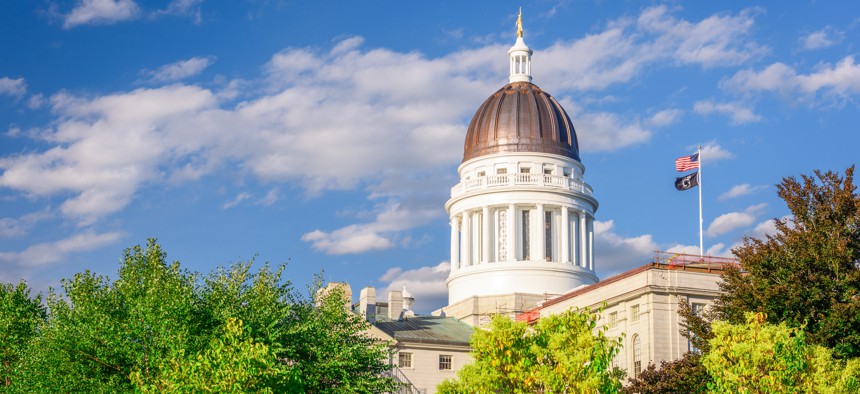
Sean Pavone via Getty Images



 By
Chris Teale
By
Chris Teale
Shenna Bellows has lived through federal demands for voter data, ICE raids, doxing and more. But with this year’s midterm elections fast approaching, there’s more to do.
It has been a tricky period for the state of Maine, which saw a controversial surge and then drawdown of Immigration and Customs Enforcement agents and is one of many states being sued by the U.S. Department of Justice for not turning over its voter rolls.
One of the state leaders standing amid the maelstrom is Secretary of State Shenna Bellows, who has been in the role since 2021. She previously served for four years in the Maine Senate and is a candidate for governor this year. Bellows was in the news a couple of years ago after she tried to disqualify President Donald Trump from the state’s Republican primary ballot for his involvement in the Jan. 6, 2021, insurrection, then withdrew after a U.S. Supreme Court decision reversed a similar effort in Colorado.
Bellows was one of several of her colleagues to take center stage at the recent National Association of Secretaries of State’s winter meeting, as they condemned the Trump administration’s efforts to acquire state voter data and the raid on a Georgia election office.
In a conversation with Route Fifty on the sidelines of the conference, Bellows reflected on a tumultuous relationship with the Trump administration, concerns ahead of this year’s midterm elections and a recent doxing that left her worried for her safety.
This conversation has been edited for brevity and clarity.
ROUTE FIFTY: From your perspective as a secretary of state, what are some of the benefits of coming to something like NASS and meeting your peers?
SHENNA BELLOWS: I made it a point to come to all the in-person NASS events since I first became secretary. It's extraordinary: the secretaries have secretaries-only meetings, we get together to talk about brass tax, about election administration. While we have strong disagreements on voting rights policies, we have enormous respect for each other and areas of shared understanding on election administration. Election security and cybersecurity; physical security; and the nuts and bolts of election administration feel like three areas that are still nonpartisan and lend themselves well to a free exchange of ideas. When I was doxed and threatened and swatted, my Republican colleagues told me they were praying for me, and they meant it genuinely, and that was really reassuring. We've socialized. Some folks have traveled abroad together. I haven't done that, but the socializing piece is important. There's some social capital when times get tough or tense. I believe strongly that our elections are safe and secure, not just in Maine, but across the whole country, in part, because of the checks and balances in the system and because of the integrity of people on all sides of the aisle who are really committed to running really good elections for Americans.
ROUTE FIFTY: Has the atmosphere felt any different to you at all? Has it been challenging, or is it the same as it ever was?
BELLOWS: This conference, in some ways, was more exciting than previous conferences because the Trump administration has crossed so many lines when it comes to interfering in election administration, so we have had to have some serious conversations about the role of the states. Interestingly, Republican secretaries will agree with Democratic secretaries that the states are sovereign and that the Constitution places the states in charge of elections, not the federal government. Sometimes we have fierce disagreements, particularly on voting rights, and what the administration is doing right now with ICE is certainly a huge bone of contention, but in areas of cybersecurity and election administration 101, there's more that we have in common than divides us.
At the Thanksgiving table, there are topics you just don't talk about with your family on the other side, but there are lots of areas of common ground. The NASS conference is a lot like a Thanksgiving dinner. There are certain things that we just kind of shy away from talking about, but there are lots of areas of common interest that make this conference worthwhile.
ROUTE FIFTY: You’ve talked about the impacts of having ICE in your community. What’s that been like?
BELLOWS: ICE has been sowing terror and chaos in our streets. People are afraid to get groceries, go to work and go to school. Good Samaritans who are just observing what ICE is doing and documenting it have been threatened and intimidated. Mainers were really shocked by armed masked men in our streets arresting people who have followed the law and all the rules and taking them away. It's been really awful, and it's brought Mainers together. Not everyone is in agreement, but there's significant Republican and independent outrage and concern over what ICE is doing. These tactics are fascist.
And then, when it comes to the demands to turn over voter data and that sort of thing as a condition for ICE leaving Minnesota, [they] demonstrate that this was never about immigration. It was always about power and control by this administration over our elections.
ROUTE FIFTY: How do you react to your peers who suggest that this is all just part of the Civil Rights Act?
BELLOWS: A few secretaries who are new to their job and don't have long experience in elections administration have turned over their voter rolls to the federal government. If this were [former President Joe] Biden putting together a national voter registration database, they would be calling for his head. More experienced secretaries on both the left and the right have refused the DOJ's sweeping requests, and this is being litigated in court, and we've won two cases so far.
ROUTE FIFTY: Particularly the privacy aspect of all of this, why is it a bad idea for states to give the DOJ data?
BELLOWS: The federal government has a terrible record keeping large datasets private. It's not a question of if a federal government database will be hacked, but when, and to what consequence? Equally importantly, however, the DOJ has the power to investigate and prosecute people and put them in jail. For the DOJ to have a huge voter file not only contradicts the Constitution, but it also may have a chilling effect on people's willingness to identify with a particular political party or vote in a primary if they have fear of reprisal.
ROUTE FIFTY: You’ve mentioned some of the cyber threats to elections. I'd love to talk a little bit about that. How concerned are you and what are you doing and thinking about in the Secretary of State's office to stay ahead of the threats?
BELLOWS: Over 95% of the ballots in this country are paper ballots. That's the gold standard in election security, and you can't hack a paper ballot. The tabulators that states use to count the ballots are air gapped. They're not connected to the internet, and they're resilient against cyberattack. The biggest cyber threats come to our networks and to the central voter registration systems that are accessed through secure internet portals. Before the Trump administration, the federal government was funding cybersecurity tools like endpoint detection and response, malicious domain blocking and reporting for the states and local, counties and municipalities.
The Trump administration zeroed out all funding through the Election Infrastructure Information Sharing and Analysis Center on Feb. 14, 2025, and hasn't brought that back. The states and the locals are now on our own in terms of cyber protections. In Maine, we have private-sector partners to protect our networks and keep our elections. Here in the wake of threats from foreign adversaries and cyber criminals, I know most states are stepping up to fill the gap, but it's costly, and it's a waste of taxpayer money and an abdication of federal responsibility to help keep all of us safe. Ironically, the feds are trying to interfere in areas of the election that are outside of their jurisdiction under the Constitution, but are pulling back on their responsibilities to the states when it comes to cyber defense.
ROUTE FIFTY: When it comes to artificial intelligence, what are your thoughts on the role of AI in elections? How concerned are you?
BELLOWS: Artificial intelligence is a technology, like any other technology, that can be abused for evil or utilized for good. The most common abuses of AI that we see in elections are imitations of officials to broadcast misinformation or lies. The most famous, of course, is the imitation President Biden phone call telling people to vote on the wrong day. We had a clerk use AI to develop an election poster for her citizenry, and AI generated a poster that told everyone they needed a voter ID. Maine doesn't require voter ID at the point of voting, it requires it at the point of registration. We got a call from a citizen that this clerk is demanding that people show their voter ID, and it was just an innocent mistake because of the utilization of AI to generate the poster. We caution local election officials that AI can't be a substitute for common sense, especially in terms of educational materials.
ROUTE FIFTY: I don't want to have you relive it, but when it comes to being doxed, what's that like for someone who's public like you?
BELLOWS: The first time that I was doxed and threatened was really shocking and scary. My sense of safety was changed forever. Now, unfortunately, being doxed is not newsworthy. Law enforcement has been really wonderful in supporting me every time there are threats. They track those down and verify that I'm truly still safe. They increased patrols in my street last week when I was getting doxed. They've been really great. I'm mindful as secretary of state that I have more resources when I'm threatened or doxed than your local election clerks or other folks. Threats and doxing and swatting shouldn't be the cost of public service, but currently it is.