Transit agencies look to ‘rewire’ tech infrastructure
JillianCain via Getty Images

Speakers during last week’s Adobe Government Forum said they want to rely less on contractors and more on unified systems, while making the rider experience more efficient.

The Washington Metropolitan Area Transit Authority has made great strides in recent years, including winning a national award as agency of the year in 2025 from the American Public Transportation Association.

But while a lot of attention focuses on its buses, trains and paratransit, the technology that underpins those systems is just as important. And one WMATA official said there is a lot of work still ahead if the agency is to move forward, especially in procuring that technology.

Sarah Meyer, WMATA’s chief customer officer, said during the Adobe Government Forum in Washington, D.C. last week that the agency is looking to “rewire our infrastructure” to have far more control over its technology and not be so reliant on vendors. That issue becomes especially pressing in areas like station signage, which may all operate using different contractors on different operating systems with different, proprietary, content management systems.

“I have signs all over in different stations that have different operating systems, and it's so difficult to get up to date information to those signs, they all sometimes say something different,” Meyer said during a panel discussion.

The pace of technological evolution also presents some challenges for a transit agency that has millions of rides every month. Meyer pointed to the latest version of the agency’s rail cars, whose information boards are all controlled on one computer in a rail yard in Greenbelt, Maryland. And with WMATA looking to produce the next generation of rail cars, they want to avoid such technological challenges while being mindful of how tech has evolved over time.

“The rate of change while ordering trains that take 10 years to produce, it's a really hard challenge,” Meyer said. “I'm grateful for… folks in the industry that are really putting our foot down now and telling our vendors we want to have more control over the systems that you're putting in, because the rate of change is just so great.”

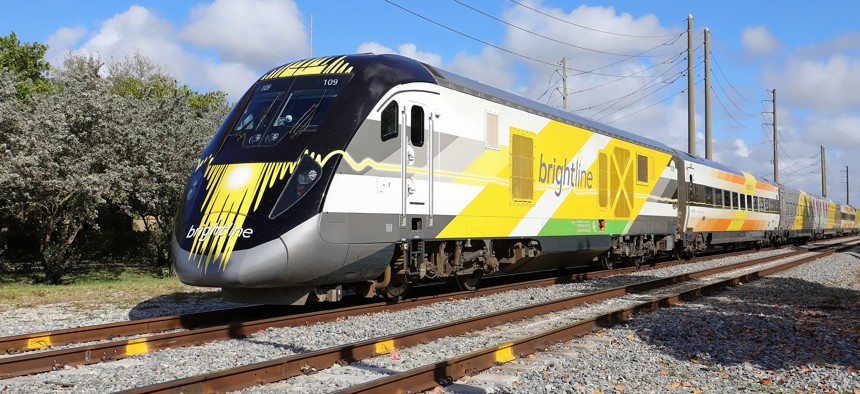
Other transit agencies have faced similar challenges with the pace of technological change. Kevin McAuliffe, chief technology and digital innovation officer at the privately owned and operated intercity Brightline rail system in Florida, recalled that the agency’s tech strategy used to be focused on buying everything ahead of time and then storing it for when stations were ready to be built.

“We built our Orlando station in 2023, and I had seven-year-old TVs coming out of the box that the warranty was already up on,” said McAuliffe. “I have 500 screens, and maybe 90% of them are out of warranty.”

In addition, McAuliffe said early in his tenure that it felt “almost impossible” to ride a Brightline train, from buying a ticket to riding the escalators to knowing when a train would show up. A combination of proprietary technology that was unreliable and not interoperable made for a frustrating experience for everybody, including employees who felt the wrath of customers but could not help much.

“Every one of those things was a disparate system, singularly built for autonomy,” McAuliffe said. “What we found out is you can't have a station where you just let people walk through it and onto a platform, you jump on any train you want, when you demand that they buy a ticket. All these different things, we had to rethink what we needed to do.”

Both agencies, then, have needed to think differently in how they approach technology. And work is already underway as WMATA has introduced tap-to-pay technology at its faregates to allow riders to pay with a debit or credit card and is looking to make its buses run more efficiently by punishing bus lane infractions. Meyer said the agency is also looking to revamp its website and make trip planning more useful.

Meanwhile, Brightline is looking to be “frictionless and seamless” by leveraging artificial intelligence and facial recognition technology, McAuliffe said. The system is also looking to use LiDAR to identify problematic sections of track for preventative maintenance before there are issues.

Too many pedestrians are still being killed by Brightline trains, and when vehicles fail to follow safety signals at crossings. McAuliffe said addressing that issue is critical too, but he said is hopeful of living “in an environment where people can trust and get on public transportation the way they want to get to where they want to go, safely and securely.”

Meyer said one of her main priorities is an efficient ride, and making it as easy as possible for as many people as possible to have a good experience.

“I care deeply about the amount of time our customers are spending on our system, and trying to reduce that as much as possible so that people can get to where they're going faster, easier, with less anxiety, less fear, so they can focus on the things that matter: their jobs, their lives, getting to doctors’ appointments on time and getting the services that they need,” she said.

X
This website uses cookies to enhance user experience and to analyze performance and traffic on our website. We also share information about your use of our site with our social media, advertising and analytics partners. Learn More / Do Not Sell My Personal Information
Accept Cookies
X
Cookie Preferences Cookie List

Do Not Sell My Personal Information

When you visit our website, we store cookies on your browser to collect information. The information collected might relate to you, your preferences or your device, and is mostly used to make the site work as you expect it to and to provide a more personalized web experience. However, you can choose not to allow certain types of cookies, which may impact your experience of the site and the services we are able to offer. Click on the different category headings to find out more and change our default settings according to your preference. You cannot opt-out of our First Party Strictly Necessary Cookies as they are deployed in order to ensure the proper functioning of our website (such as prompting the cookie banner and remembering your settings, to log into your account, to redirect you when you log out, etc.). For more information about the First and Third Party Cookies used please follow this link.

Allow All Cookies

Manage Consent Preferences

Strictly Necessary Cookies - Always Active

We do not allow you to opt-out of our certain cookies, as they are necessary to ensure the proper functioning of our website (such as prompting our cookie banner and remembering your privacy choices) and/or to monitor site performance. These cookies are not used in a way that constitutes a “sale” of your data under the CCPA. You can set your browser to block or alert you about these cookies, but some parts of the site will not work as intended if you do so. You can usually find these settings in the Options or Preferences menu of your browser. Visit www.allaboutcookies.org to learn more.

Sale of Personal Data, Targeting & Social Media Cookies

Under the California Consumer Privacy Act, you have the right to opt-out of the sale of your personal information to third parties. These cookies collect information for analytics and to personalize your experience with targeted ads. You may exercise your right to opt out of the sale of personal information by using this toggle switch. If you opt out we will not be able to offer you personalised ads and will not hand over your personal information to any third parties. Additionally, you may contact our legal department for further clarification about your rights as a California consumer by using this Exercise My Rights link

If you have enabled privacy controls on your browser (such as a plugin), we have to take that as a valid request to opt-out. Therefore we would not be able to track your activity through the web. This may affect our ability to personalize ads according to your preferences.

Targeting cookies may be set through our site by our advertising partners. They may be used by those companies to build a profile of your interests and show you relevant adverts on other sites. They do not store directly personal information, but are based on uniquely identifying your browser and internet device. If you do not allow these cookies, you will experience less targeted advertising.

Social media cookies are set by a range of social media services that we have added to the site to enable you to share our content with your friends and networks. They are capable of tracking your browser across other sites and building up a profile of your interests. This may impact the content and messages you see on other websites you visit. If you do not allow these cookies you may not be able to use or see these sharing tools.

If you want to opt out of all of our lead reports and lists, please submit a privacy request at our Do Not Sell page.

Save Settings
Cookie Preferences Cookie List

Cookie List

A cookie is a small piece of data (text file) that a website – when visited by a user – asks your browser to store on your device in order to remember information about you, such as your language preference or login information. Those cookies are set by us and called first-party cookies. We also use third-party cookies – which are cookies from a domain different than the domain of the website you are visiting – for our advertising and marketing efforts. More specifically, we use cookies and other tracking technologies for the following purposes:

Strictly Necessary Cookies

We do not allow you to opt-out of our certain cookies, as they are necessary to ensure the proper functioning of our website (such as prompting our cookie banner and remembering your privacy choices) and/or to monitor site performance. These cookies are not used in a way that constitutes a “sale” of your data under the CCPA. You can set your browser to block or alert you about these cookies, but some parts of the site will not work as intended if you do so. You can usually find these settings in the Options or Preferences menu of your browser. Visit www.allaboutcookies.org to learn more.

Functional Cookies

We do not allow you to opt-out of our certain cookies, as they are necessary to ensure the proper functioning of our website (such as prompting our cookie banner and remembering your privacy choices) and/or to monitor site performance. These cookies are not used in a way that constitutes a “sale” of your data under the CCPA. You can set your browser to block or alert you about these cookies, but some parts of the site will not work as intended if you do so. You can usually find these settings in the Options or Preferences menu of your browser. Visit www.allaboutcookies.org to learn more.

Performance Cookies

We do not allow you to opt-out of our certain cookies, as they are necessary to ensure the proper functioning of our website (such as prompting our cookie banner and remembering your privacy choices) and/or to monitor site performance. These cookies are not used in a way that constitutes a “sale” of your data under the CCPA. You can set your browser to block or alert you about these cookies, but some parts of the site will not work as intended if you do so. You can usually find these settings in the Options or Preferences menu of your browser. Visit www.allaboutcookies.org to learn more.

Sale of Personal Data

We also use cookies to personalize your experience on our websites, including by determining the most relevant content and advertisements to show you, and to monitor site traffic and performance, so that we may improve our websites and your experience. You may opt out of our use of such cookies (and the associated “sale” of your Personal Information) by using this toggle switch. You will still see some advertising, regardless of your selection. Because we do not track you across different devices, browsers and GEMG properties, your selection will take effect only on this browser, this device and this website.

Social Media Cookies

We also use cookies to personalize your experience on our websites, including by determining the most relevant content and advertisements to show you, and to monitor site traffic and performance, so that we may improve our websites and your experience. You may opt out of our use of such cookies (and the associated “sale” of your Personal Information) by using this toggle switch. You will still see some advertising, regardless of your selection. Because we do not track you across different devices, browsers and GEMG properties, your selection will take effect only on this browser, this device and this website.

Targeting Cookies

We also use cookies to personalize your experience on our websites, including by determining the most relevant content and advertisements to show you, and to monitor site traffic and performance, so that we may improve our websites and your experience. You may opt out of our use of such cookies (and the associated “sale” of your Personal Information) by using this toggle switch. You will still see some advertising, regardless of your selection. Because we do not track you across different devices, browsers and GEMG properties, your selection will take effect only on this browser, this device and this website.